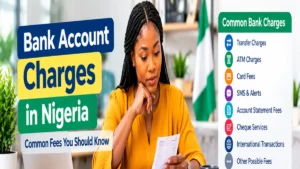
Bank charges may look small when viewed one transaction at a time, but frequent transfers, ATM withdrawals, card services and other banking activities can gradually increase your expenses.
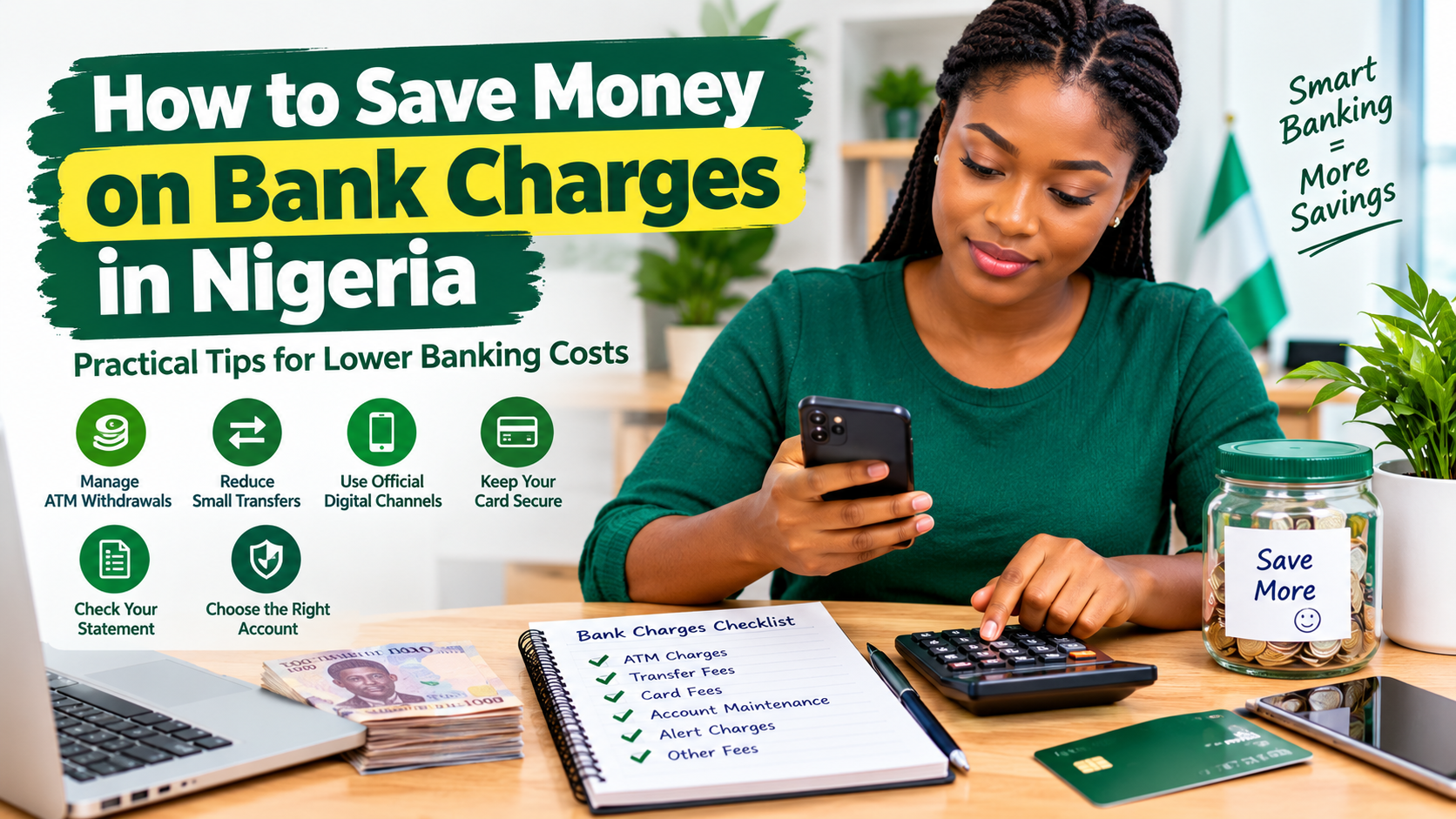
How to Save Money on Bank Charges in Nigeria
The good news is that you can often reduce unnecessary banking costs by understanding the charges attached to your account and choosing cheaper ways to carry out transactions.
In this guide, NaijaMoneyGuide.com.ng explains practical ways to reduce unnecessary bank charges in Nigeria without making banking unnecessarily difficult.
What Are Bank Charges?
Bank charges are fees that a bank or financial institution may apply for certain services or transactions.
Depending on the account and service, charges may relate to:
- Electronic transfers
- ATM transactions
- Debit cards
- Account statements
- Alerts
- Cash-related services
- International transactions
- Other banking services
The exact fees depend on the institution, product and applicable regulatory requirements. CBN rules have addressed the need for transparency and consumer protection in financial services.
Because charges can change, it is better to check your bank’s current official tariff rather than relying on old figures found online.
1. Know the Charges on Your Account
One of the easiest ways to reduce banking costs is to understand what you are being charged for.
Review your account statement or transaction history and look for recurring fees.
Pay attention to:
- Transfer-related charges
- Card fees
- ATM charges
- Alert charges
- Statement fees
- Other service charges
If you do not understand a charge, contact your bank through its official customer-service channel.
2. Reduce Unnecessary ATM Withdrawals
Frequent ATM withdrawals can become expensive, particularly when you use an ATM belonging to another bank.
Before withdrawing cash, consider whether you actually need the cash.
For everyday payments, electronic transfers or other convenient payment methods may sometimes be more practical.
CBN has periodically reviewed ATM-related charges, so always check the current applicable charges rather than relying on figures from older articles.
3. Avoid Making Many Small Transfers
If you regularly send several small transfers throughout the day, the associated transaction costs can add up.
Where appropriate, consider planning your payments so that necessary transfers are made efficiently.
However, do not combine transactions in a way that creates unnecessary risk or inconvenience. Security and accuracy should always come first.
4. Use Your Bank’s Official Digital Channels
Mobile banking and internet banking can make everyday banking more convenient.
Before using a third-party service simply because it appears cheaper, compare the total cost and make sure the service is legitimate.
Your bank’s official mobile app, USSD service or internet-banking platform may already provide the functionality you need.
5. Check Before Using Another Bank’s ATM
If you need cash, check whether your own bank’s ATM is nearby.
Using another institution’s ATM can sometimes involve additional charges depending on the transaction and current rules.
This is particularly important if you withdraw cash frequently.
6. Keep Your Debit Card Secure
Replacing a card or dealing with unauthorized transactions can create unnecessary financial and administrative problems.
Protect your:
- Card
- PIN
- One-Time Password (OTP)
- Mobile banking password
- Internet banking credentials
Never share confidential banking information with someone who contacts you unexpectedly.
If you notice an unauthorized transaction, report it to your bank promptly.
7. Review Your Account Regularly
Checking your account regularly can help you identify charges you do not recognize.
A simple monthly review can help you answer questions such as:
- How much did I spend on bank fees?
- Which charges occurred repeatedly?
- Did I pay for a service I rarely use?
- Are there charges I need the bank to explain?
Regular monitoring also makes it easier to detect unusual transactions.
8. Choose an Account That Matches Your Needs
Not every bank account is suitable for every person.
For example, someone who mainly saves money may have different needs from a business owner who makes many transactions.
Before opening or changing an account, compare:
- Account requirements
- Transaction charges
- Digital banking services
- ATM access
- Card fees
- Savings features
- Customer support
- Other applicable conditions
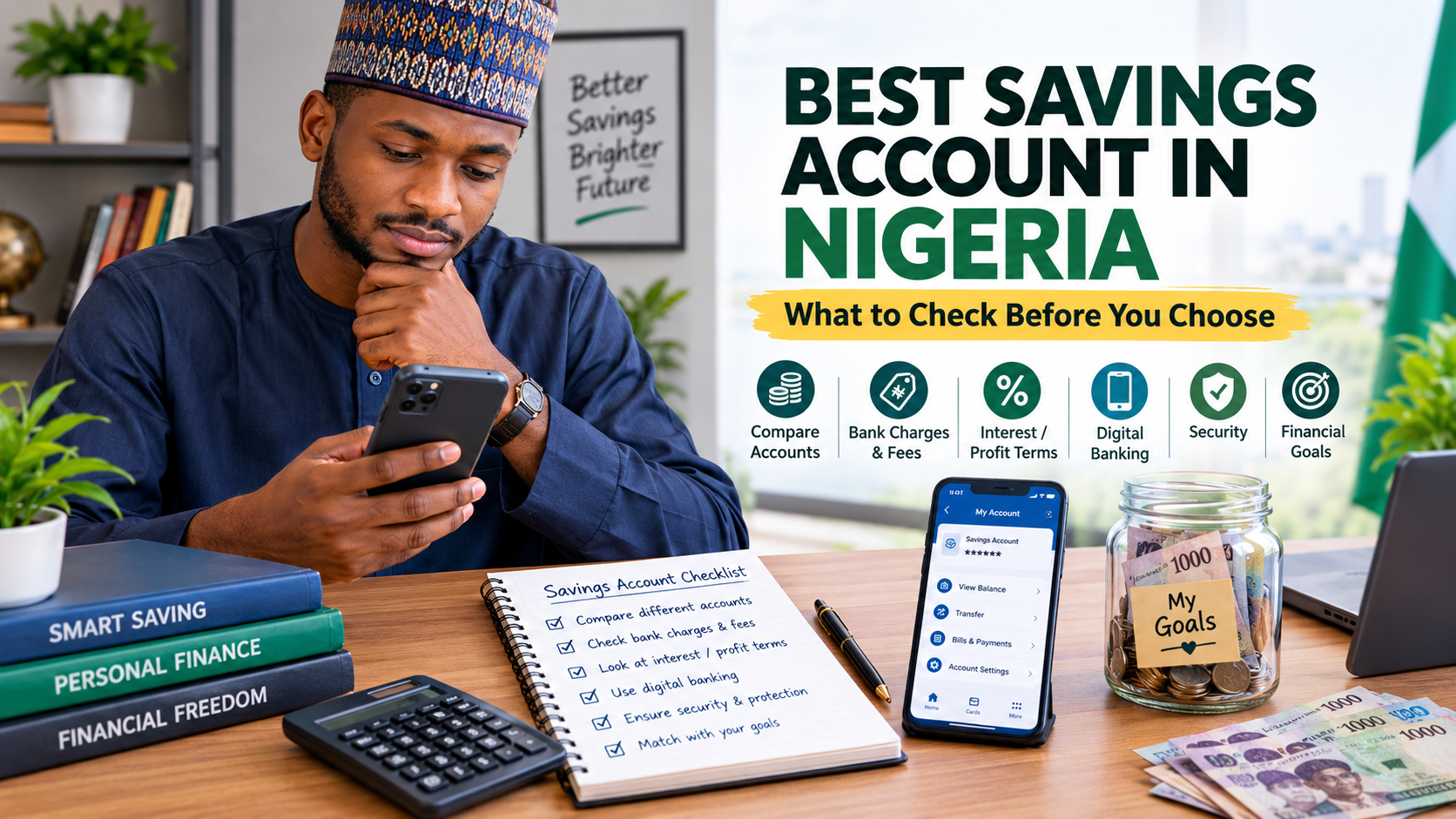 You can read our guide on How to Choose the Best Savings Account in Nigeria.
9. Don’t Choose a Bank Based Only on Advertising
A promotion may look attractive, but you should look beyond the headline.
Read the actual terms and conditions and check the current charges.
A bank account that appears attractive initially may not be the cheapest option for your particular pattern of transactions.
10. Be Careful With International Transactions
International transactions can have additional costs.
Depending on the service, you may encounter charges related to:
- Foreign currency conversion
- International card usage
- Cross-border transfers
- Other applicable banking services
If you regularly make international payments, compare the total cost before choosing a payment method.
11. Ask About Unrecognized Charges
If you see a charge that you do not understand, do not simply assume it is correct.
Contact your bank and ask for an explanation.
Keep relevant information such as:
- Transaction date
- Amount
- Transaction reference
- Account details
- Description shown on your statement
If a complaint is not resolved satisfactorily, customers can use the appropriate complaint and escalation channels available through the financial institution and, where applicable, the CBN Consumer Protection Department.
Simple Example
Imagine someone frequently uses ATMs, makes many transfers and pays for banking services without checking the associated costs.
Instead of changing banks immediately, the person could first:
- Review their monthly account statement.
- Identify recurring charges.
- Reduce unnecessary ATM withdrawals.
- Use suitable official digital banking channels.
- Combine planned payments where practical.
- Compare available account options.
- Ask the bank about unexplained charges.
Small improvements in financial habits can make banking more cost-efficient over time.
Bank Charges vs Other Financial Costs
It is important to remember that bank charges are only one part of managing your money.
You should also pay attention to:
- Unnecessary subscriptions
- Impulse purchases
- Late-payment fees
- Poor budgeting
- Unplanned withdrawals
- Expensive borrowing
Reducing bank charges is useful, but controlling your overall spending can have a much larger effect on your finances.
 For more practical saving ideas, read our guide on How to Save Money in a Bank Account in Nigeria.
Frequently Asked Questions
How can I reduce bank charges in Nigeria?
Start by understanding your bank’s current fees, reducing unnecessary ATM withdrawals and transfers, using suitable official digital channels and reviewing your account regularly.
Are bank charges the same for every bank?
No. Charges can vary depending on the bank, account type, service and applicable regulatory requirements.
Can bank charges change?
Yes. Banking fees and applicable rules can change. Always check your bank’s current official tariff before relying on an old fee figure.
What should I do if I see an unknown bank charge?
Contact your bank through an official channel and request an explanation. Keep the transaction reference and other relevant details.
Should I change my bank to avoid charges?
Not necessarily. First compare your current account’s costs, services and convenience with available alternatives. The cheapest account is not always the best account for your particular needs.
Final Thoughts
Reducing bank charges does not necessarily require changing banks.
Start by understanding what you are paying for, reviewing your transaction history and avoiding services you do not need.
Before making financial decisions, always verify current fees and terms directly with your bank or the relevant financial institution.
Good banking habits, combined with a realistic budget and regular saving, can help you manage your money more effectively.
Disclaimer
This article is for general educational and informational purposes only. Bank charges, account terms, regulatory requirements and financial products can change. NaijaMoneyGuide.com.ng does not guarantee the accuracy of any specific fee unless it is clearly identified and verified from an authoritative current source. Always confirm current charges and terms directly with your bank or relevant financial institution before making financial decisions.