how to open a savings account in Nigeria
Opening a savings account is one of the simplest ways to keep your money secure while having convenient access to it when you need it. In Nigeria, banks and financial institutions offer different types of savings accounts designed for students, salary earners, business owners, young people and other customers.
However, choosing an account should not be based only on the name of the bank. It is important to understand the account requirements, available services, transaction limits, charges and other conditions before making a decision.
This guide explains how to open a savings account in Nigeria, the documents you may need, the different ways to open an account and the important factors to consider before choosing one.
Important: Banking requirements, charges, limits and account features can change. Always confirm the latest information directly with your chosen financial institution before opening an account.
What Is a Savings Account?
A savings account is a bank account designed primarily for keeping money safely while allowing the account holder to make eligible deposits and withdrawals.
Unlike a current account, which is commonly associated with frequent business transactions, a savings account is generally intended for personal saving and everyday financial needs.
Depending on the bank and account type, a savings account may provide access to services such as:
- ATM cards
- Mobile banking
- Internet banking
- Bank transfers
- USSD banking
- Debit cards
- Bills payment
- Account statements
- Automated savings features
The exact services available depend on the financial institution and the specific account.
Who Can Open a Savings Account in Nigeria?
Generally, eligible individuals can open savings accounts with Nigerian banks and other regulated financial institutions, subject to the institution’s requirements.
Different account types may be available for:
- Adults
- Students
- Children and teenagers through appropriate account arrangements
- Salary earners
- Self-employed individuals
- Small-business owners
- Other eligible customers
The requirements may differ depending on the account type.
Requirements for Opening a Savings Account in Nigeria
The exact requirements depend on the bank and the type of account you want to open.
Common requirements may include:
1. Valid Identification
You may be asked to provide an acceptable means of identification.
Depending on the institution and circumstances, this may include a recognised identity document.
2. Bank Verification Number (BVN)
A BVN may be required as part of the customer identification and banking verification process.
If you do not have a BVN, ask the bank about the current process for obtaining or linking one.
3. National Identification Number (NIN)
Some banking services and account processes may require your NIN or verification of your identity information.
Requirements can change, so confirm what your chosen bank currently requires.
4. Phone Number
A valid phone number is important because banks may use it for:
- Transaction alerts
- One-time passwords
- Mobile banking
- USSD services
- Security notifications
Make sure the number you provide is one you can access.
5. Passport Photograph
Depending on the account type and opening method, the bank may request a recent passport photograph.
6. Address Information
You may be asked to provide residential or contact address information. Some account types may require additional address verification.
7. Additional Documents
Certain accounts may require additional documents.
For example, a salary account, student account, joint account or specialised account may have requirements that differ from those of a standard personal savings account.
Always check the bank’s current requirements before visiting a branch.
How to Open a Savings Account in Nigeria
There are several ways you may be able to open a savings account.
Method 1: Open an Account at a Bank Branch
This is the traditional method.
You can visit a branch of your preferred bank and tell the customer service representative that you want to open a savings account.
The general process may involve:
- Choosing the appropriate savings account.
- Completing an account-opening form.
- Providing the required identification information.
- Providing your BVN/NIN details where required.
- Providing your phone number and other requested information.
- Completing any required verification.
- Submitting the application.
- Waiting for the account to be activated, where applicable.
The bank should explain any important account conditions and applicable charges.
Method 2: Open an Account Through a Banking App
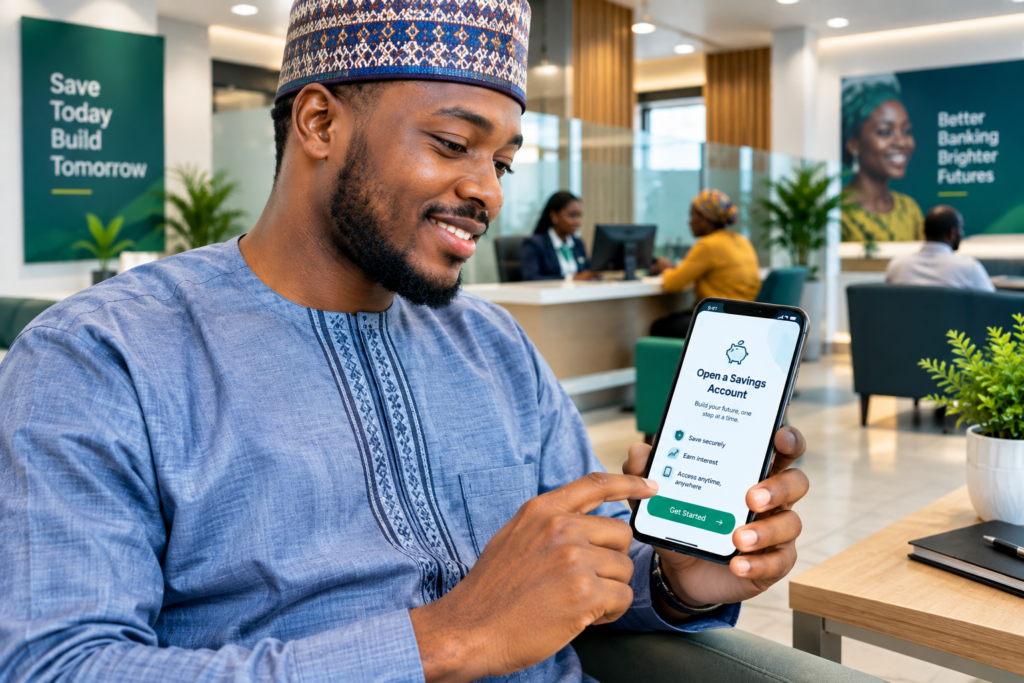
Some Nigerian banks allow eligible customers to begin or complete account opening digitally.
The process may involve downloading the bank’s official application, entering your personal information and completing identity verification.
Only download banking applications from official and trusted sources.
Avoid applications or websites that request your banking information without being clearly associated with the financial institution.
Method 3: USSD or Other Digital Channels
Some financial institutions provide account-opening options through USSD or other digital channels.
Availability and requirements vary.
If you use USSD, make sure you are using the official code provided by the bank or financial institution.
How Much Money Do You Need to Open a Savings Account?
There is no single amount that applies to every savings account in Nigeria.
Some accounts may allow customers to open an account with little or no initial deposit, while other account types may have different requirements.
Before opening an account, check:
- Minimum opening deposit
- Minimum balance requirements
- Transfer charges
- ATM-related charges
- Card fees
- SMS or notification charges
- Other applicable fees
Do not assume that every account offered by the same bank has identical conditions.
What Should You Consider Before Choosing a Savings Account?
Choosing the right account is more important than simply choosing a popular bank.
Consider the following factors.
1. Account Charges
Check the fees associated with the account.
A low-cost account may be more suitable if you make frequent transactions.
2. Ease of Access
Consider how easily you can access your money.
Look at the availability of:
- ATMs
- Mobile banking
- Internet banking
- USSD
- Branches
- Transfer services
3. Savings Features
Some accounts may provide features designed to encourage regular saving.
If your goal is to save consistently, look for features that make saving easier without creating unnecessary costs.
4. Transaction Limits
Some account types may have transaction or balance restrictions depending on their classification and verification level.
Understand these limits before choosing an account.
5. Customer Support
Good customer support can be important when you have problems with transactions, cards, transfers or account access.
6. Security
Choose a regulated financial institution and protect your banking information.
Never share sensitive information such as your PIN or one-time authentication codes with another person.
Savings Account vs Current Account
A savings account and a current account serve different purposes.
| Feature | Savings Account | Current Account |
|---|---|---|
| Main purpose | Saving and personal banking | Frequent transactions and business use |
| Typical users | Individuals and savers | Businesses and frequent transactors |
| Access channels | Mobile, ATM, USSD, branch | Mobile, ATM, USSD, branch |
| Transaction activity | Usually moderate | Often higher |
| Account features | Depends on account type | Depends on account type |
The best choice depends on how you intend to use the account.
For a detailed comparison, see our related guide:
Internal Link: Savings Account vs Current Account in Nigeria: What’s the Difference?
Can You Have More Than One Savings Account?
Yes, a person may have multiple bank accounts, subject to applicable banking rules and the policies of the financial institutions involved.
Having more than one account can be useful if you want to separate your money for different purposes.
For example:
- Emergency savings
- Daily expenses
- School expenses
- Business-related money
- Long-term savings
However, having multiple accounts can also make your finances harder to manage if you do not keep proper records.
How to Use a Savings Account Effectively
Opening an account is only the first step. You also need a practical saving strategy.
Set a Savings Target
Decide how much you want to save and what the money is for.
For example, you could create targets for:
- Emergency expenses
- Education
- Rent
- Business capital
- Major purchases
Save Regularly
Consistency is often more useful than waiting until you have a large amount of money.
You could choose a weekly or monthly saving target based on your income.
Track Your Spending
Understanding where your money goes can help you identify expenses that can be reduced.
Avoid Unnecessary Withdrawals
If you repeatedly withdraw money from your savings for non-essential expenses, reaching your target may become difficult.
Common Mistakes to Avoid When Opening a Savings Account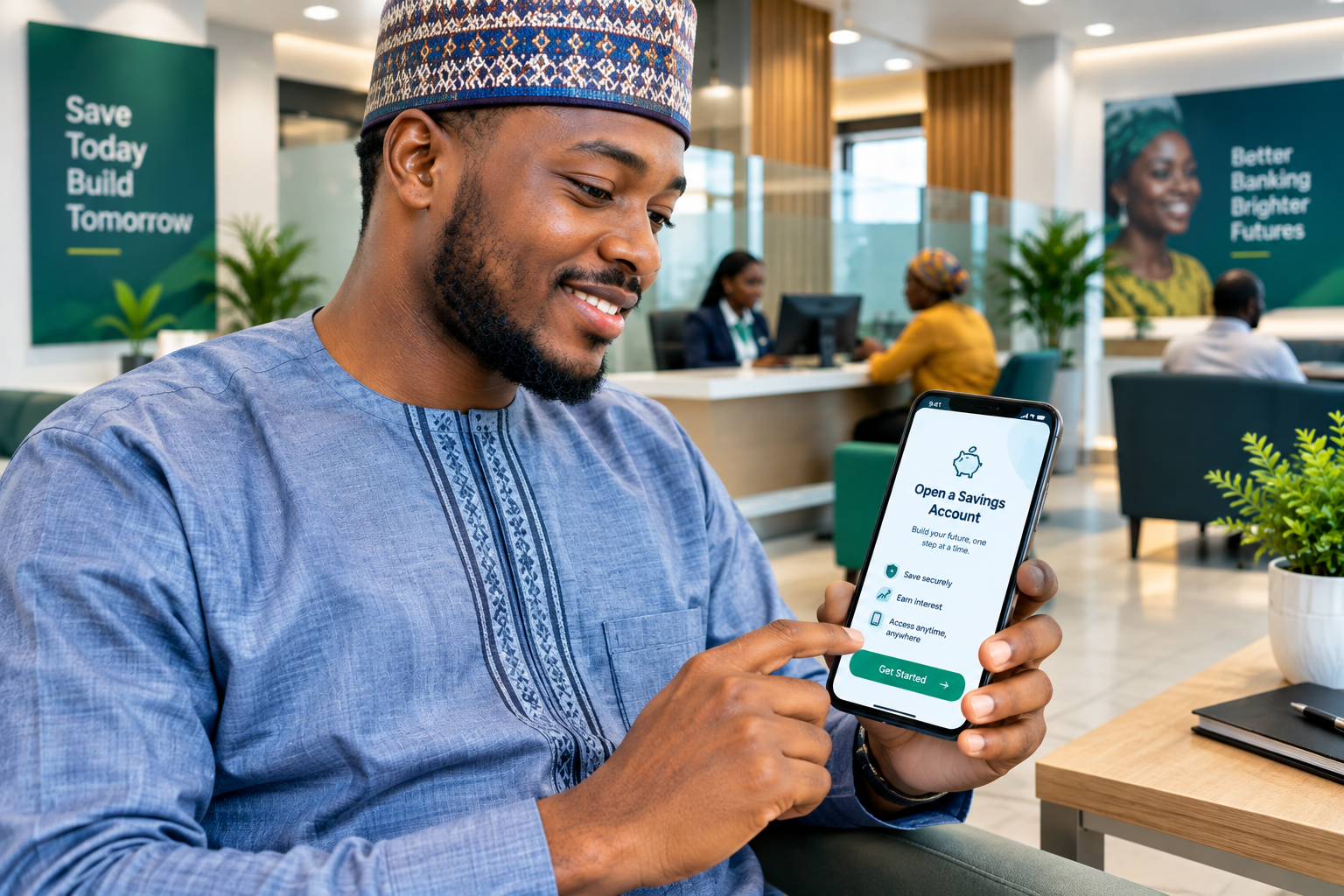
Mistake 1: Choosing an Account Without Checking the Conditions
Do not open an account simply because you recognise the bank’s name.
Read the account information and understand the applicable charges and restrictions.
Mistake 2: Ignoring Transaction Charges
Small charges can add up if you make many transactions.
Check the current fee structure before choosing an account.
Mistake 3: Sharing Your PIN
Your PIN should remain confidential.
Bank staff should not need you to disclose your PIN to them.
Mistake 4: Sharing OTPs
Never disclose one-time passwords or authentication codes to someone claiming to be calling from your bank.
If you receive a suspicious request, contact the bank through its official customer-service channel.
Mistake 5: Using Unofficial Banking Applications
Download banking applications from official sources and verify that you are using the correct institution’s application.
Frequently Asked Questions
Can I open a savings account online in Nigeria?
Some banks and financial institutions provide digital account-opening options. Availability and requirements vary, so check the official platform of the institution you choose.
Do I need BVN to open a savings account?
BVN requirements depend on the account and current banking regulations. Confirm the latest requirements with your chosen financial institution.
Do I need NIN to open a bank account?
Identity-verification requirements can change and may depend on the account type. Check the latest requirements directly with the bank.
Can a student open a savings account?
Some financial institutions offer accounts designed for students or young customers. Eligibility requirements vary.
Can I open a savings account without visiting a bank branch?
Some banks allow eligible customers to open accounts through digital channels. Others may require additional verification or a branch visit.
How much should I save every month?
There is no universal amount that works for everyone. Choose an amount that fits your income and regular expenses, then try to maintain the habit consistently.
Is money in a savings account completely risk-free?
A savings account is designed to provide a secure way to hold money, but customers should still understand the institution’s terms, applicable protections and risks. Always use regulated financial institutions and follow basic account-security practices.
Final Thoughts
Opening a savings account in Nigeria can be a useful step toward better money management. Before choosing an account, compare its requirements, charges, accessibility, transaction limits and available services.
Most importantly, choose an account that matches the way you actually intend to use your money.
Do not focus only on promotional offers. Read the account terms and confirm current information directly with the financial institution before making a decision.
Related Articles
Disclaimer
This article is provided for general educational and informational purposes only. Banking requirements, fees, account limits, products and regulations may change over time. Naija Money Guide does not provide personalised financial advice or guarantee the terms of any bank or financial institution. Always confirm current information directly with the relevant financial institution or an appropriate official source before making financial decisions.