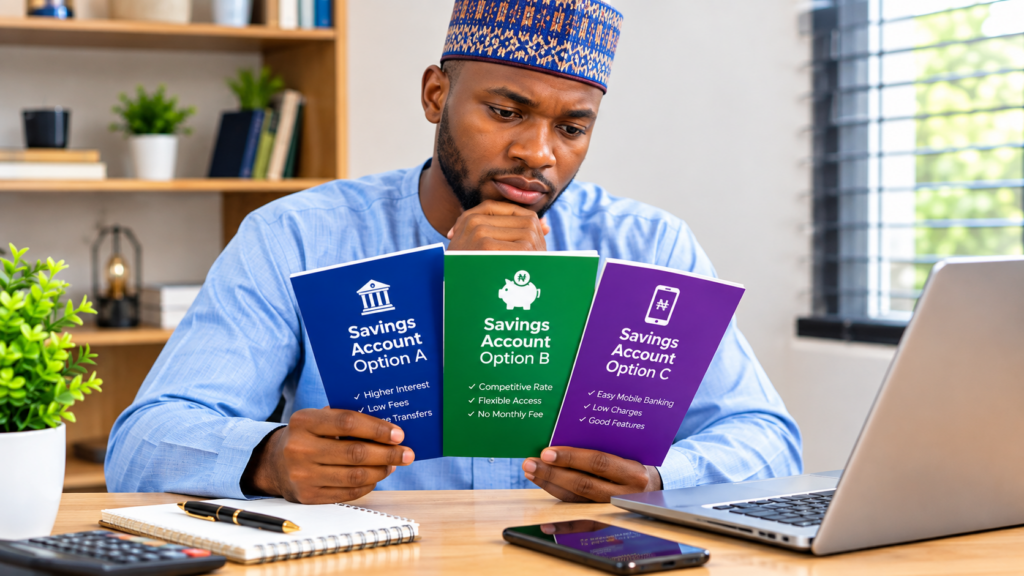
Best savings account in Nigeria
Choosing a savings account in Nigeria may seem simple, but different banks and financial institutions offer accounts with different features, charges, requirements and limitations.
The account that works well for one person may not necessarily be the best option for another. A student, salary earner, business owner and someone saving for an emergency fund may have completely different banking needs.
Before opening a savings account, it is therefore important to understand what you are actually getting.
This guide explains 7 important things to check before choosing a savings account in Nigeria, including fees, accessibility, transaction limits, digital banking features and security.
Important: Banking products, fees, requirements and transaction limits can change. Always verify the latest information directly with the relevant financial institution before opening an account.
1. Check the Account Charges
One of the first things to check is how much the account may cost you to maintain and use.
Depending on the account and institution, possible charges may relate to:
- ATM services
- Transfers
- Debit cards
- SMS or transaction notifications
- Certain cash transactions
- Other banking services
A bank may appear inexpensive at first, but frequent transaction charges can become significant over time.
What to do
Before opening the account, review the bank’s current fee information and consider how frequently you expect to make transactions.
If you mainly want an account for saving money and making occasional transfers, an account designed for frequent transactions may not be necessary.
2. Consider How Easily You Can Access Your Money
A savings account is more useful when you can conveniently access your money when necessary.
Check whether the financial institution provides convenient access through:
- Mobile banking
- Internet banking
- USSD
- ATMs
- Branches
- Bank transfers
If you live in an area where branches or ATMs are limited, strong digital banking access may be particularly important.
However, convenience should not come at the expense of security.
Always use official banking applications and websites when accessing your account.
3. Understand the Account’s Transaction Limits
Some savings accounts may have transaction, balance or other restrictions depending on the account category and applicable requirements.
These restrictions can affect how you use the account.
For example, someone who receives regular income and makes frequent transfers may need a different account arrangement from someone who simply deposits money periodically and rarely withdraws it.
Before opening an account, ask:
- Are there transaction limits?
- Are there balance restrictions?
- Are there limits on withdrawals?
- What happens if I exceed a particular limit?
- Will additional verification be required?
Understanding these conditions in advance can prevent unexpected problems later.
4. Check the Available Mobile Banking Features
Digital banking has become an important part of everyday money management in Nigeria.
A good banking application may allow you to perform activities such as:
- Checking your balance
- Sending money
- Paying bills
- Managing cards
- Reviewing transactions
- Receiving security notifications
But do not choose an account based only on how attractive an application looks.
Consider whether the digital service is reliable, easy to use and protected with appropriate security features.
You should also check whether the bank provides official customer support when you experience problems.
5. Consider Your Main Reason for Saving
Before choosing an account, ask yourself:
Why am I opening this account?
Your answer can help determine which type of savings account is appropriate.
Emergency savings
If the account is primarily for emergencies, easy access to your money may be important.
Regular personal savings
If you want to save part of your income every month, look for an account that makes regular deposits convenient.
School or education savings
You may prefer an account that helps you keep education-related money separate from your everyday spending.
Business-related savings
If the money will be used heavily for business transactions, compare whether a savings account is actually appropriate for your expected activity.
For frequent business transactions, you may want to compare savings and current accounts before deciding.
Related article: Savings Account vs Current Account in Nigeria: What’s the Difference?
6. Look at Security Features
Security should be one of your highest priorities.
Before opening an account, understand the security features available to protect your money and account information.
These may include:
- Transaction notifications
- Login protection
- One-time authentication codes
- Card controls
- Account alerts
- Fraud monitoring
- Customer support for suspicious transactions
You also have an important role to play in protecting your account.
Never share your PIN
Your bank PIN should remain private.
Never share authentication codes
Do not disclose OTPs or other security codes to people who contact you unexpectedly.
Be careful with links
Avoid clicking suspicious links claiming to be from your bank.
If you receive a questionable message, contact the financial institution through its official channel rather than using contact details provided in the suspicious message.
7. Compare the Account With Other Options
Do not feel pressured to open the first account you see.
Take a few minutes to compare different options.
You can create a simple comparison like this:
| Feature | Account A | Account B | Account C |
|---|---|---|---|
| Account charges | Check current fees | Check current fees | Check current fees |
| Mobile banking | Available? | Available? | Available? |
| USSD | Available? | Available? | Available? |
| ATM access | Check availability | Check availability | Check availability |
| Transaction limits | Check terms | Check terms | Check terms |
| Savings features | Compare | Compare | Compare |
| Customer support | Compare | Compare | Compare |
The purpose is not necessarily to find the bank with the lowest fee.
Instead, look for the account that provides the best overall fit for your needs.
What Is the Best Savings Account for You?
There is no single savings account that is automatically the best for everyone.
The right choice depends on factors such as:
- Your income
- How often you transact
- Your savings goals
- How often you need to withdraw money
- Where you live
- Your preferred banking method
- Applicable charges
- Account requirements
For example, someone who rarely visits a bank branch may place more importance on reliable mobile banking, while someone who frequently handles cash may consider ATM and branch availability more important.
Should You Choose a Savings Account Based on Interest?
Interest or returns can be one factor to consider, but it should not be the only factor.
When comparing accounts, also consider:
- Fees
- Conditions attached to any advertised rate
- Minimum balances
- Withdrawal conditions
- Account restrictions
- How the rate is calculated
- Whether the advertised rate applies to your specific account
Always read the terms rather than relying solely on promotional advertisements.
Common Mistakes People Make When Choosing a Savings Account
Choosing Only Because Friends Use the Bank
A bank that works well for someone else may not meet your own needs.
Ignoring Fees
Small transaction charges can accumulate when you make many transactions.
Not Reading the Account Terms
Always understand the major conditions before opening an account.
Giving Banking Details to Strangers
Never disclose your PIN, password or authentication codes to another person.
Keeping All Your Money in an Account Without a Plan
A savings account can help you organise money, but you should still have a clear financial goal and budget.
How to Make Your Savings Account More Useful
Once you have chosen an account, develop a simple savings routine.
Set a monthly target
Choose an amount that fits your income and expenses.
Automate savings when possible
If your bank provides an appropriate automated savings feature, it may help you save consistently.
Separate savings from spending
Keeping money intended for savings separate from everyday spending can make it easier to stay disciplined.
Review your account periodically
Check your transactions and account charges regularly.
If your needs change, compare whether your current account is still suitable.
Frequently Asked Questions
Which savings account is best in Nigeria?
There is no single best account for everyone. Compare fees, accessibility, transaction limits, digital services, security and the account’s suitability for your personal needs.
Can I have savings accounts with different banks?
Yes, eligible customers can generally maintain accounts with different financial institutions, subject to applicable rules and the institutions’ requirements.
Should I choose a bank with the lowest charges?
Low charges are useful, but they should not be your only consideration. Accessibility, security, reliability and account features are also important.
Is mobile banking important?
For many customers, yes. Mobile banking can make it easier to check balances, transfer money and manage account services without visiting a branch.
How often should I review my savings account?
You should regularly review your transactions and charges. It is also sensible to review your account when your financial needs change.
Final Thoughts
Choosing a savings account should be based on more than the name of the bank.
Before opening an account, compare the charges, accessibility, transaction limits, digital services, security features and conditions.
Most importantly, choose an account that matches your financial goals and how you actually intend to use it.
Banking products and requirements can change, so confirm the latest information directly with the relevant financial institution before making your decision.
Related Articles
- How to Open a Savings Account in Nigeria: Requirements, Steps and Tip
- Savings Account vs Current Account in Nigeria: What’s the Difference?
Disclaimer
This article is for general educational and informational purposes only. Banking products, fees, requirements, limits and regulations may change. Naija Money Guide does not provide personalised financial advice or guarantee the terms offered by any bank or financial institution. Always verify current information with the relevant institution or appropriate official source before making financial decisions.