Last reviewed: October 2026
Loan apps have made it easier for Nigerians to apply for short-term credit using a smartphone. However, not every lending app or online lending platform should automatically be treated as a legitimate lender.
Before borrowing, it is important to check who operates the app, whether the company appears on the appropriate regulatory register, what the loan actually costs, what information the app requests and how complaints can be handled.
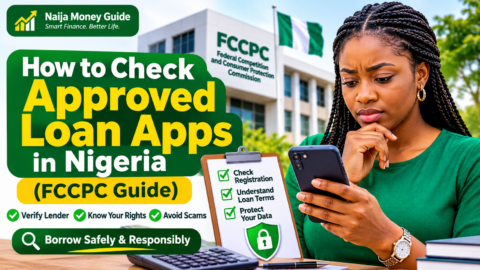
The Federal Competition and Consumer Protection Commission (FCCPC) maintains information on digital money lenders and has introduced the Digital, Electronic, Online and Non-Traditional Consumer Lending Regulations, 2025. The Commission has also taken enforcement action against digital lenders that did not regularise their status.
This guide explains practical checks you can perform before accepting a loan.
1. Check the lender’s current regulatory status
This should be one of your first checks.
The FCCPC publishes information about digital money lenders, including approved/registered operators, watchlist entries and delisted apps. Its published register can change, so do not rely on an old blog post or social-media list to determine whether an app is currently authorised.
For a digital lender, search the official FCCPC information and check:
- The company name
- The exact app name
- Whether the app is listed
- The status shown by the regulator
- Whether the information is current
Do not assume that two apps with similar names belong to the same company.
Official FCCPC digital-lending information:
FCCPC Digital Money Lenders registration and approval information
2. Check whether the lender is regulated by the appropriate authority
Not every financial service is regulated in exactly the same way.
Some lenders may fall under the regulatory framework of the FCCPC, while institutions such as banks and microfinance banks are subject to Central Bank of Nigeria (CBN) regulation.
The CBN provides information and regulatory services for financial institutions operating within its supervisory framework.
Therefore, identify what type of financial institution you are dealing with before deciding which regulatory register to check.
For example, if an app claims to be operated by a bank or microfinance bank, verify the underlying institution rather than relying only on the app’s marketing.
3. Verify the actual company behind the app
Look beyond the app’s name.
A credible lending platform should provide identifiable information about the business operating it, such as:
- Registered company name
- Business contact information
- Physical or registered address where applicable
- Customer-support channels
- Terms and conditions
- Privacy information
- Information about the lender or service provider
Be cautious when an app provides almost no information about who is responsible for the lending service.
An attractive app design is not evidence of regulatory compliance.
4. Don’t judge legitimacy by the app-store listing alone
Finding an app on Google Play or another app marketplace is not the same thing as verifying its regulatory status.
Before borrowing, conduct an independent check using the relevant regulator’s information.
This is particularly important because the FCCPC’s current published information distinguishes between approved/registered operators, watchlist entries and delisted apps.
A good rule is:
App store → identify the company → check the regulator → examine the loan terms.
5. Calculate the total cost of the loan
Never focus only on the amount you receive.
Before accepting a loan, determine:
Total repayment = principal + interest + applicable fees and charges
For example, if you borrow ₦100,000 and the total amount payable is ₦120,000, the financing cost is ₦20,000.
Also check whether the lender charges:
- Interest
- Processing fees
- Service fees
- Late-payment charges
- Other disclosed charges
The important figure is the total amount you are expected to repay, not just the advertised loan amount.
6. Check the repayment period carefully
A loan can look affordable until you examine the repayment deadline.
Before accepting it, check:
- Disbursement date
- First repayment date
- Final repayment date
- Number of instalments
- Instalment amount
- Late-payment consequences
For example, a ₦100,000 loan may appear manageable, but a very short repayment period could create significant pressure on your monthly budget.
Only borrow an amount and repayment schedule that you can realistically afford.
7. Read the loan agreement before accepting
Do not accept a loan simply because the application process is quick.
Read the agreement or loan offer carefully.
Pay particular attention to:
- Amount disbursed
- Total repayment
- Interest or financing charge
- Fees
- Repayment dates
- Default consequences
- Cancellation or withdrawal provisions where applicable
- Data and privacy terms
If an important cost is unclear, seek clarification before accepting the loan.
8. Examine the app’s privacy and data permissions
Loan applications may require sensitive personal information during identity and credit assessment.
Before installing or using an app, examine the information it requests and its privacy policy.
Be particularly careful about requests for information that appear unrelated to providing or assessing the loan.
You should understand:
- What information is collected
- Why it is collected
- How it is used
- Whether it is shared with other parties
- How long it may be retained
- How you can contact the company about your data
Do not provide passwords, PINs or other authentication secrets to a lender.
The CBN itself warns users not to disclose PINs and passwords when handling financial complaints.
9. Be careful with aggressive collection practices
A lender should not be evaluated only by whether it gives you money quickly.
Consider how it handles customers who have repayment difficulties.
Warning signs can include:
- Threatening messages
- Harassment
- Intimidation
- Unreasonable pressure
- Contacting unrelated people inappropriately
- Misuse of personal information
The FCCPC has specifically stated that its digital-lending enforcement work is intended to protect consumers from abusive, deceptive or unlawful conduct.
Keep records of important communications if you have a dispute.
10. Check the company’s customer-support channels
Before borrowing, try to determine how you would contact the lender if something goes wrong.
Look for:
- Customer-service email
- Telephone number
- In-app support
- Physical or business address where applicable
- Complaint procedure
Do not assume that an app is trustworthy simply because it responds quickly during the application process.
The ability to obtain help after receiving the loan is equally important.
11. Be suspicious of unrealistic promises
Be careful with advertisements promising things such as:
- “Guaranteed approval”
- “No verification”
- “Everyone qualifies”
- “Instant millions for everyone”
- “No repayment required”
- “Pay a fee first and receive your loan”
Such statements should not be treated as proof of a genuine lending opportunity.
Never send money to an unknown person simply because they claim that an upfront payment is required to release a loan.
If you are unsure, stop the application and verify the company independently.
12. Know where to complain if something goes wrong
Keep your loan agreement, receipts, transaction records, emails, SMS messages and other relevant evidence.
If the lender is a financial institution regulated by the CBN, the CBN’s complaint process generally requires consumers to first complain to the institution and allow it an opportunity to resolve the issue before escalating to the CBN Consumer Protection Department.
For digital-lending regulatory matters, consumers can also consult the FCCPC’s current digital-lending information and complaint channels.
Official CBN complaint information:
CBN Complaints Management
Quick Checklist Before Using a Loan App
Before accepting a loan, ask yourself:
| Check | What to verify |
|---|---|
| Company | Who actually operates the service? |
| Regulation | Is the lender on the relevant current regulatory information? |
| App | Does the exact app match the listed company? |
| Cost | What is the total repayment? |
| Fees | Are all charges clearly disclosed? |
| Tenure | When must the loan be repaid? |
| Privacy | What personal information does the app collect? |
| Agreement | Have you read the loan terms? |
| Collection | What happens if repayment is late? |
| Support | How can you contact the lender? |
| Complaints | Where can you escalate a dispute? |
| Affordability | Can your budget comfortably handle repayment? |
What to Do If a Loan App Is Not on the Current Register
Do not automatically conclude that an app is fraudulent simply because you cannot find its name immediately.
First:
- Check the exact spelling of the company and app.
- Look for the lender’s underlying company name.
- Check the relevant regulatory source.
- Determine whether it operates under another licensed institution.
- Check whether its regulatory status has changed.
- Avoid providing sensitive information until you can establish who you are dealing with.
The FCCPC specifically advises consumers to exercise caution when dealing with digital lenders that do not appear on its current list of approved operators.
Legitimate Loan App vs Risky Loan App
| Feature | Better sign | Warning sign |
|---|---|---|
| Company identity | Clearly identified | Difficult to identify |
| Regulatory information | Verifiable | No verifiable information |
| Loan cost | Clearly explained | Important costs unclear |
| Repayment | Clear schedule | Vague deadline |
| Privacy | Clear privacy information | Excessive or unexplained data requests |
| Customer service | Accessible | No reliable support |
| Agreement | Available before acceptance | Important terms hidden |
| Complaints | Clear procedure | No complaint channel |
| Marketing | Realistic | Guaranteed or exaggerated promises |
| Data handling | Transparent | Threatening or abusive use of data |
Should You Borrow From a Loan App?
A loan app should not be judged solely by how quickly it approves an application.
Before borrowing, consider whether:
- You actually need the loan.
- You understand the total repayment.
- You can meet the repayment dates.
- You have checked the lender’s regulatory status.
- You understand the privacy terms.
- You know what happens if you miss a payment.
If the repayment would put your essential expenses at risk, consider whether borrowing is appropriate before proceeding.
Frequently Asked Questions
How can I check if a loan app is legitimate in Nigeria?
Start by identifying the company operating the app and checking the current information published by the relevant Nigerian regulator. For digital money lenders, the FCCPC publishes digital-lending registration and approval information.
Is every loan app on Google Play legitimate?
No. An app-store listing alone should not be treated as proof that a lender has the appropriate regulatory status.
What should I check before taking a loan?
Check the lender, regulatory status, total repayment, fees, repayment period, loan agreement, privacy terms and complaint process.
Can a legitimate lender charge interest?
Loan costs can vary by lender and product. What matters is that the applicable costs and repayment obligations are clearly disclosed before you accept the loan.
What if I cannot repay my loan on time?
Check the loan agreement for the consequences of late repayment and contact the lender as soon as possible. Do not ignore the lender or assume that the problem will disappear.
Where can I verify digital lenders in Nigeria?
The FCCPC maintains a published digital-money-lending information page containing current lists and categories of digital lending operators.
Can I complain about a financial institution?
Yes. For financial institutions within the CBN’s regulatory scope, the CBN provides a consumer complaint process. Customers are generally expected to complain to the institution first before escalating an unresolved complaint to the CBN.
Final Takeaway
Finding a loan app is easy. Finding out whether the lender is appropriate to use requires more research.
Before accepting a loan, verify the company, check the relevant regulatory information, calculate the total repayment, read the agreement and understand how your personal information will be handled.
Most importantly, do not borrow simply because an app offers you a high limit. The right loan amount is one that you can realistically repay without putting essential expenses under unnecessary pressure.
Naija Money Guide does not guarantee the legitimacy, approval, pricing or availability of any particular loan app. Regulatory status and loan terms can change, so readers should verify current information directly with the relevant regulator and lender before making financial decisions.
Disclaimer
This article is provided for general educational and informational purposes only. It is not financial, legal or investment advice, and Naija Money Guide is not a lender or financial institution. Loan availability, interest, fees, eligibility requirements, repayment terms and regulatory status may change. Always verify current information with the lender and relevant Nigerian regulatory authorities before borrowing.