Introduction
Have you ever applied for a loan and wondered why the lender did not approve your application? Or perhaps you have repaid a loan but are worried that the repayment may not have been properly recorded.
These are reasonable concerns.
When you borrow money from a bank or another lender, information about your borrowing and repayment history may become part of your credit record. Lenders can use credit information, alongside other factors, when assessing whether to approve a loan.
The problem is that many people do not check their credit records until they need another loan. By then, an incorrect outstanding balance, an unfamiliar loan or a payment recorded as late could become an unexpected concern.
The good news is that you can take steps to understand your credit history and request corrections when information is inaccurate.
In this guide, you will learn how to check your credit report in Nigeria, where to request it, what to look for, how to dispute incorrect information and how to protect yourself from credit-related scams.
You do not need to be a financial expert to get started. You simply need to know where to look and what to do next.
What Is a Credit Report?
A credit report is a record of credit-related information about an individual or business.
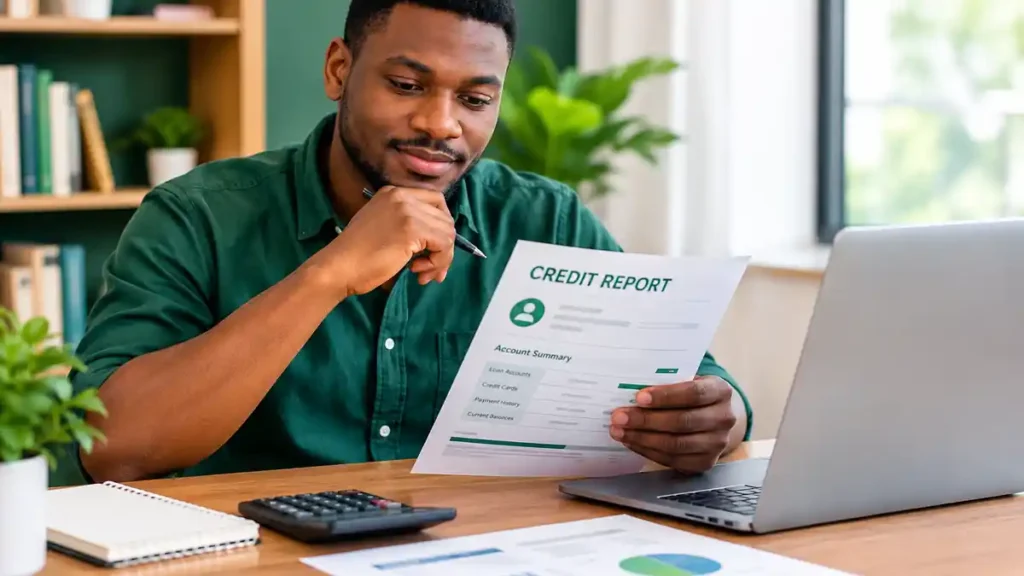
Depending on the information available to a credit bureau, it may contain details about loans you have taken, your repayment history, outstanding balances and the status of your credit facilities.
For example, imagine you borrowed ₦100,000 from a lender and repaid the loan according to the agreed terms. Your credit information may show the facility and the repayment information reported by the lender.
Now imagine that you repaid the loan but the lender’s records still show an outstanding balance. If that information is reported incorrectly, it could be worth investigating and requesting a correction.
Credit reports are used to help lenders assess credit applications. However, each lender has its own assessment process, and a credit report alone does not determine every loan decision.
Is a Credit Report the Same as a Credit Score?
No. The two are related, but they are not identical.
| Credit report | Credit score |
|---|---|
| Contains credit-related information about you | A numerical or other scored assessment of credit risk |
| May show loans, balances and repayment history | Summarises certain information using a scoring model |
| Helps you identify missing or inaccurate records | May help lenders assess an application |
| Can contain errors that need correction | May be affected by inaccurate underlying information |
The exact information provided depends on the credit bureau and the report you request. Not every report includes the same scoring features.
Important: Do not assume that every Nigerian lender uses one universal credit score or one identical scoring system.
Why Should You Check Your Credit Report in Nigeria?
Checking your credit report can be useful even when you are not planning to borrow money immediately.
Here are five reasons to consider it.
1. To check whether your loan repayment was recorded correctly
Suppose you finished repaying a loan several months ago. You expect the account to show the correct repayment status, but you are unsure whether the lender has updated its records.
Reviewing your report may help you identify information that needs clarification.
Keep your receipts, transaction references and loan-closure documents in case you need to support a correction request.
2. To identify a loan you do not recognise
Imagine seeing a loan account in your report that you do not remember opening.
Do not immediately assume that someone has committed fraud. First, check the lender’s name, account details and dates, and consider whether the entry could relate to an old facility or another product.
If you still do not recognise it, contact the credit bureau and the named lender through their official channels.
You should not ignore an unfamiliar entry.
3. To prepare before applying for credit
If you are planning to apply for a personal loan, business loan or another credit facility, checking your report beforehand can help you identify potential issues.
You may discover an incorrect balance or an old account whose status needs clarification.
Correcting inaccurate information does not guarantee approval, but it gives you an opportunity to address problems before submitting another application.
4. To check your personal information
Credit records may contain identifying details used to match your information with financial records.
Check whether your name and other identifying details are accurate. If you find information belonging to another person, report it promptly.
This is especially important when two people have similar names or when your personal details have changed.
5. To monitor your financial records
Your financial life changes over time. You may repay a loan, close an account or take out a new credit facility.
Reviewing your credit information periodically can help you understand what is being reported about you and spot information that deserves attention.
How to Check Your Credit Report in Nigeria
Nigeria has credit bureaus that provide credit information services. The Credit Bureau Association of Nigeria (CBAN) lists credit bureau members and provides information about accessing credit reports.
You can start by visiting the association’s website:
Official starting point: https://cban.ng/
Use the association’s information to identify a provider and confirm the current process for requesting your personal report.
Here is a practical step-by-step approach.
Step 1: Choose a credit bureau
Start with a credit bureau that provides consumer credit reports.
Examples include:
- CRC Credit Bureau
- CreditRegistry
- FirstCentral Credit Bureau
You can use their official websites to learn about their services, report options and request procedures.
Do not rely on an unofficial agent who claims to have access to your complete credit history.
Step 2: Visit the official website
Type the provider’s website address into your browser rather than automatically clicking an unfamiliar link sent through WhatsApp or social media.
Check that the website belongs to the provider you intended to contact.
For example:
- CRC Credit Bureau: https://www.crccreditbureau.com/
- CreditRegistry: https://www.creditregistry.ng/
- FirstCentral Credit Bureau: https://firstcentralcreditbureau.com/
These providers publish information about their credit-report services. Their procedures and available products may differ.
Step 3: Find the consumer credit-report service
Look for a section that refers to consumer reports, personal credit reports, self-enquiry or credit-information requests.
Make sure you select a report intended for an individual if you want to check your personal credit history.
A business credit report may be designed for a company rather than an individual.
Step 4: Follow the identity-verification instructions
The provider may ask for personal details to identify the correct record and verify your identity.
Depending on the service, these details may include your name, contact information, date of birth or other identifying information.
Some providers may request your Bank Verification Number (BVN) as part of their verification process.
Before supplying sensitive information, confirm that you are using the provider’s genuine website and understand why the information is required.
Never send your banking password, ATM PIN or one-time password (OTP) to an individual claiming to help you obtain a credit report.
Step 5: Check the price before submitting your request
Do not assume that every credit report is free or that every provider charges the same amount.
The Credit Bureau Association of Nigeria advertises access to one free credit report per year. However, you should confirm the current eligibility conditions and the process for obtaining it directly with the relevant bureau.
Other report types or additional services may attract fees.
For example, FirstCentral publishes a consumer basic-report request page with a listed price. CRC also describes a consumer self-enquiry report and a free-report option subject to its stated conditions.
Always verify the current price and terms before paying.
Step 6: Submit your request securely
Complete the provider’s required steps and retain any reference number or confirmation you receive.
Depending on the service, the report may be provided electronically or through another specified delivery method.
If the process fails, contact the provider through its official support channel rather than submitting your sensitive information to a stranger.
Step 7: Read the report carefully
When your report becomes available, review each section instead of looking only for a credit score.
Check the accounts, balances, repayment information and personal details listed in the report.
If something looks unfamiliar or incorrect, write down the specific entry and gather any evidence that can help explain the problem.
What Should You Look for in Your Credit Report?
You do not need to understand every technical term immediately. Start with the information that matters most to your circumstances.
Personal information
Check your name and the other identifying details included in the report.
If your information has been mixed with another person’s record, ask the bureau to investigate.
Loan accounts
Review the lenders and credit facilities listed.
Ask yourself:
- Do I recognise this lender?
- Did I actually apply for this loan?
- Does the account appear to belong to me?
- Are the dates consistent with my records?
An unfamiliar entry deserves investigation, but it should not automatically be treated as proof of fraud.
Outstanding balances
Compare the reported balance with your own records.
If you believe a loan has been fully repaid but the report still shows money outstanding, collect your payment receipts, transaction references and any confirmation from the lender.
Remember that the reported amount and the amount you believe you owe may differ for several reasons, including timing or an unresolved account adjustment. Ask for clarification before drawing a conclusion.
Repayment history
Check whether payments appear to have been recorded accurately.
If you paid on time but a payment is marked late, gather evidence showing the transaction date and any relevant repayment confirmation.
Account status
Look at whether the account is described as active, outstanding, closed, settled or another status.
The terminology may vary by provider. If you do not understand a label, ask the bureau to explain it.
Do not assume that an account is incorrect simply because the wording differs from what you expected.
What If Your Credit Report Contains an Error?
Finding a possible error can be frustrating, particularly if you have already settled the loan involved.
The sensible approach is to document the problem and contact the organisations responsible for the information.
Here is how to proceed.
Step 1: Identify the exact error
Be specific.
Instead of saying, “My credit report is wrong,” explain which entry is incorrect.
For example:
- A loan is shown as outstanding even though you repaid it.
- A payment is recorded as late despite evidence that it was made on time.
- An account appears that you do not recognise.
- Your personal details have been matched to another person’s information.
- A balance does not match the lender’s records.
The more clearly you identify the issue, the easier it is to explain what needs investigating.
Step 2: Gather supporting documents
Depending on the problem, useful evidence may include:
- Loan repayment receipts
- Bank transaction records
- Loan-closure confirmation
- Relevant statements from the lender
- Your credit-report reference number
- Identification documents requested through a secure process
- Relevant correspondence with the lender
Keep copies of the documents you submit.
Do not send more personal information than is necessary to investigate the issue.
Step 3: Contact the credit bureau
Use the bureau’s official customer-support or dispute process.
Explain the error and provide the relevant account details and evidence.
Ask for confirmation that your complaint has been received and whether additional information is needed.
Keep a record of your correspondence and any case or reference number.
Step 4: Contact the lender when necessary
If the error concerns a loan balance or repayment status, the lender may need to review its own records.
For example, if you repaid a loan but the bureau shows an outstanding balance, the lender may need to confirm the correct status and provide updated information.
CreditRegistry explains in its FAQs that credit bureaus maintain credit information supplied by information providers and provide processes for addressing data errors.
You can read its guidance here:
The exact process will depend on the provider and the nature of the dispute.
Step 5: Follow up until you receive a response
Keep your complaint reference number and any supporting evidence in a safe place.
If you do not receive a satisfactory response, follow the bureau’s escalation process and ask which organisation is responsible for resolving the issue.
Do not assume that sending one email means the correction has been completed.
Step 6: Check the result
Once you receive confirmation that the matter has been investigated, check the relevant record again where the service allows you to do so.
If the problem remains unresolved, request an explanation and ask about the next available complaint or escalation route.
Important: A dispute is a request for an investigation, not a guarantee that the entry will be removed. Accurate negative information is not automatically deleted simply because you disagree with it.
Can You Get a Free Credit Report in Nigeria?
You may be able to obtain a free credit report through a participating credit bureau, subject to the applicable conditions.
The Credit Bureau Association of Nigeria advertises one free report per year. Its website provides a starting point for finding member bureaus and accessing report services.
Visit:
CRC Credit Bureau also describes a free-report option on its consumer self-enquiry page:
https://www.crccreditbureau.com/products/crc-self-enquiry/
Check the current eligibility rules, promotional terms and identity-verification requirements before proceeding.
If a website claims that you must pay an agent to unlock a government-approved credit score, verify that claim directly with the relevant credit bureau before sending money.
Does Checking Your Credit Report Reduce Your Chances of Getting a Loan?
Checking your own credit report is different from submitting a loan application.
Reviewing your personal information is intended to help you understand what is recorded about you. A lender’s credit enquiry is a separate activity.
The precise treatment of enquiries depends on the credit bureau, the reporting system and the relevant lender.
Do not avoid checking your report simply because you fear that reviewing your own records will automatically harm your credit standing. Confirm any questions about enquiries directly with the provider.
How Can You Build a Better Credit History?
There is no instant trick that guarantees a good credit record. The practical approach is to manage borrowing responsibly and make sure the information reported about you is accurate.
Pay according to the agreed repayment terms
Before accepting a loan, make sure you understand the due dates and the repayment amount.
Set reminders if necessary, and retain evidence of your payments.
Borrow within your repayment capacity
Do not judge a loan only by the amount being offered.
Consider your income, essential expenses, other debts and the full repayment obligation.
A loan that is too expensive for your budget can create financial pressure.
Contact the lender if you anticipate difficulty
If you expect to miss a payment, contact the lender through its official channels and ask what options may be available.
Do not assume that ignoring the situation will make it disappear.
Check your records periodically
Review your credit information from time to time, particularly after settling a loan or resolving a dispute.
This helps you notice potential problems earlier.
Avoid unnecessary loan applications
Apply for credit when you have a genuine need and understand the terms.
Multiple applications do not guarantee approval, and lenders may consider different aspects of your borrowing history.
Protect your identity
Keep your financial documents secure, be careful with unsolicited messages and investigate unfamiliar credit accounts promptly.
If you suspect identity theft, contact the relevant lender and credit bureau, and take appropriate steps to secure your accounts.
Common Mistakes to Avoid When Checking a Credit Report
A few mistakes can make the process more confusing than it needs to be.
1. Using an unofficial website. A website that looks professional is not automatically trustworthy. Start with recognised providers and official sources.
2. Assuming every report is free. Check the current conditions and prices before ordering a report.
3. Ignoring unfamiliar entries. Investigate accounts you do not recognise rather than assuming they are harmless.
4. Expecting every error to disappear immediately. Disputes may require investigation by the bureau and the lender. Ask about the process and follow up.
5. Believing that a good report guarantees loan approval. Lenders may consider income, affordability, existing obligations, eligibility and their own lending policies.
6. Paying someone who promises to erase accurate debt records. Be cautious of anyone guaranteeing that they can remove valid credit information in exchange for money.
7. Sharing your OTP or banking PIN. These credentials should remain private. Do not disclose them to an agent or someone claiming to work for a credit bureau.
Frequently Asked Questions
How do I check my credit report in Nigeria?
Start with the Credit Bureau Association of Nigeria at https://cban.ng/ to identify a credit bureau. Visit the provider’s official website, select its consumer-report service, follow its identity-verification instructions and check any applicable charges.
Which credit bureaus operate in Nigeria?
Examples include CRC Credit Bureau, CreditRegistry and FirstCentral Credit Bureau. Visit the Credit Bureau Association of Nigeria’s website to review its member information and verify the services available.
Can I check my credit report online?
Yes. Credit-report providers publish online information and services for requesting consumer reports. The exact registration, identity-verification and delivery process varies by provider.
Is a credit report free in Nigeria?
The Credit Bureau Association of Nigeria advertises one free credit report per year. Confirm the applicable conditions directly with the bureau. Other report types or services may attract charges.
How do I correct a wrong loan record?
Identify the specific error, gather supporting documents, contact the credit bureau through its official dispute process and contact the lender if its records need to be reviewed. Keep your complaint reference and follow up.
What should I do if a loan appears on my report that I never took?
Contact the credit bureau and the named lender through official channels. Request an investigation, retain copies of your complaint and secure your financial accounts if you suspect identity theft.
Does a bad credit report mean I can never get a loan?
Not necessarily. Lenders use different eligibility requirements and assessment methods. However, inaccurate information should be investigated, and outstanding obligations should be managed responsibly.
Will paying off a loan immediately remove it from my credit history?
Not necessarily. Repayment and removal are different issues. A repaid loan may remain in your credit history with an updated status, depending on the applicable reporting practices and retention rules. Confirm how the particular bureau handles settled accounts.
Can I improve my credit history without borrowing more money?
You can manage existing obligations responsibly, maintain accurate records, resolve errors and avoid taking on debt you cannot afford. You do not need to take out another loan simply to try to improve your credit history.
How often should I check my credit report?
There is no single interval that suits everyone. Consider checking periodically and after important events, such as settling a loan or resolving a credit-report dispute. Also follow any free-report eligibility conditions that apply.
Final Thoughts
Your credit report is worth understanding before you need it.
Whether you are preparing to apply for a loan, checking a repayment record or investigating an unfamiliar account, taking the time to review your credit information can help you identify issues that deserve attention.
Start with a recognised credit bureau, verify the current request process, protect your personal information and keep evidence of your financial transactions.
If you find an error, explain the problem clearly and follow the official dispute process. If the information is accurate, use it as an opportunity to review your borrowing and repayment habits.
You cannot control every lending decision, but you can take practical steps to understand your credit records and make more informed financial decisions.
Official Sources and Further Reading
- Credit Bureau Association of Nigeria: https://cban.ng/
- CRC Credit Bureau consumer self-enquiry: https://www.crccreditbureau.com/products/crc-self-enquiry/
- CreditRegistry frequently asked questions: https://www.creditregistry.ng/faqs/
- FirstCentral consumer basic-report request: https://firstcentralcreditbureau.com/request-for-consumer-basic-report/
- Central Bank of Nigeria consumer education: https://www.cbn.gov.ng/supervision/cpdconedu.html
Disclaimer
This article is for general educational and informational purposes only. It is not personalised financial, legal or credit-repair advice. Credit-report services, fees, procedures and eligibility conditions may change. Verify current information directly with the relevant credit bureau or lender before providing personal information or paying for a service. Naija Money Guide does not guarantee loan approval, credit-score improvement or the removal of any credit entry.