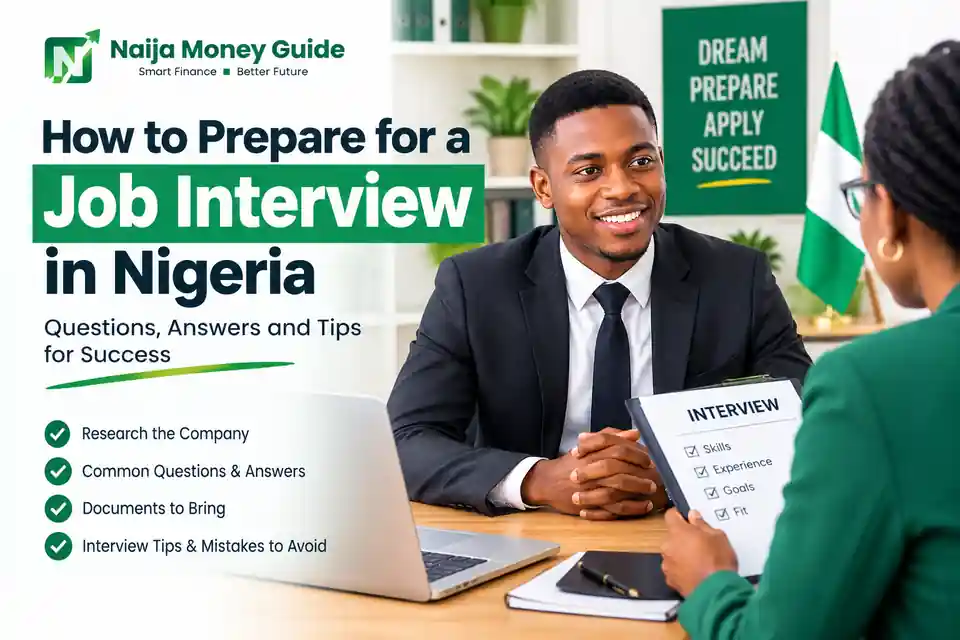
Imagine applying for several jobs and finally receiving a message inviting you for an interview. You are excited because you know the opportunity could help you earn an income, develop your skills and support your family.
But as the interview date approaches, you begin asking yourself questions.
What will the employer ask? How should you introduce yourself? What if you do not know the answer to a question? Should you discuss salary? And what can you do if you have little or no work experience?
These concerns are normal, particularly for fresh graduates and people applying for their first professional position.
The important thing to understand is that an interview is not simply a test of how confidently you speak. It is an opportunity for an employer to assess your qualifications, communication, judgement, relevant skills and suitability for a particular role.
You also have an opportunity to understand the employer, the responsibilities of the position and the conditions of employment.
You cannot control every part of the recruitment process, and no preparation method guarantees that you will be selected. However, preparing properly can help you communicate your abilities more clearly and avoid preventable mistakes.
This guide explains how to prepare for a job interview in Nigeria, with practical examples, common questions and sample answers you can adapt to your actual experience.
1. Research the Company Before the Interview
One of the most useful things you can do before an interview is learn about the organisation.
Some applicants focus entirely on memorising answers but know very little about the employer. This can make it difficult to explain why they want the job or how their skills relate to the organisation’s work.
Start with the employer’s official website.
Look for:
- The organisation’s main products or services.
- The industry in which it operates.
- Its main customers or the people it serves.
- The responsibilities of the advertised position.
- Its location and publicly available contact information.
- Any recent developments relevant to the role.
For a bank, you might research its financial services and customer-service operations. For a school, you might learn about its curriculum, teaching approach and student population. For a small business, you might investigate its products, customers and daily operations.
You do not need to memorise the entire website.
Your goal is to understand what the organisation does and why the position you applied for matters.
Read the job description carefully
The job description is especially important because it tells you what the employer expects.
Suppose a vacancy requests a customer-service officer who can communicate effectively, resolve complaints and use basic computer applications.
During preparation, think about examples that demonstrate these abilities.
You might describe a time when you helped someone solve a problem, organised information accurately or explained a difficult subject clearly.
If you have never held a formal job, you can use relevant examples from school, volunteering, practical training or legitimate personal projects.
Do not invent experience to impress the interviewer.
2. Prepare Your Answer to “Tell Me About Yourself”
This is one of the most familiar interview questions, but applicants sometimes make the mistake of giving a long account of their entire lives.
The interviewer usually wants a brief introduction that explains your background, relevant strengths and interest in the position.
A useful structure is:
- Your educational or professional background.
- Your relevant skills or experience.
- Why you are interested in the position.
Example for a fresh graduate
The following is a sample you should adapt to your actual qualifications:
“My name is [your name]. I studied [your course] at [your institution]. During my studies, I developed skills in communication, problem-solving and working with others. I am interested in this position because it relates to my abilities and offers an opportunity to contribute to the organisation while continuing to learn and develop professionally.”
This answer is more useful when you replace the general statements with genuine examples.
For instance, you could mention a research project, teaching practice, internship, relevant software skill or volunteer responsibility.
Example for an experienced applicant
“I have experience in [your field], particularly in [relevant responsibility]. In my previous role, I worked on [specific task or achievement]. I am interested in this position because my experience in [relevant skill] matches the responsibilities described in the job advertisement.”
Keep your introduction focused and natural.
You do not need to speak as though you are reading a speech. Practise the main points until you can explain them comfortably in your own words.
3. Common Job Interview Questions and Sample Answers
The questions below are examples of what an employer might ask. No interviewer is required to use this exact list, and your answers should reflect your own background.
Question 1: Why do you want this job?
The interviewer may want to understand whether you have considered the role and whether your interests align with its responsibilities.
Sample answer:
“I am interested in this position because the responsibilities match my skills and career interests. I have reviewed the job requirements and believe I can contribute through my ability to [relevant skill]. I am also interested in learning more about the organisation and supporting its objectives.”
Make the answer specific to the actual position.
Avoid saying only that you need money, even though earning an income may be an important reason for applying. Explain what you can contribute as well.
Question 2: What are your strengths?
Choose strengths that are relevant to the role and that you can demonstrate.
For example, an administrative assistant might emphasise organisation and attention to detail. A teacher might discuss explaining difficult concepts and managing a classroom. A sales applicant might mention listening to customers and communicating product information clearly.
Sample answer:
“One of my strengths is organisation. I try to plan my tasks, keep records accurately and complete important responsibilities on time. I believe this would be useful in a position that requires careful handling of information and deadlines.”
If possible, support your answer with a real example.
Question 3: What is your weakness?
This question does not require you to describe yourself negatively or invent a weakness.
Choose a genuine area you are working to improve, preferably one that does not make you unable to perform a core responsibility of the role.
Sample answer:
“I used to feel uncomfortable speaking in front of unfamiliar groups. I have been working on this by practising presentations and contributing more during group discussions. I am becoming more comfortable communicating my ideas.”
Only use this example if it is true for you.
The strongest answer explains what you are doing to improve rather than simply naming a weakness.
Question 4: Why should we hire you?
Use this opportunity to connect your qualifications and abilities with the employer’s requirements.
Sample answer:
“I believe I would be a suitable candidate because my background in [relevant area], together with my skills in [two relevant skills], matches important parts of this role. I am prepared to learn the organisation’s procedures, work responsibly and contribute to the team’s objectives.”
Avoid claiming that you are better than every other applicant. You probably do not know the other candidates’ qualifications.
Focus on what you can genuinely offer.
Question 5: Where do you see yourself in five years?
The employer may be interested in your professional goals and whether you have thought about developing your skills.
Sample answer:
“In five years, I hope to have developed stronger professional skills, gained meaningful experience and taken on greater responsibility in my field. I would like to build a career by performing well in my role and continuing to learn.”
Your answer should reflect your real ambitions.
You do not need to promise that you will remain with one employer forever. Instead, explain how you intend to develop professionally.
Question 6: How do you handle pressure?
Many jobs involve deadlines, competing priorities or unexpected problems.
Give an example of how you organise tasks and respond when things become difficult.
Sample answer:
“When I have several responsibilities, I identify which tasks are most urgent, break larger assignments into manageable steps and keep track of deadlines. If a problem may affect my ability to complete a task, I communicate early and seek guidance where necessary.”
If you have a genuine example from school, work or volunteering, include it.
Question 7: What salary do you expect?
Salary questions can be uncomfortable, especially when the employer has not disclosed a salary range.
Before the interview, research comparable roles, taking into account location, experience, qualifications, industry and the responsibilities involved.
Sample answer when you do not know the range:
“I would like to understand the responsibilities and overall compensation package for this position. I am open to discussing a reasonable salary based on the role, my qualifications and the organisation’s established range.”
If you already have a realistic salary expectation, you can state it and explain that you are open to discussing the overall package.
Do not invent another job offer or claim to earn a salary you do not receive.
Question 8: Do you have any questions for us?
When an interviewer invites questions, it is an opportunity to clarify the role.
Useful questions include:
- What would my main responsibilities be during the first three months?
- How will performance be evaluated?
- What training or induction is provided?
- What are the usual working hours?
- What are the next stages of the recruitment process?
Choose questions that have not already been answered.
Avoid asking questions simply to fill the silence.
4. How to Answer Interview Questions When You Have No Work Experience
Fresh graduates often worry that employers will reject them because they have never held a formal job.
The important thing is to distinguish between having no employment history and having no useful skills.
You may have developed relevant abilities through education, projects, practical training, volunteering or other responsibilities.
For example:
| Experience you have | Skills you may be able to demonstrate |
|---|---|
| Research project | Research, analysis and writing |
| Teaching practice | Communication, preparation and classroom management |
| Group assignment | Teamwork and coordination |
| Volunteering | Responsibility and service |
| Personal technical project | Problem-solving and practical ability |
| Student organisation | Planning and organisation |
Only claim skills that your actual experience supports.
Example for a fresh graduate
Suppose you are applying for an administrative position and have no previous office employment.
You could explain that your academic projects required you to organise information, meet deadlines and communicate with other people.
Then describe one specific example.
This is more persuasive than simply saying, “I am hardworking and can do anything.”
Employers may be willing to train an entry-level applicant, but they still need evidence of relevant abilities, reliability and willingness to learn.
5. Use the STAR Method to Explain Your Experience
The STAR method is a structured way to answer questions about situations you have handled.
STAR stands for:
- Situation: What was happening?
- Task: What were you responsible for?
- Action: What did you do?
- Result: What happened as a result?
Suppose an interviewer asks you to describe a time you solved a problem.
You could structure your answer like this:
Situation: During a group assignment, our team was struggling to organise the information needed for the presentation.
Task: I was responsible for helping the group prepare the material before the deadline.
Action: I divided the remaining work into smaller tasks, agreed on responsibilities with the other members and checked our progress.
Result: We completed the presentation in time and were able to review the material before submitting it.
This is a fictional illustration. Use your own experience and describe the result honestly.
The STAR method helps you move beyond vague statements and show how you behave in practical situations.
6. What Documents Should You Bring to an Interview in Nigeria?
The documents you need depend on the employer and the position.
Before the interview, read the invitation carefully and follow any instructions about identification, certificates or other documents.
Depending on the role, you may need:
- Copies of your updated CV.
- Educational certificates or statements of results.
- NYSC discharge or exemption documentation, where applicable.
- Relevant professional certificates.
- A valid form of identification, if requested.
- A portfolio or samples of your work, where relevant.
- The interview invitation or reference information.
- A notebook and pen.
Keep your documents organised in a folder.
If the employer requests original certificates for verification, bring them as instructed. Do not leave original documents with an unknown person without a clear and legitimate reason.
You should also avoid sending sensitive personal information to unofficial contacts merely because they claim to represent the employer.
7. How Should You Dress for a Job Interview?
Your appearance should be appropriate for the organisation and the nature of the job.
You do not necessarily need expensive clothing. The main goal is to appear clean, neat and professional.
Before leaving home:
- Choose clean, presentable clothing suitable for the workplace.
- Ensure your clothes are comfortable enough to sit and move in.
- Keep shoes clean and appropriate.
- Maintain good personal hygiene.
- Carry only the items you need.
- Avoid clothing or accessories that distract from the interview.
Expectations may differ between a formal corporate office, a school, a technical workplace and a creative organisation.
If you are unsure, choose a neat and reasonably formal outfit.
8. Plan Your Journey Before Interview Day
Arriving late can create unnecessary stress and may affect the impression you make.
If the interview is in person, confirm the location and plan how to reach it.
Consider:
- The exact address.
- Available transport.
- Traffic conditions.
- The expected journey time.
- The interviewer’s contact details.
- An alternative route if practical.
For an unfamiliar location, check the route in advance.
Aim to arrive with enough time to settle yourself, while avoiding entering the interview room excessively early without permission.
If an unavoidable problem delays you, contact the employer using the verified contact details provided in the invitation.
Do not wait until after the interview time to explain that you cannot arrive.
9. How to Prepare for an Online Interview
Some employers conduct interviews through video calls or other online platforms.
The same preparation principles apply, but you also need to check your equipment and connection.
Before the interview:
- Confirm the platform and meeting link.
- Test your internet connection.
- Check your microphone and camera.
- Charge your phone or laptop.
- Choose a quiet place with adequate lighting.
- Position the camera at a comfortable angle.
- Close unnecessary applications and notifications.
- Keep the job description and relevant notes nearby.
If you use a phone, place it on a stable surface rather than holding it throughout the interview.
Test the meeting link in advance if the employer’s instructions allow it.
If the connection fails, try to reconnect and use the official contact method to explain the problem.
Do not assume that every online interview is legitimate. Verify the employer and the invitation before sharing sensitive information.
10. Mistakes That Can Hurt Your Interview Performance
Even a qualified candidate can make avoidable mistakes.
Arriving unprepared
If you know very little about the role, it may be difficult to explain why you applied.
Read the job description and prepare relevant examples beforehand.
Giving unnecessarily long answers
An answer that takes several minutes to reach its main point can make communication difficult.
Answer the question directly, explain the relevant details and stop when you have provided enough information.
Inventing qualifications or experience
False claims can be discovered during document verification, reference checks or practical assessments.
Present your actual skills and be honest about what you still need to learn.
Speaking negatively about previous employers
If you have left a job because of difficulties, explain the circumstances professionally without turning your interview into a personal attack.
Focus on what you learned and what you are looking for in your next role.
Failing to listen to the question
Sometimes applicants begin speaking before they fully understand what the interviewer is asking.
Take a moment to listen. If a question is unclear, politely ask the interviewer to clarify it.
Pretending to know everything
If you do not know an answer, do not fabricate one.
You can explain what you understand, describe how you would approach the problem or acknowledge that you would need to learn more.
Ignoring the employer’s instructions
If the employer specifies a time, location, required documents or assessment format, prepare accordingly.
Following instructions is part of demonstrating reliability.
11. How to Identify a Suspicious Recruitment or Interview Invitation
Job seekers should be careful when dealing with unfamiliar recruiters, especially when a message arrives through social media or an unofficial email address.
Not every unexpected interview invitation is fraudulent, but it is sensible to verify the opportunity.
Warning signs may include:
- Requests for money in exchange for guaranteed employment.
- Pressure to pay for an appointment letter or recruitment slot.
- An employer that cannot be independently identified.
- A suspicious website impersonating a known organisation.
- Requests for banking PINs, passwords or one-time passwords.
- An offer that promises unusually high earnings without explaining the work.
- Requests for unnecessary sensitive information before the employer’s identity is clear.
Research the organisation independently and use contact details published through its official channels.
A legitimate employer may have ordinary administrative requirements, and some roles may involve legitimate expenses or checks. However, a demand for money in exchange for guaranteed selection should be treated with particular caution.
Never provide your ATM PIN, banking password or OTP to a recruiter.
12. What Should You Do After the Interview?
Your preparation does not end when you leave the interview room.
If appropriate, send a short thank-you message using the contact method provided by the employer.
For example:
“Thank you for the opportunity to discuss the [position title] role. I appreciated learning more about the responsibilities and the organisation. I remain interested in the opportunity and look forward to hearing from you regarding the next steps.”
Keep the message professional and concise.
Afterward, write down any questions you found difficult and consider how you could answer them more clearly in future interviews.
If the employer gives you a date for an update, allow that period to pass before following up, unless you have a good reason to contact them earlier.
If you are not selected, it is understandable to feel disappointed. However, one unsuccessful interview does not automatically mean you are unqualified.
Where appropriate, you can politely ask whether the employer is able to provide feedback.
Continue applying for suitable opportunities while you wait for responses rather than assuming that one interview will lead to an offer.
13. A Seven-Day Interview Preparation Plan
If you have several days before your interview, use them to prepare systematically.
| Time | What to do |
|---|---|
| Seven days before | Read the job description and research the employer. |
| Six days before | Review your CV and identify relevant skills. |
| Five days before | Prepare examples from your work, education or projects. |
| Four days before | Practise common questions aloud. |
| Three days before | Review technical or job-specific knowledge. |
| Two days before | Organise documents, clothing and travel arrangements. |
| One day before | Confirm the time and location, check equipment and rest. |
If your interview is tomorrow, do not panic because you cannot follow the entire schedule.
Prioritise the job description, company research, a clear introduction, a few relevant examples and the practical arrangements.
Quality preparation is more useful than memorising dozens of answers without understanding them.
14. Questions You Can Ask Before Accepting a Job Offer
An interview is also an opportunity to determine whether the position is suitable for you.
If the discussion reaches the appropriate stage, consider asking about:
- The main duties and expected working hours.
- The reporting structure.
- Training and probation requirements.
- Salary and payment frequency.
- Whether the position is permanent, temporary or contract-based.
- Leave arrangements and other benefits.
- The expected start date.
- Any conditions that must be satisfied before employment begins.
You do not need to ask every question during the first interview. Choose the ones that are relevant and appropriate to the stage of recruitment.
Before accepting an offer, read the written terms carefully.
Make sure you understand the responsibilities, compensation and any conditions attached to the role.
Frequently Asked Questions
How do I prepare for a job interview in Nigeria?
Research the employer, study the job description, practise common questions, prepare relevant examples and organise the requested documents. Confirm the time and location and plan your journey before interview day.
What are the most common job interview questions?
Employers may ask you to introduce yourself, explain why you want the job, describe your strengths and weaknesses, discuss your experience and explain how you handle challenges. The exact questions depend on the position and employer.
How should a fresh graduate answer interview questions?
A fresh graduate should explain their education, relevant skills and genuine examples from academic projects, practical training, volunteering or other responsibilities. Do not invent professional experience.
What should I bring to an interview?
Bring the documents requested in the invitation. These may include your CV, educational certificates, relevant professional credentials, identification and a portfolio. Requirements differ between employers.
What if I do not know the answer to an interview question?
Stay calm and answer honestly. Explain what you know, ask for clarification if necessary or describe how you would approach finding the answer. Avoid inventing information.
Should I discuss salary during an interview?
You can discuss salary when the interviewer raises it or when it is appropriate to clarify the terms of the role. Research comparable positions and consider the responsibilities, experience required and overall compensation package.
How early should I arrive for an interview?
Plan to arrive with enough time to settle yourself before the scheduled start. Allow for transport delays and unfamiliar routes. If an unexpected problem makes you late, notify the employer using verified contact details.
Can I send a follow-up message after an interview?
Yes, where appropriate. A brief, professional message thanking the interviewer and confirming your interest can be suitable. Follow any instructions the employer gave about further communication.
How can I avoid fake job interviews?
Verify the organisation independently, check the invitation carefully and use official contact details. Be cautious of demands for payment in exchange for guaranteed employment and never disclose banking PINs, passwords or OTPs.
Conclusion
Preparing for a job interview is not about pretending to be someone you are not. It is about understanding the position, recognising the skills you genuinely possess and explaining how those skills could help the employer.
Start by researching the organisation and reviewing the job description. Practise your introduction, prepare examples that demonstrate your abilities and organise the documents requested by the employer.
If you are a fresh graduate, remember that relevant examples can come from education, projects and practical training, not only from paid employment.
If you have previous work experience, focus on the responsibilities you handled and the results you can honestly demonstrate.
Most importantly, remain professional, listen carefully and be truthful about your qualifications.
Your next step: Take one job advertisement you are interested in and write down five questions the employer might ask based on its requirements. Practise answering each question using your own experience.
Disclaimer
This article provides general career and employment information. Interview practices, selection procedures and required documents vary between employers. Naija Money Guide is not a recruitment agency and does not guarantee interviews, job offers or employment.