Getting a loan through your smartphone can seem like the easiest solution when money is urgently needed. Perhaps your salary has not arrived, your business needs additional capital, or an unexpected expense has disrupted your budget.
Within a few minutes, a digital lending application may allow you to submit a loan request without visiting a physical office.
But there is something many borrowers forget to check: Is the company offering the loan properly registered or approved to operate under the applicable Nigerian regulations?
This question matters because not every application advertising instant loans deserves your trust.
Some borrowers discover important charges only after receiving a loan. Others experience difficulties when trying to understand repayment conditions, resolve disputed transactions or protect their personal information.
The Federal Competition and Consumer Protection Commission (FCCPC) has introduced regulatory requirements intended to improve transparency and consumer protection in Nigeria’s digital lending market.
On 20 July 2026, the Commission announced that implementation of its Digital, Electronic, Online or Non-Traditional Consumer Lending Regulations, 2025, had resumed following a Federal High Court judgment that removed the previous restriction on enforcement.
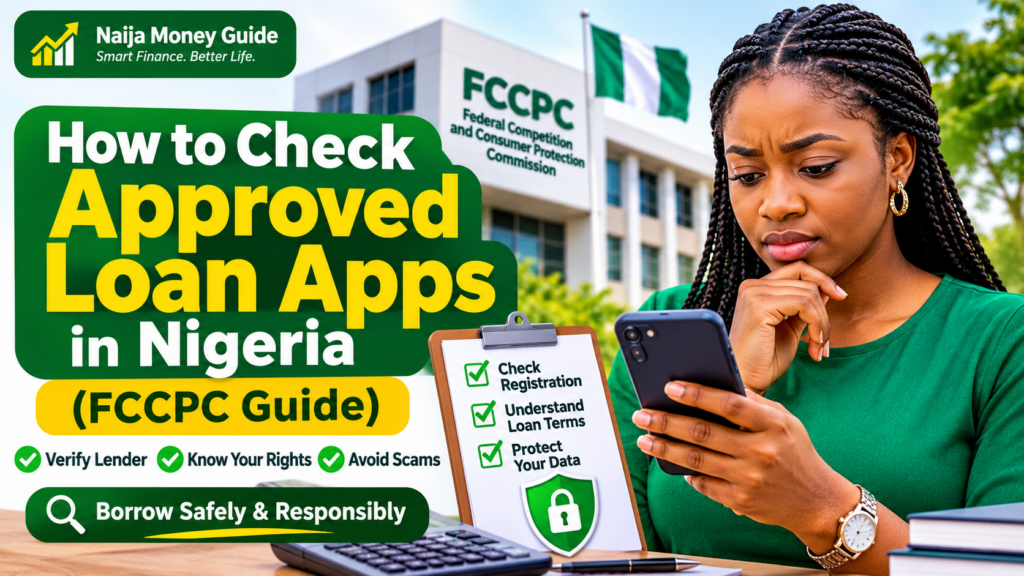
In this guide, we explain how to check digital lenders, what to examine before accepting a loan, how to identify warning signs, and what to do if a lender treats you unfairly.
The aim is simple: help you make a more informed borrowing decision before committing yourself to repayment.
What Are Digital Loan Apps?
Digital loan applications are platforms that allow individuals to request credit through mobile applications, websites or other electronic channels.
Unlike traditional lending arrangements that may require a physical visit to a bank or financial institution, many digital lenders allow customers to complete much of the application process online.
Depending on the provider, the process may involve:
- Creating an account.
- Providing personal information.
- Completing identity verification.
- Submitting a loan request.
- Reviewing an offer.
- Accepting the repayment conditions.
- Receiving money electronically.
Some platforms specialise in short-term personal loans, while others provide credit for small businesses or specific financial needs.
However, the convenience of applying through a smartphone should not be the only factor influencing your decision.
Before accepting any loan, you need to understand who is lending the money, how much it will cost, when repayment is due and what happens if you cannot pay on time.
What Is FCCPC and Why Does It Regulate Digital Lending?
The Federal Competition and Consumer Protection Commission is a Nigerian government agency responsible for protecting consumers and promoting fair competition.
Its responsibilities include addressing unfair business practices, misleading representations and conduct that may harm consumers.
In the digital lending sector, the Commission introduced the Digital, Electronic, Online or Non-Traditional Consumer Lending Regulations, 2025, commonly referred to as the DEON Regulations.
These regulations establish requirements for covered non-bank digital lenders operating in Nigeria.
The framework is intended to promote:
- Transparency in lending arrangements.
- Clear communication of loan conditions.
- Responsible lending practices.
- Protection of consumer information.
- Accountability among lending providers.
- Fair treatment during debt recovery.
- Better oversight of digital lending businesses.
The FCCPC published an update on 20 July 2026 confirming that the regulations were again fully operational and enforceable after the court proceedings.
You can read the announcement on the Commission’s official website:
Important distinction: The DEON Regulations cover non-bank lenders providing unsecured consumer credit through digital, electronic, online or other non-traditional means. Deposit money banks are governed under their separate banking regulatory framework. Do not assume that every financial institution follows the same registration process.
How to Check Whether a Digital Loan App Is Approved by FCCPC
One of the most important things to do before borrowing is verify the identity and regulatory status of the lender.
The FCCPC provides information about approved digital money lenders through its official website.
Follow these steps.
Step 1: Visit the Official FCCPC Website
Open:
Make sure you are visiting the genuine website of the Federal Competition and Consumer Protection Commission.
Avoid clicking registration links sent by unknown WhatsApp contacts or individuals claiming to represent the Commission.
Step 2: Find the Digital Money Lenders Register
Look for the Commission’s section relating to digital money lender registration and approved digital money lenders.
The website provides access to information about approved digital lending operators.
You can also explore the relevant section here:
Navigate to the business registration or digital lending section.
Step 3: Search for the Company’s Name
Find the actual company operating the loan application.
This is important because the name displayed on an application may differ from the registered legal name of the company.
For example, an application may use a short commercial name while the business operates under a longer registered company name.
Check the company name, not just the application’s logo.
Step 4: Compare the Information
Where available, compare the lender’s registered details with the information provided on its website or application.
Pay attention to:
- Company or legal business name.
- Application or trading name.
- Relevant registration status.
- Contact information.
- Other identifying details supplied in the register.
If the information does not match, contact the company through independently verified channels before proceeding.
Step 5: Confirm That the Listing Covers the Actual Lender
Some digital platforms operate as intermediaries or use different companies to provide credit.
Do not automatically assume that the name of a technology platform is the same as the actual lending company.
Identify the entity that will issue the loan and establish which regulatory requirements apply to it.
If you cannot establish who is lending you the money, it is safer not to proceed until the matter is clarified.
What Should You Check Before Accepting a Loan?
Finding a lender’s name in an official register is only one part of responsible borrowing.
You should also examine the loan agreement and understand the financial obligations involved.
Here are seven important checks.
1. Check the Total Amount You Must Repay
Do not focus only on the amount being offered.
A lender may advertise a ₦50,000 loan, but the total amount payable could be higher after applicable interest and charges.
For example, imagine you receive the following offer:
| Loan detail | Amount |
|---|---|
| Amount borrowed | ₦50,000 |
| Interest and other charges | ₦7,500 |
| Total repayment | ₦57,500 |
The example is illustrative, not an actual offer from a lender.
The important figure is the total amount you must repay, not simply the money entering your bank account.
Always request a clear breakdown of the charges before accepting.
2. Understand the Repayment Date
Some digital loans have short repayment periods.
Before accepting, establish:
- The exact repayment date.
- Whether repayment is automatic.
- Whether instalment payments are permitted.
- What happens if repayment is late.
- Whether any extension or restructuring arrangement exists.
Consider whether your expected income will arrive before the repayment date.
A loan that becomes due before your next salary or business payment may create additional financial pressure.
3. Read the Interest and Other Charges
The interest rate alone may not tell you the complete cost of borrowing.
Check whether the agreement includes:
- Interest charges.
- Processing fees.
- Service fees.
- Applicable taxes.
- Late-payment charges.
- Other disclosed costs.
Ask the lender to explain any charge you do not understand.
Do not accept an offer simply because the application displays an attractive amount.
4. Check How the Company Uses Your Personal Information
Loan applications may request information to establish identity and assess applications.
However, you should understand why the company needs the information and how it will use it.
Pay particular attention to:
- Identity verification.
- Contact information.
- Financial information.
- Device permissions.
- Data-sharing arrangements.
- Privacy notices.
- Data retention policies.
Be cautious when an application requests permissions that appear unrelated to the service.
The fact that an application is available in an app store does not automatically establish that every permission it requests is appropriate.
5. Check Its Debt Recovery Practices
Before borrowing, understand how the company handles overdue payments.
A lender may have legitimate rights to pursue repayment in accordance with applicable law and the loan agreement.
However, debt collection should not be confused with harassment, threats, intimidation or improper disclosure of personal information.
The FCCPC’s digital lending framework includes consumer protection requirements intended to address unfair and exploitative lending practices.
6. Confirm the Company’s Contact Details
A trustworthy lending business should provide identifiable contact and complaint channels.
Check whether the company has:
- A functioning official website.
- A verifiable customer support channel.
- Clear loan terms.
- A privacy policy.
- A complaint-handling procedure.
- Identifiable business information.
Avoid sending sensitive financial documents to people operating only through anonymous social media accounts.
7. Consider Whether You Actually Need the Loan
This is a financial decision that deserves more attention.
Not every unexpected expense requires borrowing.
Before accepting a loan, ask yourself:
- Can I postpone the purchase?
- Can I use available savings?
- Can I reduce another expense?
- Will I have enough income to repay the loan?
- Will the loan create another financial problem next month?
If repayment will interfere with food, rent, transportation or other essential expenses, reconsider the decision.
How Much Will a Digital Loan Actually Cost?
Understanding the mathematics of borrowing can prevent unpleasant surprises.
Consider this example:
A borrower receives ₦100,000 with a total interest and fee charge of ₦15,000.
The total repayment is:
₦100,000 + ₦15,000 = ₦115,000.
Now imagine that the borrower has only ₦40,000 available for repayment when the loan becomes due.
The difference is:
₦115,000 – ₦40,000 = ₦75,000.
The borrower still has an outstanding repayment obligation of ₦75,000, subject to the agreement and any applicable payments or adjustments.
This demonstrates why it is important to consider your repayment capacity before taking a loan.
A loan application can approve an amount that is much larger than what your monthly income can comfortably support.
Remember: Approval does not mean affordability.
What Are Your Rights When Using a Digital Loan App?
The FCCPC’s published DEON guidance explains several obligations applicable to covered digital lenders.
These include requirements relating to clear loan agreements, disclosure of charges, consumer data protection and lender registration.
As a borrower, you should pay attention to the following areas.
Right to Clear Loan Information
A borrower should be able to understand the terms of a lending arrangement.
The agreement should clearly explain the relevant interest rates, fees, repayment schedule and other applicable obligations.
If a company refuses to explain how much you must repay, do not accept the offer until you understand it.
Protection of Personal Information
Your personal information should be handled in accordance with applicable data protection requirements.
The FCCPC’s guidance specifically refers to compliance with the Nigeria Data Protection Act 2023.
A lending company should not treat access to your personal information as permission to misuse it.
Protection Against Unfair Debt Collection
A lender can pursue repayment through lawful methods.
However, borrowers should not assume that owing money means they lose all their consumer rights.
Threats, public shaming, intimidation and improper disclosure of private information raise serious consumer protection concerns.
Access to Complaint Channels
If a lending company treats you unfairly, you can first contact the provider and request a resolution.
If the matter remains unresolved, you may escalate the complaint to the FCCPC through its official channels.
What Should You Do If a Loan App Harasses You?
Imagine that you borrowed ₦30,000 and later experienced difficulty repaying the amount.
Instead of communicating with you through an appropriate recovery process, the company starts sending threatening messages or contacting people in your phone contacts to expose your financial situation.
What should you do?
Start by keeping evidence.
Step 1: Save All Messages
Keep screenshots of threatening messages, emails, call records and other relevant communication.
Do not delete evidence that may help establish what happened.
Step 2: Keep Your Loan Agreement
Save the original loan agreement and payment records.
You should be able to establish:
- The original amount borrowed.
- The amount already repaid.
- The remaining amount claimed.
- The applicable charges.
- The repayment dates.
Step 3: Contact the Lending Company
Use the provider’s official complaint channel.
Explain the issue clearly and request a written response.
Keep evidence that you made the complaint.
Step 4: Report the Matter to FCCPC
If the company does not resolve the complaint satisfactorily, you can approach the FCCPC.
The Commission provides an official complaint portal:
https://complaints.fccpc.gov.ng/
The Commission’s published guidance explains that consumers should first engage the service provider before escalating an unresolved complaint.
Step 5: Provide Supporting Evidence
Prepare relevant documents, including:
- The name of the company.
- The amount involved.
- A description of the complaint.
- The resolution you expect.
- Transaction receipts.
- Screenshots or other supporting evidence.
The clearer your evidence, the easier it may be for the Commission to understand the complaint.
Important: A complaint does not automatically cancel a genuine debt. If you borrowed money, you should continue to address your repayment obligations while pursuing any complaint about unfair treatment.
How to File a Consumer Complaint With FCCPC
The Commission provides an online complaint facility.
Visit:
https://complaints.fccpc.gov.ng/
Before submitting your complaint, prepare the relevant information.
According to the FCCPC’s published FAQ, a complaint should clearly identify the party complained against, the amount involved and the redress expected. Supporting transaction documents should also be attached.
The Commission advises consumers to first approach the service provider.
Its FAQ also states that consumer complaints are free to submit.
You can find additional information here:
Do not pay an agent who promises to secure a favourable outcome from the Commission.
Does Every Loan App Need FCCPC Registration?
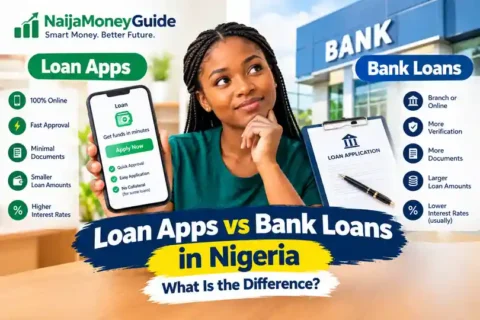
This is an important question because not every financial institution is regulated under the same framework.
The FCCPC’s DEON Regulations apply to non-bank lenders providing unsecured consumer credit through digital, electronic, online or other non-traditional means.
The Commission’s published FAQs specifically identify digital lenders, fintech companies and relevant microfinance institutions among the businesses covered by the framework.
The same guidance explains that deposit money banks are governed under the Banks and Other Financial Institutions Act 2020.
Therefore, you should not assume that the FCCPC digital lender register is a complete list of every bank, financial institution or organisation that can legally provide credit.
For example, when checking a bank loan, you should also consider the bank’s regulatory status and relevant Central Bank of Nigeria requirements.
The important thing is to identify the actual provider and determine which regulatory rules apply.
Five Warning Signs to Watch Out for Before Borrowing
Before installing a lending application or submitting your details, pay attention to these warning signs.
1. Guaranteed loan approval: Be cautious of platforms promising that every applicant will receive money regardless of eligibility.
2. Hidden repayment conditions: Avoid accepting offers that do not clearly explain the total repayment obligation.
3. Unclear company identity: You should be able to establish which business is providing the credit.
4. Suspicious upfront payments: Be extremely careful when someone asks you to transfer money to a personal account to unlock a loan.
5. Excessive access to personal information: Review requested permissions and privacy terms before allowing an application to access your device information.
One warning sign alone does not establish that a company has committed an offence. However, several warning signs together should make you stop and investigate before proceeding.
A Practical Checklist Before Accepting Any Digital Loan
Use this checklist before committing to a loan.
- [ ] I have identified the actual lending company.
- [ ] I have checked the relevant regulatory registration or authorisation.
- [ ] I understand the amount I will receive.
- [ ] I know the total repayment amount.
- [ ] I understand the interest and other charges.
- [ ] I know the repayment date.
- [ ] I have read the loan agreement.
- [ ] I understand how my personal information will be used.
- [ ] I have checked the company’s customer support details.
- [ ] I can reasonably afford the repayment.
If you cannot confidently answer these questions, take time to investigate before accepting the loan.
Frequently Asked Questions
1. How can I check if a loan app is approved by FCCPC?
Visit the official FCCPC website at https://fccpc.gov.ng/ and locate its digital money lender registration or approved lender information. Search for the actual lending company’s legal name and verify the information before borrowing.
2. Is FCCPC still regulating digital loan apps in Nigeria in 2026?
Yes. On 20 July 2026, FCCPC announced that implementation of the DEON Regulations 2025 had resumed following a Federal High Court judgment that removed the earlier restriction on enforcement.
3. Can a loan app contact my family members?
A lender should handle personal information in accordance with applicable data protection requirements. Borrowing money does not automatically give a company permission to publicly shame or intimidate you or misuse your contacts’ information.
4. Can I report a loan app for harassment?
Yes. You can first complain to the lending company and keep evidence of the incident. If the issue remains unresolved, you can submit a complaint through the FCCPC’s official complaint portal.
5. Is it free to report a digital lender to FCCPC?
The Commission’s published FAQ states that consumer complaints are free.
6. Does FCCPC registration guarantee that a loan app is safe?
No. A registration listing is an important verification step, but it does not guarantee that every transaction or interaction will be problem-free. Always read the agreement, examine the charges and protect your personal information.
7. Can a lender charge interest on a digital loan?
Interest and other charges may apply according to the loan agreement and applicable regulations. The lender should clearly disclose the relevant costs and repayment obligations before you accept the offer.
8. What happens if I cannot repay my digital loan on time?
Contact the lender through its official customer support channel as early as possible. Ask whether any repayment arrangement is available. Do not ignore the obligation, but remember that debt recovery must comply with applicable laws and consumer protection requirements.
9. Does FCCPC regulate every bank loan?
No. The DEON digital lending framework discussed in this article covers specified non-bank lending arrangements. Deposit money banks are subject to their separate banking regulatory framework.
10. Where can I find the official FCCPC website?
The official website is https://fccpc.gov.ng/. You can find information about consumer rights, digital lending regulation and complaint procedures there.
Final Thoughts: Verify Before You Borrow
Digital lending has made it easier for Nigerians to access credit without visiting a traditional banking office.
But convenience should never replace proper financial checks.
Before accepting a loan, identify the company providing the money, understand the total repayment obligation, review its privacy policy and check the applicable regulatory requirements.
If something is unclear, ask questions before accepting the offer.
And if you experience unfair treatment, keep your evidence, contact the lender and use the appropriate official complaint channels.
A loan should help you manage a genuine financial need, not create a bigger problem because you failed to understand its conditions.
Check the official FCCPC website: https://fccpc.gov.ng/
Submit a consumer complaint: https://complaints.fccpc.gov.ng/
Editorial and Financial Disclaimer
Naija Money Guide is an independent Nigerian financial information website and is not affiliated with the Federal Competition and Consumer Protection Commission or any lending company discussed in this article.
This article is intended for general educational purposes and does not constitute legal or personalised financial advice. Regulatory requirements and lender registration information may change. Always verify the current status of a financial service provider with the relevant regulator before borrowing.
We do not guarantee loan approval, lender safety or any particular financial outcome.