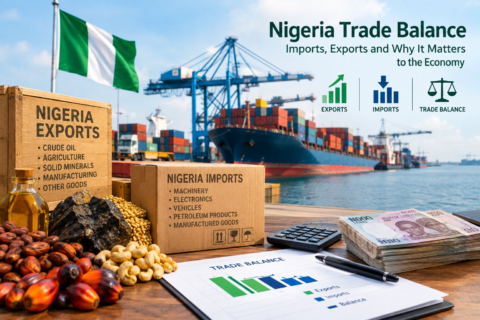

The naira exchange rate is one of the most important economic topics in Nigeria because it can affect the prices of imported goods, international payments, businesses, travel, education and some household expenses.
You may hear people ask questions such as:
- What is the naira exchange rate today?
- Why does the naira rise or fall against the dollar?
- What causes changes in the exchange rate?
- How does the dollar affect prices in Nigeria?
- What is the official exchange rate?
- What is the difference between the bank, Bureau de Change and other exchange rates?
Understanding these questions can help you make better financial decisions.
This guide explains how the naira exchange rate works in Nigeria in 2026, what influences it and how exchange-rate movements can affect individuals and businesses.
Important: Exchange rates change continuously. The figures displayed by banks, licensed Bureau de Change operators and other authorised market participants can change during the day. Always check the current rate before making a foreign-exchange transaction.
Quick Summary
- The exchange rate tells you how much one currency is worth relative to another.
- For Nigerians, the naira-to-dollar exchange rate is particularly important because the US dollar is widely used in international trade and payments.
- Exchange rates are influenced by foreign-exchange supply and demand, international trade, capital flows, oil revenue, remittances, monetary conditions and other economic factors.
- The CBN has implemented reforms aimed at improving transparency and price discovery in Nigeria’s foreign-exchange market.
- The CBN says Nigeria’s foreign-exchange market uses a market-driven approach based on willing buyers and willing sellers.
- Exchange-rate movements can affect imported goods, business costs, international education, travel and some consumer prices.
- A lower or higher exchange rate does not automatically tell you whether a financial decision is good or bad; the purpose, timing, fees and risks also matter.
What Is an Exchange Rate?
An exchange rate is the price of one currency expressed in another currency.
For example, if someone says:
$1 = ₦X
they are describing how many naira are required to exchange for one US dollar at that particular rate.
Exchange rates can also be quoted for:
- Euro
- British pound
- Canadian dollar
- Ghanaian cedi
- CFA franc
- Other currencies
The exact rate depends on the market, transaction type, provider and time.
Why Is the Dollar Important to Nigeria?
The US dollar plays an important role in international trade and financial transactions.
Businesses may need dollars to pay for:
- Imported equipment
- Raw materials
- Machinery
- Software
- International services
- Some educational expenses
- Overseas suppliers
Nigerians may also need foreign currency for:
- International travel
- School fees abroad
- Medical expenses abroad
- Online services
- Business transactions
- Investments that are legally available to them
Because of these activities, movements in the naira-dollar exchange rate can have effects beyond the foreign-exchange market itself.
How Does Nigeria’s Foreign-Exchange Market Work?
Nigeria has undergone significant foreign-exchange-market reforms in recent years.
The Central Bank of Nigeria says it moved toward a market-driven foreign-exchange framework based on a willing buyer, willing seller approach and unified previously segmented FX markets. The former Investors’ and Exporters’ window was renamed the Nigerian Foreign Exchange Market (NFEM).
The CBN has also introduced measures intended to improve transparency and market operations, including the Electronic Foreign Exchange Matching System (EFEMS) and the Nigerian Foreign Exchange Code.
This means people should be careful when comparing an old exchange-rate figure with a current one because the structure and rules of the market can change.
What Determines the Naira Exchange Rate?
Several factors can influence the value of the naira relative to other currencies.
1. Supply and Demand for Foreign Currency
Foreign exchange is affected by supply and demand.
When demand for dollars and other foreign currencies is high relative to available supply, exchange-rate pressure can increase.
When foreign-exchange supply improves relative to demand, market conditions can change in the opposite direction.
This is one reason the exchange rate can move over time.
2. Nigeria’s Foreign-Exchange Inflows
Foreign currency can enter Nigeria through several channels.
These can include:
- Export earnings
- Remittances
- Foreign investment
- International borrowing
- Other legitimate financial inflows
Greater foreign-currency inflows can affect the supply available in the market.
However, the effect depends on many other economic conditions.
3. Oil and Gas Earnings
Oil remains an important source of Nigeria’s foreign-exchange earnings.
Changes in global oil prices and Nigeria’s oil production can therefore have implications for foreign-exchange inflows.
However, Nigeria’s economy is not limited to oil.
Agriculture, manufacturing, telecommunications, trade and services also contribute to economic activity.
4. Import Demand
Businesses and consumers may need foreign currency to pay for imported products and services.
When demand for imports increases, demand for foreign exchange can also increase.
This is one reason the exchange rate can affect businesses that depend heavily on imported inputs.
5. Foreign Investment
Foreign investors may bring foreign currency into Nigeria when investing in businesses or financial assets.
Investment flows can change over time depending on economic conditions, expected returns, market confidence, regulations and global financial conditions.
6. Remittances
Nigerians living abroad send money to families and other recipients in Nigeria.
These remittances are an important source of foreign-currency inflows.
The CBN has introduced measures aimed at improving the transparency and efficiency of formal remittance channels.
7. Monetary Policy
Monetary policy can influence financial conditions and economic activity.
The CBN’s Monetary Policy Committee continues to adjust monetary policy as economic conditions change.
For example, at its September 21–22, 2026 meeting, the MPC reset the Monetary Policy Rate at 23%.
Changes in interest rates can affect borrowing, saving, investment and financial-market conditions.
The relationship between interest rates and exchange rates is complex, so a change in the policy rate does not guarantee a particular movement in the naira.
Why Does the Naira Exchange Rate Matter to Ordinary Nigerians?
You may not buy dollars every day, but exchange-rate movements can still affect your finances.
Imported Products
Businesses that import goods may face higher or lower naira costs depending on exchange-rate movements.
Some businesses may pass part of those changes to consumers.
Electronics and Technology
Products such as smartphones, computers, accessories and some equipment can be affected by import costs and foreign-currency movements.
Travel
If you need foreign currency for an international trip, the exchange rate affects how many naira you need.
For example, if you need $1,000, the naira amount required depends on the applicable exchange rate and any fees.
International Education
Students or families paying tuition and other expenses abroad may be affected by exchange-rate changes.
A change in the naira value can significantly change the naira amount required to make the same foreign-currency payment.
Business Operations
Businesses importing:
- Machinery
- Spare parts
- Raw materials
- Packaging
- Software
- Equipment
may need to monitor exchange-rate movements closely.
How Does the Exchange Rate Affect Inflation?
Exchange rates can influence inflation through several channels.
If imported goods or production inputs become more expensive in naira terms, businesses may face higher costs.
For example:
Exchange-rate movement → higher import cost → higher business cost → possible increase in selling price
However, this does not happen equally for every product.
Prices can also be affected by:
- Local production
- Transportation
- Energy costs
- Labour
- Supply conditions
- Competition
- Consumer demand
Therefore, exchange rates are only one part of the inflation story.
What Is the Difference Between Official and Unofficial Exchange Rates?
People sometimes encounter different exchange-rate figures online or in conversations.
It is important to distinguish between rates offered through authorised financial institutions and rates from unauthorised or informal markets.
For legitimate transactions, consumers should use authorised channels and verify the applicable rate and fees.
The CBN has strengthened regulation and oversight of Bureau de Change operators and other participants in the foreign-exchange market.
Do not assume that a rate posted on social media is available to you or is appropriate for a particular transaction.
What Is a Bureaude Change?
A Bureau de Change (BDC) is a business licensed to conduct specified foreign-exchange transactions under applicable CBN regulations.
The CBN has revised its regulatory framework for BDC operations and continues to regulate participation in the retail foreign-exchange market.
Before using a BDC, verify that it is properly licensed and understand the rate, charges and transaction conditions.
Why Can Exchange Rates Differ Between Providers?
Even when two providers are operating legitimately, the amount you receive can differ.
Possible reasons include:
- Provider’s buying rate
- Provider’s selling rate
- Transaction fees
- Transfer fees
- Service charges
- Currency availability
- Transaction type
- Timing
- Market conditions
This is why comparing only the advertised exchange rate may not give you the complete cost.
Buying Rate vs Selling Rate
Financial institutions and foreign-exchange providers may quote different rates for buying and selling currency.
Buying rate
This is generally the rate at which a provider buys a foreign currency.
Selling rate
This is generally the rate at which a provider sells a foreign currency.
The difference between these rates is often referred to as the spread.
When exchanging money, check which rate applies to your transaction.
Example: How Exchange Rate Changes Affect a Payment
Imagine you need to pay $2,000 for an overseas expense.
Suppose the applicable exchange rate is:
$1 = ₦1,500
The naira equivalent before fees would be:
$2,000 × ₦1,500 = ₦3,000,000
If the applicable rate later becomes:
$1 = ₦1,600
The equivalent becomes:
$2,000 × ₦1,600 = ₦3,200,000
The difference is:
₦200,000
This simple example shows why people making foreign-currency payments should consider exchange-rate risk.
It is only an illustration and does not represent a current market quote.
How Can You Check the Current Naira Exchange Rate?
Exchange rates change, so avoid relying on old articles for today’s rate.
For an actual transaction, check the rate directly with the relevant:
- Bank
- Licensed Bureau de Change
- Authorised payment provider
- Other regulated financial institution
Also check the transaction fee.
The CBN publishes foreign-exchange information and regulatory updates through its official channels.
Should You Buy Dollars Just Because the Naira Is Moving?
There is no universal answer.
Foreign currency can be needed for legitimate future expenses such as:
- Travel
- Education
- International business
- Approved payments
- Other specific obligations
But buying foreign currency simply because you expect a particular future exchange rate involves uncertainty.
Before making a decision, consider:
- Why you need the currency
- How soon you need it
- Transaction costs
- Storage and security
- Regulatory requirements
- Your overall financial position
Avoid treating exchange-rate movements as a guaranteed way to make money.
How Can Small Businesses Manage Exchange-Rate Risk?
Businesses exposed to foreign currency can consider several practical measures.
1. Know Your Foreign-Currency Exposure
List the expenses that depend on foreign currency.
For example:
- Imported inventory
- Equipment
- Software
- International suppliers
- Foreign loans
2. Price Products Carefully
When imported costs change, businesses should review their pricing and margins.
However, pricing should also consider customer demand and competition.
3. Keep Accurate Records
Track:
- Purchase price
- Exchange rate used
- Fees
- Shipping costs
- Taxes and duties where applicable
- Final landed cost
This helps you understand the actual cost of imported products.
4. Avoid Unnecessary Foreign-Currency Debt
If your business earns primarily in naira but borrows in a foreign currency, exchange-rate movements can increase the naira value of your repayment obligations.
Understand the currency risk before accepting such financing.
How Can Individuals Manage Exchange-Rate Changes?
Individuals can reduce unnecessary financial pressure by:
Planning International Payments
If you know you will need foreign currency for a legitimate expense, plan the payment in advance where practical.
Comparing Providers
Compare the total amount you will pay, including fees.
Keeping Records
Save receipts and transaction confirmations.
Using Authorised Channels
Use regulated financial institutions and legitimate foreign-exchange providers.
Avoiding Panic
Exchange rates can move in both directions.
Avoid making major financial decisions based solely on rumours or social-media posts.
Common Mistakes People Make With Exchange Rates
Mistake 1: Looking Only at the Dollar Rate
Other costs may apply.
Always consider the total transaction cost.
Mistake 2: Using an Old Rate
Exchange rates change.
A rate published weeks or months ago may no longer apply.
Mistake 3: Trusting Unverified Social-Media Posts
A screenshot of an exchange rate does not prove that the rate is available for your transaction.
Mistake 4: Ignoring Fees
A provider offering a seemingly attractive rate may have additional charges.
Mistake 5: Treating Currency as a Guaranteed Investment
Currency movements are uncertain.
Do not assume that buying dollars or another foreign currency will automatically produce a profit.
Frequently Asked Questions
What is the naira exchange rate?
The naira exchange rate is the value of the Nigerian naira relative to another currency, such as the US dollar, euro or British pound.
Why does the naira exchange rate change?
It can change because of foreign-exchange supply and demand, imports, exports, capital flows, remittances, oil earnings, monetary conditions and other domestic and international factors.
Where can I check the current dollar-to-naira rate?
Check the current rate directly with your bank, licensed Bureau de Change or other authorised financial institution. The CBN also publishes foreign-exchange information through its official channels.
Does a weaker naira always mean higher inflation?
Not necessarily. Exchange rates can influence prices, especially through imported goods and inputs, but inflation has multiple causes.
Why do different providers show different exchange rates?
Rates can differ because of buying and selling prices, transaction fees, market conditions, currency availability and the type of transaction.
What is NFEM?
NFEM stands for the Nigerian Foreign Exchange Market. The CBN uses this name for the market that replaced the former Investors’ and Exporters’ window following its FX-market reforms.
What is EFEMS?
EFEMS stands for the Electronic Foreign Exchange Matching System. The CBN introduced it as part of efforts to improve transparency and efficiency in interbank foreign-exchange trading.
Should I buy dollars to protect my savings?
That depends on your financial objective, time horizon, currency needs, costs and risk tolerance. Foreign currency can fluctuate, so it should not automatically be treated as a guaranteed protection against losses or a guaranteed investment return.
Final Thoughts
The naira exchange rate is an important part of Nigeria’s economy because it connects the domestic economy with international trade and financial transactions.
Changes in the exchange rate can affect imported goods, business costs, travel, international education and other expenses.
However, exchange rates should be viewed in context.
A single exchange-rate figure does not explain the entire Nigerian economy, and a movement in the naira does not automatically determine what will happen to every product or household.
When you need foreign currency, check the current rate through an authorised provider, understand all applicable charges and avoid making financial decisions based solely on rumours or predictions.
For businesses, keeping accurate records of foreign-currency costs and understanding exposure can help with pricing and financial planning.
For households, planning international expenses and maintaining a realistic budget can reduce surprises when exchange rates change.
Disclaimer
This article is provided for general educational and informational purposes. Exchange rates, regulations, fees and market conditions can change. Examples in this article are illustrative and are not current exchange-rate quotations or financial recommendations. Always verify the applicable rate and transaction requirements with the relevant authorised financial institution or official Nigerian regulator before making a foreign-exchange transaction.
Last reviewed: September 2026
Sources
- Central Bank of Nigeria — Foreign-exchange reforms and regulatory information.
- Central Bank of Nigeria — Monetary Policy Decisions.
- Central Bank of Nigeria — Official website and market information.