Introduction
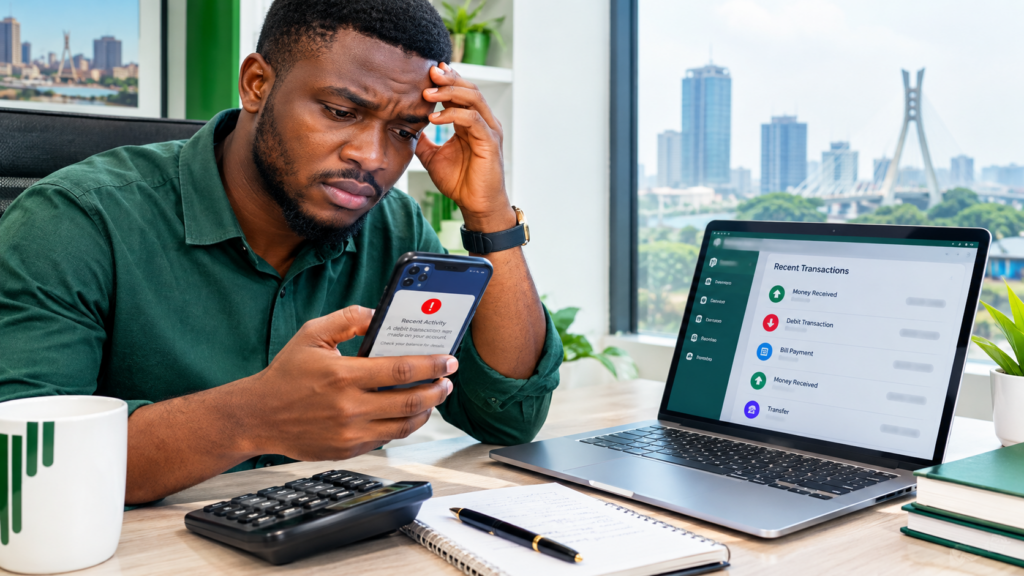
Seeing money disappear from your bank account without expecting the transaction can be stressful.
Sometimes a deduction may be a legitimate bank charge, a transaction that you forgot about, a reversed or pending transaction, or a payment made through a card, transfer or another channel.
In other situations, the transaction may genuinely be unauthorized.
The important thing is not to panic and not to ignore it.
If you notice an unfamiliar deduction from your Nigerian bank account, you should first identify the transaction, secure your account if necessary and contact your bank through an official channel.
This guide explains what you can do when money is deducted from your bank account without your permission.
What Is an Unauthorized Bank Deduction?
An unauthorized bank deduction is a transaction from your account that you do not recognize or did not approve.
For example, you may notice:
- A card payment you did not make
- An unfamiliar transfer
- An unexpected debit
- A payment made through a digital channel you do not recognize
- An unfamiliar recurring payment
- A charge you do not understand
However, an unfamiliar transaction does not automatically mean that your money was stolen.
The transaction could be a legitimate charge that you have forgotten about or a transaction processed under a name different from the business name you recognize.
That is why the first step is to investigate the transaction carefully.
Why Was Money Deducted From My Bank Account?
There are several possible explanations.
1. Bank Charges
Banks can apply charges for certain services and transactions according to applicable terms and tariffs.
Examples may include charges related to particular banking services or transactions.
If you do not understand a charge, check your account statement and ask the bank for an explanation.
The Central Bank of Nigeria states that customers have a right to clear and truthful information about financial products, services and applicable charges.
2. Card Transactions
Your debit card may have been used for a transaction that you do not recognize.
This can happen if:
- Your card details were compromised
- Someone had access to your card
- You forgot about an earlier purchase
- A merchant processed a delayed transaction
If you genuinely did not authorize the transaction, contact your bank immediately.
3. POS Transactions
A POS transaction may appear on your account with a description that you do not immediately recognize.
If you recently used a POS terminal, compare the amount and date with your receipts or transaction records.
If the transaction does not match anything you authorized, report it to your bank.
4. Recurring Payments or Subscriptions
A subscription can sometimes renew automatically.
For example, you may have previously authorized a payment for:
- A digital service
- A software subscription
- Entertainment
- Internet-related services
- Another recurring service
Check whether the transaction corresponds to a subscription you previously activated.
5. Failed or Reversed Transactions
Banking transactions do not always appear exactly as expected.
A transaction may initially show as a debit and later be reversed, or a pending transaction may temporarily affect your available balance.
If you believe a failed transaction has not been reversed correctly, contact your bank and provide the transaction details.
6. Fraud or Unauthorized Access
If someone gained access to your card, banking credentials or another payment channel, an unauthorized transaction may occur.
Warning signs can include:
- Several unfamiliar transactions
- Transactions you did not initiate
- Unexpected password or account notifications
- Changes to your account information
- Unfamiliar withdrawals
- Unusual transfers
If you notice these signs, act quickly.
What Should You Do If Money Is Deducted Without Permission?
Step 1: Check Your Transaction History
Before assuming fraud, open your banking app, internet banking platform or account statement.
Look carefully at:
- Amount
- Date
- Time
- Transaction description
- Transaction reference
- Transaction type
Sometimes the name displayed on a transaction is different from the name of the business you remember.
Step 2: Check Whether You Recognize the Transaction
Think about recent activities.
Did you:
- Use your debit card?
- Pay through POS?
- Subscribe to a service?
- Make a transfer?
- Authorize someone to use your card?
- Pay a bill?
- Make an online purchase?
If you identify the transaction, determine whether the amount is correct.
If you still do not recognize it, continue with the next steps.
Step 3: Contact Your Bank Immediately
If you believe the transaction is unauthorized, contact your bank through its official customer-service channel.
Depending on the bank, this could include:
- Official customer-care phone number
- Official mobile app
- Official website
- Branch
- Other official complaint channels
Tell the bank that you do not recognize the transaction and ask them to investigate it.
Provide:
- Your account details as requested through the official channel
- Transaction date
- Amount
- Transaction reference
- Description of the problem
Keep the complaint/reference number if the bank gives you one.
Step 4: Secure Your Account
If you suspect that someone has gained access to your banking information, take appropriate security measures immediately.
Depending on the situation, this may include:
- Blocking your debit card
- Changing your banking password
- Reviewing account security settings
- Contacting the bank about suspicious access
- Asking whether additional security measures are required
Do not wait several days if you believe your account is actively being compromised.
Step 5: Do Not Share Your PIN or OTP
This is extremely important.
A person may claim to be a bank employee and ask you to provide:
- PIN
- Password
- OTP
- Card security information
- Authentication code
Do not disclose these credentials simply because someone claims to represent your bank.
If you receive a suspicious call or message, end the conversation and contact your bank using a trusted official channel.
Step 6: Keep Evidence
Save information about the transaction.
Useful evidence can include:
- Screenshot of the transaction
- Account statement
- Transaction reference
- SMS or app notification
- Relevant receipts
- Emails or messages related to the transaction
- Your complaint/reference number
Do not delete important evidence while the complaint is being investigated.
Step 7: Follow Up on Your Complaint
After reporting the issue, monitor your account and follow up using the complaint reference provided by the bank.
Keep records of:
- Date you reported the problem
- Channel used
- Complaint/reference number
- Responses received
- Any subsequent transactions
Good record-keeping can make it easier to explain the problem if you need to escalate the complaint.
What If the Bank Does Not Resolve the Problem?
Start by giving the bank an opportunity to investigate and resolve the complaint through its official complaints process.
If the issue is not resolved satisfactorily, you can consider escalating the complaint through the appropriate regulatory consumer-protection channel.
The CBN provides consumer-protection and complaints resources for banking customers.
Before escalating, keep your bank complaint reference and relevant evidence.
What Information Should You Give the Bank?
When reporting an unfamiliar deduction, provide clear information.
For example:
Transaction date: 20 September 2026
Amount: ₦25,000
Transaction reference: Your transaction/reference number
Description: Unrecognized transfer/card transaction
Issue: I did not authorize or recognize this transaction.
Avoid publishing your complete account number, card number, PIN or authentication codes on public platforms.
Can a Bank Reverse an Unauthorized Deduction?
A bank may investigate a disputed transaction and determine what action is appropriate.
Whether a transaction can be reversed depends on the circumstances, transaction type, investigation and applicable rules.
For example, the process can be different for:
- Card transactions
- Transfers
- POS transactions
- Direct debits
- Failed transactions
- Merchant payments
Therefore, do not assume that every disputed debit will automatically be reversed.
Report the transaction as soon as possible and follow the bank’s complaint process.
What If the Deduction Is a Bank Charge?
If the deduction is a legitimate bank charge, ask the bank to explain:
- What the charge is for
- The applicable tariff
- When the charge was applied
- Whether the charge was disclosed under the account’s terms
The CBN emphasizes that consumers should receive relevant information about financial products, services and charges.
If you believe a charge was applied incorrectly, raise a complaint with the bank and keep the complaint reference.
What If the Transaction Was Made Through a Fintech App?
If the transaction occurred through a fintech service, first identify the institution responsible for the account or payment service.
Use the provider’s official complaint channel.
Do not rely on an individual social-media account claiming to represent the company.
The CBN supervises participants in Nigeria’s payment system and places emphasis on safety, transparency and consumer protection.
How to Prevent Unauthorized Bank Deductions
You cannot eliminate every financial risk, but you can reduce your exposure.
1. Protect Your Banking Credentials
Never share your:
- PIN
- Password
- OTP
- Authentication codes
with strangers.
2. Use Transaction Alerts
Enable appropriate transaction notifications where available.
They can help you identify unusual activity quickly.
3. Check Your Account Regularly
Do not wait until the end of the month to discover an unfamiliar transaction.
Review your account periodically.
4. Keep Your Phone Secure
Use a screen lock and avoid allowing strangers to access your banking device.
5. Avoid Suspicious Links
Do not enter your banking information into websites or forms received from unknown sources.
6. Use Official Banking Apps
Download banking applications from trusted app stores and verify the official publisher.
7. Be Careful With Public Wi-Fi
Avoid carrying out sensitive financial transactions over unsecured networks where possible.
8. Report Suspicious Activity Quickly
The earlier you report an unauthorized transaction, the sooner your bank can begin investigating the issue.
What You Should Never Do
If money disappears from your account, avoid these mistakes:
Don’t post your full account details online
Publicly sharing financial information can expose you to additional risks.
Don’t give your OTP to someone promising a refund
A refund does not require you to casually disclose your authentication code to a stranger.
Don’t trust random social-media accounts
Use your bank’s verified official channels.
Don’t delete evidence
Keep screenshots, statements and transaction references.
Don’t ignore repeated deductions
If unfamiliar transactions continue, contact your bank immediately.
Simple Example
Imagine you check your account and discover a ₦50,000 debit that you do not recognize.
Instead of immediately assuming that your money has been stolen, take these steps:
1. Open your transaction history.
2. Check the date, amount and transaction description.
3. Think about whether you recently made a card, POS or online payment.
4. If you still do not recognize it, contact your bank through its official channel.
5. Report the transaction and request an investigation.
6. Secure your card/account if you suspect unauthorized access.
7. Keep the complaint reference and evidence.
This approach gives the bank clear information to investigate the transaction.
Frequently Asked Questions
Why was money deducted from my bank account?
Possible reasons include legitimate bank charges, card or POS transactions, subscriptions, failed transactions, transfers or unauthorized activity. Check your transaction details before deciding what happened.
Can I get my money back after an unauthorized transaction?
A disputed transaction can be investigated by the financial institution. The outcome depends on the transaction type, circumstances and applicable rules. Report it promptly.
What should I do if I don’t recognize a bank transaction?
Check the transaction details, contact your bank through an official channel, report the transaction and keep your complaint reference and evidence.
Should I give my OTP to the bank’s customer-care agent?
Do not disclose your OTP or other authentication credentials to someone who contacts you unexpectedly. If you are unsure, end the conversation and contact the bank through an official channel.
What if the bank deducted money as a charge?
Ask the bank to explain the charge and identify the applicable tariff or account term. If you believe the charge is incorrect, raise a formal complaint.
How long does a bank investigation take?
There is no single timeframe for every type of transaction. It can depend on the transaction channel, circumstances and investigation required. Ask the bank for the applicable complaint process and keep your reference number.
Can I complain to the CBN about my bank?
If you have first complained to your bank and the matter remains unresolved, the CBN provides consumer-protection and complaint channels for eligible banking complaints. Keep your bank complaint reference and supporting evidence.
Final Thoughts
An unexpected deduction from your bank account does not always mean fraud, but it should never be ignored.
Start by checking the transaction details. If you cannot identify the transaction, contact your bank through an official channel and report it as soon as possible.
Protect your banking credentials, keep evidence and follow the formal complaint process.
Most importantly, never give your PIN, password or OTP to someone simply because they claim to be a bank representative.
For more Nigerian banking guides, continue reading the Banking & Fintech section on NaijaMoneyGuide.com.ng.
Financial Disclaimer
This article is for general educational and informational purposes only. It does not constitute financial, legal or banking advice.
Banking procedures, complaint processes, charges and regulatory requirements may change. Always confirm current information directly with your financial institution and relevant Nigerian regulators.
Naija Money Guide does not guarantee the outcome of any banking dispute or transaction investigation.
Related article: