
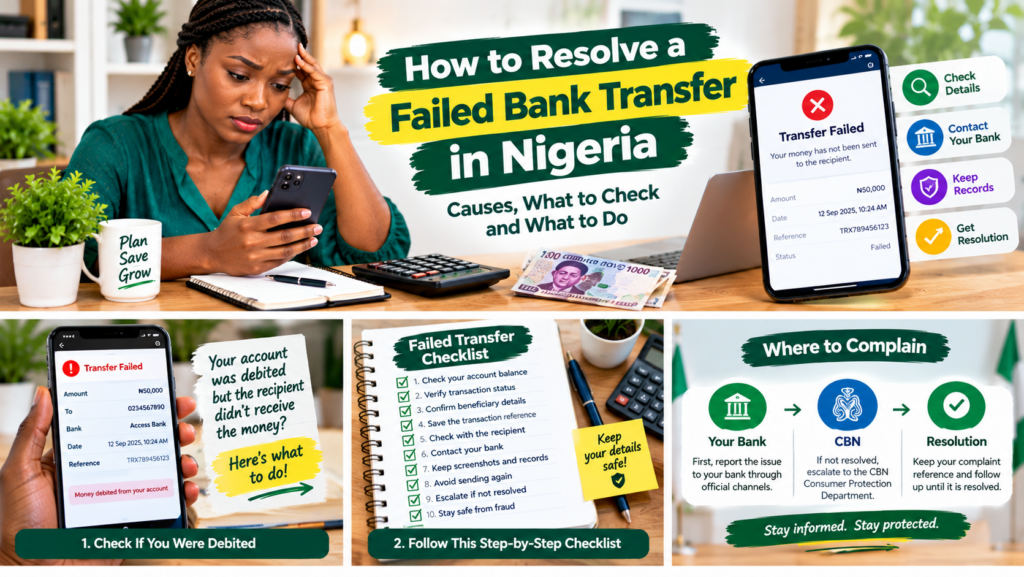
How to Resolve a Failed Bank Transfer in Nigeria
A failed bank transfer can be frustrating, especially when your account has already been debited but the person you sent money to has not received it.
Sometimes the money returns automatically. In other situations, you may need to contact your bank or payment provider and provide details of the transaction.
Whether you are sending money through a banking app, USSD, internet banking or another electronic payment channel, knowing what to do after a failed transfer can help you avoid unnecessary panic and repeated transactions.
This guide explains the common reasons bank transfers fail in Nigeria, what to check first, what information to keep, and how to escalate the issue if it is not resolved.
What Does a Failed Bank Transfer Mean? 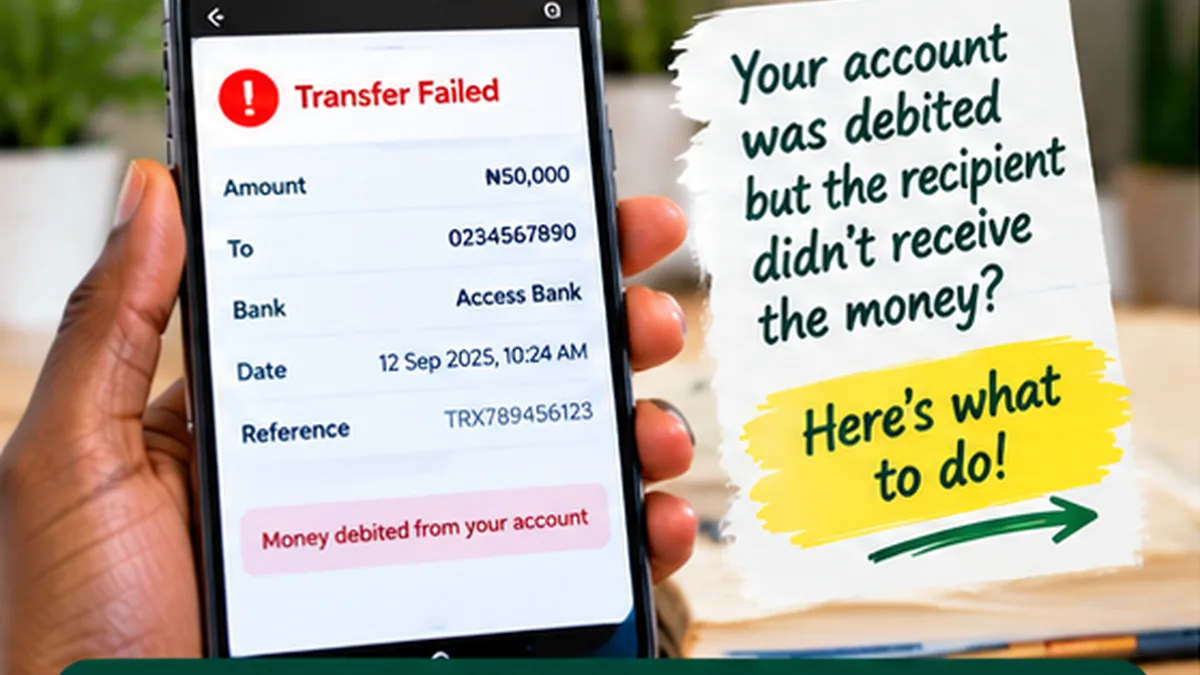
A failed transfer generally means a payment instruction did not complete successfully.
Different situations can occur.
For example:
- The transfer fails before your account is debited.
- Your account is debited but the beneficiary does not receive the money.
- The transaction remains pending.
- The beneficiary receives the money later than expected.
- Your account is debited and the transaction is eventually reversed.
- You receive an error message while attempting the transfer.
These situations may require different next steps.
The first thing you should determine is whether your account was actually debited.
First Check: Was Your Account Debited?
Before trying the transfer again, check your account balance and transaction history.
If you were NOT debited
The transfer may simply have failed before money left your account.
You can check:
- Your transaction history
- The transfer status
- Your available balance
- Any error message displayed by your bank
If no money was deducted, you may be able to retry the transaction after confirming that the recipient’s details are correct.
If you WERE debited
Do not immediately send the money again.
First confirm:
- The transaction status
- The amount deducted
- The recipient’s account details
- The transaction reference
- Whether the recipient actually received the money
Sending the same amount again before understanding the first transaction could result in paying twice if the original transfer eventually succeeds.
Common Reasons Bank Transfers Fail in Nigeria
1. Network or System Problems
Electronic transfers depend on interconnected banking and payment systems.
Temporary technical problems can cause a transaction to fail, remain pending or take longer than expected.
If this happens, avoid repeatedly pressing the transfer button.
Check the transaction status first.
2. Incorrect Account Details
Entering the wrong account number or selecting the wrong bank can create problems.
Before confirming a transfer, carefully check:
- Account number
- Bank name
- Beneficiary name displayed
- Amount
- Transfer description
If something does not look right, stop before completing the transaction.
3. Insufficient Available Balance
Your account may not have enough available funds to complete the transfer.
Remember that your available balance can differ from what you mentally consider your total money.
Possible deductions or restrictions may affect what you can transfer.
4. Bank or Payment-Service Downtime
A bank’s mobile application, USSD service or payment infrastructure may temporarily experience problems.
If other transactions are also failing, the issue may not be specific to your account.
5. Security or Transaction Limits
Banks and payment providers may apply transaction limits or security controls.
A transfer can therefore fail because the amount or transaction pattern triggers a restriction.
If you repeatedly receive a security-related error, contact your financial institution through an official channel instead of repeatedly attempting the transaction.
6. Account Restrictions
An account may have restrictions that affect certain transactions.
If your account is restricted, the appropriate solution depends on the reason for the restriction.
Contact your bank and ask for the specific reason and the steps required to resolve it.
7. Beneficiary-Side Problems
Sometimes the problem may involve the receiving account or institution rather than your own account.
This is another reason to keep your transaction reference instead of immediately assuming that your bank has lost the money.
What to Do When Your Account Was Debited but the Recipient Didn’t Receive the Money
- This is one of the most important situations to handle correctly.
Follow these steps.
Step 1: Don’t Send Another Transfer Immediately
First establish what happened to the original transaction.
A second transfer could create a duplicate payment if the first one is later completed.
Step 2: Check the Transaction Status
Open your banking app or transaction history.
Look for terms such as:
- Successful
- Failed
- Pending
- Reversed
- Processing
The exact wording varies between financial institutions.
Step 3: Save the Transaction Reference
Take a screenshot or write down the transaction reference.
Also record:
- Date
- Time
- Amount
- Sending account
- Receiving bank
- Receiving account number
- Transaction description
These details can make it easier for customer service to trace the transaction.
Step 4: Ask the Recipient to Check Their Account
Ask the recipient to check their actual account transaction history rather than relying only on an SMS notification.
The recipient should confirm whether the money has arrived.
Step 5: Contact Your Bank
If the transaction remains unresolved, report it to your bank using an official customer-service channel.
CBN guidance says customers should first submit complaints to their bank or other financial institution before escalating an unresolved complaint to the CBN.
Information You Should Have Before Contacting Your Bank
Don’t simply tell customer service:
“My transfer failed.”
Give them enough information to investigate.
Prepare:
Transaction date: __________
Transaction time: __________
Amount: ₦__________
Beneficiary bank: __________
Beneficiary account number: __________
Transaction reference: __________
Transaction status: __________
Your account was debited: Yes / No
This can make the complaint clearer.
Never Share Your PIN or Password
When reporting a failed transfer, never give anyone your:
- ATM PIN
- Mobile banking password
- One-time authentication code
- Card PIN
- Full security credentials
CBN complaint guidance specifically warns customers not to include PINs and passwords when making complaints.
Use only your bank’s official customer-service channels.
What If the Transfer Says “Successful” but the Recipient Says They Didn’t Receive It?
Don’t automatically assume the recipient is lying or that your money has disappeared.
First compare the transaction details.
Check:
- The beneficiary account number.
- The receiving bank.
- The amount.
- The transaction reference.
- The transaction date and time.
Then ask your bank to trace the transaction if necessary.
If the transaction was sent to the wrong account because incorrect details were supplied, the recovery process may be different from a technical failure.
What If You Sent Money to the Wrong Account?
This is different from a normal failed transfer.
Contact your bank as soon as possible and report the mistake.
Provide:
- The transaction reference
- Amount
- Date and time
- Account details used
- Correct account details, if relevant
CBN payment rules include provisions concerning certain erroneous transfers caused by the sending institution, but recovery circumstances can vary depending on how the error occurred and whether the funds remain available.
Do not attempt to resolve the situation by contacting or threatening the recipient yourself.
Let the appropriate financial institutions handle the recovery process.
What If the Money Is Automatically Reversed?
A reversal means the amount that was deducted is returned to your account.
Check your transaction history to confirm the reversal rather than assuming it happened.
If the money has been returned, you can consider trying the transfer again after checking the beneficiary details and ensuring the service is working.
What If the Transaction Remains Pending?
A pending transaction means the payment has not yet reached a final status in the system.
Avoid repeatedly initiating the same transfer while the first transaction remains unresolved.
Instead:
- Check the transaction details.
- Wait for the status to update where appropriate.
- Contact your bank if the transaction remains unresolved.
- Keep the transaction reference.
Keep Evidence of the Complaint
If you contact customer service, keep evidence showing that you reported the problem.
This could include:
- Complaint reference number
- SMS
- Screenshot
- Date and time of complaint
- Customer-service conversation reference
CBN materials emphasize the importance of complaint tracking and escalation when a financial institution does not resolve a complaint satisfactorily.
What If Your Bank Does Not Resolve the Problem?
If you have already complained to your bank and the matter is not satisfactorily resolved, you can consider escalating the complaint to the Central Bank of Nigeria Consumer Protection Department, where the complaint falls within its regulatory scope.
CBN’s published complaint guidance says customers should first report the complaint to their financial institution before approaching the CBN for escalation.
When escalating, keep evidence that you first complained to your bank.
Your complaint should clearly explain:
- What happened
- Date of transaction
- Amount involved
- Bank or financial institution
- Transaction reference
- What you have already done
- The response received
- What resolution you are requesting
Don’t Pay Anyone Who Claims They Can “Release” Your Money
Be careful if someone contacts you claiming to be a bank employee or regulator and asks you to send money to release a failed transfer.
A genuine complaint process should not require you to disclose your PIN or password to a stranger.
Also be cautious with links sent through social media, WhatsApp or unofficial accounts.
Use your bank’s verified channels.
A Simple Failed-Transfer Checklist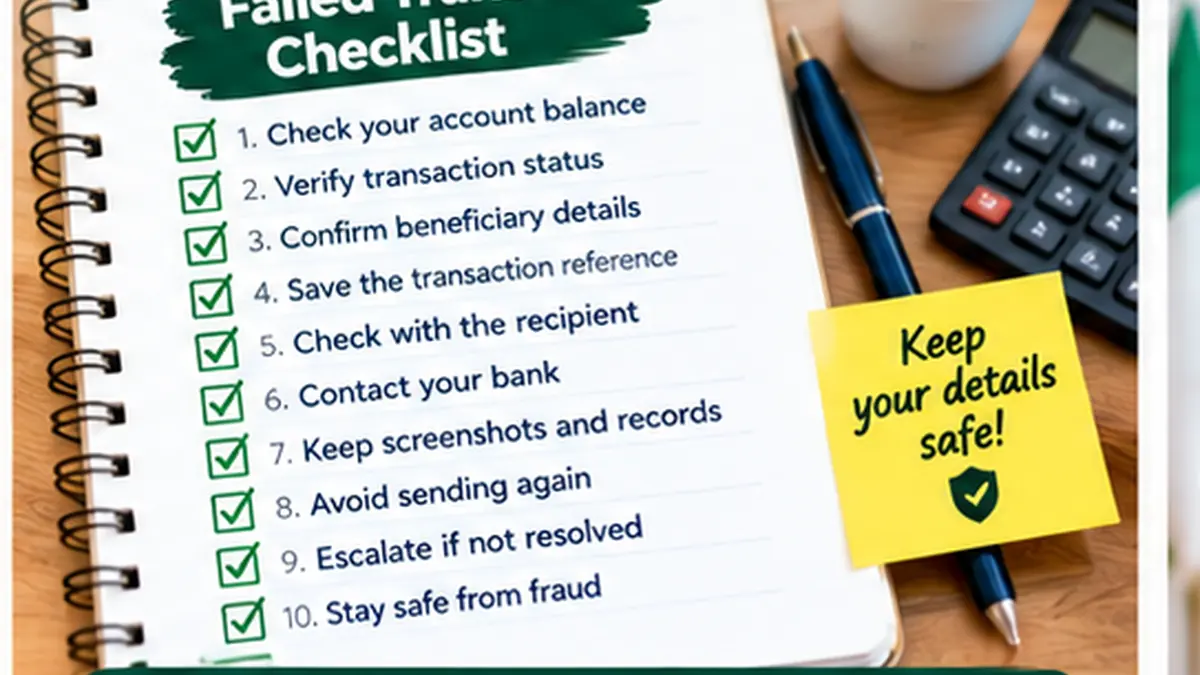
Save this checklist on your phone.
FAILED BANK TRANSFER CHECKLIST
- Check whether your account was debited.
- Check transaction status.
- Confirm recipient account number.
- Confirm recipient bank.
- Save transaction reference.
- Check with the recipient.
- Do not immediately repeat a debited transfer.
- Contact your bank through an official channel.
- Record your complaint/reference number.
- Keep screenshots and transaction evidence.
- Escalate appropriately if the complaint remains unresolved.
Example: A ₦50,000 Failed Transfer
Imagine you transfer:
₦50,000
Your account is debited, but the recipient says nothing arrived.
Don’t immediately send another ₦50,000.
Instead:
Step 1: Check your transaction history.
Step 2: Confirm the status.
Step 3: Save the reference number.
Step 4: Ask the recipient to check their account.
Step 5: Contact your bank if the issue remains unresolved.
If the original transaction later succeeds, you could otherwise end up paying ₦100,000 instead of ₦50,000.
How to Reduce Failed-Transfer Problems
You cannot prevent every technical problem, but you can reduce avoidable mistakes.
Check account details carefully
Before confirming the transfer, verify the account number and beneficiary name.
Keep your banking app updated
Use the official version of your bank’s application.
Avoid repeated transfers during system problems
If a transaction has already been initiated, check its status before trying again.
Keep transaction records
Screenshots and references can be useful when reporting problems.
Use official customer-service channels
Don’t rely on random social-media accounts claiming to represent your bank.
Frequently Asked Questions
How long does a failed bank transfer take to reverse in Nigeria?
The timing can vary depending on the type of transaction, the institutions involved and the reason for the failure. Don’t assume that every failed transaction will have the same reversal time. If you were debited and the transaction remains unresolved, contact your financial institution and keep the transaction reference.
What should I do if my bank transfer failed but I was debited?
Check the transaction status, save the reference number, confirm whether the recipient received the money and contact your bank if the issue is not resolved. Avoid immediately sending another transfer.
Can I complain to the CBN about a failed transfer?
If the financial institution has not satisfactorily resolved your complaint, CBN guidance provides for escalation of complaints involving financial institutions within its regulatory scope. You should first complain to the institution involved.
What information should I provide when reporting a failed transfer?
Provide the transaction date, time, amount, beneficiary details, transaction reference and a clear description of what happened. Keep supporting evidence.
Can a failed transfer later become successful?
Yes, a transaction that initially appears unresolved can later receive a final status depending on the circumstances. This is why checking the transaction status before sending another payment is important.
Final Thoughts
A failed bank transfer does not always mean that your money is lost.
The most important thing is to avoid panic and avoid sending the same payment repeatedly.
First determine whether you were debited, check the transaction status, keep the reference number and contact your financial institution through an official channel when necessary.
If the matter remains unresolved after you have complained to the institution, the CBN provides a route for escalating qualifying consumer complaints.
Good transaction records can make the entire process easier.
Related NaijaMoneyGuide Articles
Disclaimer
This article is for general financial education and information only. It is not financial, banking, legal or investment advice. Banking procedures, transaction systems and regulatory requirements can change. For a specific failed transaction, contact your bank or financial institution through its official channels and verify the latest applicable requirements.