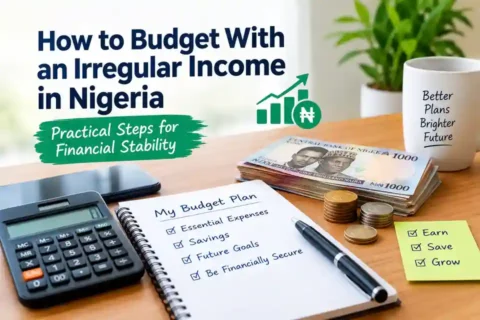
Unexpected expenses can happen at any time. A medical bill, urgent family responsibility, phone replacement, business setback, home repair or temporary loss of income can put pressure on your finances when you are not prepared.
One way to prepare is to build an emergency fund—money kept specifically for unexpected and necessary expenses.
You do not need to wait until you have a high income before starting. Even a small amount saved consistently can give you a financial cushion.
In this guide, we explain what an emergency fund is, how much you may need, how to start one in Nigeria, where to keep it and when you should use it.
Quick answer: An emergency fund is money reserved for unexpected and necessary expenses. Start with an amount you can realistically save, keep it separate from everyday spending and gradually increase the fund as your income and financial situation improve.
What Is an Emergency Fund?
An emergency fund is a dedicated cash reserve for unplanned expenses or financial emergencies.
Examples may include:
- Unexpected medical expenses
- Urgent home repairs
- Essential phone or equipment replacement
- Emergency transportation
- Sudden family responsibilities
- Temporary loss of income
- Unexpected business expenses for people who are self-employed
An emergency fund is different from money you save for planned expenses.
For example, if you know that your rent is due in three months, that is a planned expense and should generally have its own savings plan.
An emergency fund is intended for expenses you did not reasonably expect or budget for.
The Consumer Financial Protection Bureau describes emergency savings as a reserve for unplanned expenses and notes that even a small amount can provide some financial protection when unexpected costs occur.
Why Is an Emergency Fund Important?
Without emergency savings, an unexpected expense may force you to reduce money meant for other important expenses or borrow money.
For example, imagine that you have ₦80,000 available for your monthly expenses and suddenly need ₦50,000 for an urgent repair.
Without an emergency fund, you may have to:
- Borrow from friends or family.
- Take a loan.
- Delay another important payment.
- Sell an asset.
- Use money intended for another financial goal.
Having a reserve does not eliminate financial problems, but it can give you another option when an unexpected expense occurs.
The CBN identifies financial literacy as the knowledge and skills needed to manage financial resources effectively and emphasizes informed use of financial products and services.
How Much Should You Have in an Emergency Fund?
There is no single emergency-fund amount that is suitable for everyone.
Your target depends on factors such as:
- Monthly essential expenses
- Income stability
- Number of people depending on you
- Existing savings
- Debt obligations
- Employment situation
- Business income
- Insurance coverage
- Access to other reliable financial resources
Instead of focusing immediately on a large target, you can build your emergency fund in stages.
Stage 1: Start With a Small Target
Your first target could be something like:
₦20,000 → ₦50,000 → ₦100,000
The appropriate amount depends on your circumstances.
The purpose of the first stage is to establish the habit of keeping money aside for emergencies.
Stage 2: Cover a Larger Unexpected Expense
After reaching your first target, gradually increase the fund.
For example:
₦100,000 → ₦200,000 → ₦300,000
Again, these figures are examples, not universal recommendations.
Stage 3: Build Toward Your Personal Safety Cushion
Once you have a basic emergency reserve, calculate your essential monthly expenses and decide what larger emergency-fund target makes sense for you.
Someone with stable employment and low fixed expenses may have different needs from a self-employed person with irregular income and several dependants.
How to Calculate Your Emergency Fund Target
Start by calculating your essential monthly expenses.
For example:
| Expense | Monthly amount |
|---|---|
| Food | ₦50,000 |
| Transportation | ₦25,000 |
| Utilities | ₦15,000 |
| Communication | ₦10,000 |
| Essential family expenses | ₦20,000 |
| Other essential expenses | ₦10,000 |
| Total | ₦130,000 |
In this example, essential monthly expenses are ₦130,000.
You could then use that figure to create different emergency-fund targets.
For example:
1 month: ₦130,000
2 months: ₦260,000
3 months: ₦390,000
These are simple calculations based on the example above. Your own target should be based on your actual circumstances.
How to Build an Emergency Fund on a Low Income
Building emergency savings can be difficult when most of your income already goes toward necessities.
That does not mean you cannot start.
1. Start With What You Can Afford
If you can only save ₦2,000 per month, start there.
If you can save ₦5,000, use that amount.
The goal is to create a sustainable habit rather than choosing an amount that makes your monthly budget impossible.
2. Save Immediately After Receiving Income
If you receive a salary or regular income, consider transferring your planned emergency-fund contribution before spending on non-essential items.
For example:
Monthly income: ₦150,000
Emergency savings: ₦5,000
Remaining amount: ₦145,000
The amount you choose should be affordable for your circumstances.
3. Save Extra Income
When you receive money outside your normal income, you can decide whether part of it should go toward your emergency fund.
Examples could include:
- Bonuses
- Extra business income
- Gifts
- Occasional freelance income
- Money from selling unused items
You do not necessarily need to save all of it. The important thing is to have a clear plan.
4. Reduce One Unnecessary Expense
Look through your monthly spending and identify one expense you can reasonably reduce.
For example, if you reduce unnecessary spending by ₦5,000 per month and put that amount into your emergency fund:
₦5,000 × 12 = ₦60,000
After one year, you would have contributed ₦60,000, assuming the same contribution every month.
Create a Separate Emergency Savings Account
Keeping emergency money separate from everyday spending can make it easier to protect the fund.
For example, you could have:
Account 1: Everyday spending
Account 2: Emergency savings
The objective is to make the purpose of the money clear.
Before choosing a savings account or financial institution, check the applicable fees, withdrawal conditions, account terms and regulatory status.
The CBN advises consumers to understand the terms and conditions of savings arrangements and recommends using licensed financial institutions.
Where Should You Keep Your Emergency Fund?
Your emergency fund should generally be somewhere that is:
- Relatively safe
- Accessible when genuinely needed
- Separate from everyday spending
- Easy for you to monitor
- Appropriate for the purpose of the money
A regulated bank savings account may be one option.
However, do not choose an account simply because it advertises a particular return.
Before using any financial product, understand:
- Fees
- Withdrawal rules
- Minimum balance requirements
- Interest conditions
- Restrictions
- Applicable deposit-protection arrangements
The CBN’s consumer guidance also recommends monitoring accounts and being alert to fraud and unauthorized transactions.
Should You Keep Emergency Money as Cash?
Some people prefer to keep a small amount of physical cash available for urgent situations.
However, keeping large amounts of cash at home can expose you to risks such as theft, loss or damage.
If you keep any emergency cash at home, consider the security implications and avoid keeping more physical cash than is reasonably necessary.
For the larger portion of your emergency fund, consider an appropriate regulated financial arrangement that provides access when needed.
When Should You Use Your Emergency Fund?
An emergency fund should be used for genuine unexpected needs rather than ordinary spending.
Good examples
You may consider using it for:
- Unexpected medical expenses
- Urgent repairs
- Essential replacement of damaged equipment
- Unexpected travel caused by a genuine emergency
- Temporary loss of income
- Other necessary expenses that were not reasonably planned for
Expenses that may not qualify as emergencies
You may want to avoid using emergency savings for:
- New clothes you simply want
- Entertainment
- Unplanned luxury purchases
- New gadgets when your current one works
- Regular monthly bills that you already knew about
- Impulse purchases
The exact definition of an emergency depends on your personal circumstances.
The important principle is to establish your own rules before you need the money.
What If You Use Your Emergency Fund?
Using your emergency fund does not mean that you have failed.
That is what the fund exists for.
Suppose you have ₦200,000 saved and use ₦80,000 to handle an unexpected expense.
Your remaining balance becomes:
₦200,000 − ₦80,000 = ₦120,000
Once the emergency has passed, make rebuilding the fund part of your financial plan.
For example, if you normally save ₦10,000 per month, you could continue contributing that amount until the fund reaches your new target.
The Consumer Financial Protection Bureau similarly recommends rebuilding emergency savings after using it for an unexpected expense.
Emergency Fund vs Regular Savings
These two types of savings can have different purposes.
| Emergency Fund | Regular Savings |
|---|---|
| Unexpected expenses | Planned goals |
| Medical emergencies | School fees |
| Temporary income loss | Rent |
| Urgent repairs | Business purchases |
| Unexpected essential costs | Travel |
| Financial shocks | New equipment |
Keeping these purposes separate can help prevent you from spending emergency money on planned purchases.
Financial education resources also distinguish emergency savings from savings for specific future goals.
Emergency Fund vs Investment
An emergency fund and an investment serve different purposes.
Emergency savings are primarily about having accessible money available when an unexpected financial need occurs.
Investments are generally intended for longer-term financial goals and can involve risks, including the possibility that the value may fall.
For this reason, money that you may urgently need should not automatically be placed into an investment simply because you hope to earn a higher return.
Understand the purpose, accessibility and risk of a financial product before using it.
A Simple 6-Month Emergency Fund Plan
Here is an example of how someone could build a ₦120,000 emergency fund over six months.
| Month | Monthly contribution | Total saved |
|---|---|---|
| Month 1 | ₦20,000 | ₦20,000 |
| Month 2 | ₦20,000 | ₦40,000 |
| Month 3 | ₦20,000 | ₦60,000 |
| Month 4 | ₦20,000 | ₦80,000 |
| Month 5 | ₦20,000 | ₦100,000 |
| Month 6 | ₦20,000 | ₦120,000 |
This is only an example.
If ₦20,000 per month is too high for your budget, you could save ₦5,000 or ₦10,000 instead and take longer to reach your target.
A slower plan that you can maintain may be more practical than an aggressive plan that causes you to fall behind on essential expenses.
How to Stay Consistent With Emergency Savings
Building the fund is only part of the process. You also need to protect the habit.
Set an automatic transfer if available
If your financial institution provides an automatic savings feature, you may use it to move a planned amount regularly.
Track your progress
Create a simple record:
Target: ₦200,000
Current balance: ₦85,000
Remaining: ₦115,000
Seeing your progress can make the goal easier to manage.
Increase contributions when possible
If your income increases, consider reviewing your emergency-fund contribution.
Avoid unnecessary withdrawals
Before withdrawing money, ask:
Is this unexpected?
Is it necessary?
Can the expense be paid from my normal budget instead?
If the answer is yes to the first two questions and your normal budget cannot cover it, the emergency fund may be serving its intended purpose.
Common Emergency Fund Mistakes
Waiting until you earn more money
You can start with a small amount instead of waiting for a perfect financial situation.
Setting an unrealistic target
A target should fit your actual income and responsibilities.
Mixing emergency savings with spending money
This can make it easier to spend the money unintentionally.
Using emergency savings for wants
An emergency fund should have a clear purpose.
Chasing high returns
Emergency money has a different purpose from long-term investment money. Do not take unnecessary risk simply to pursue a higher return.
Ignoring account fees
Fees can gradually reduce your savings. Always check the terms of an account or financial product.
Sharing banking credentials
Never give your PIN, password, OTP or other confidential banking credentials to someone claiming they need them to help manage your savings.
A Simple Emergency Fund Checklist
Before you start, answer these questions:
- [ ] What are my essential monthly expenses?
- [ ] What is my first emergency-fund target?
- [ ] How much can I save every month?
- [ ] Where will I keep the money?
- [ ] What will count as an emergency?
- [ ] How will I rebuild the fund after using it?
- [ ] When will I review my target?
Once you answer these questions, you have a basic emergency-savings plan.
Frequently Asked Questions
How much should I have in an emergency fund in Nigeria?
There is no universal amount. Calculate your essential monthly expenses and consider your income stability, family responsibilities, debts and other financial resources when setting a target.
Can I build an emergency fund with a small salary?
Yes. Start with an amount you can realistically afford. A small contribution made consistently is a practical starting point.
Where should I keep my emergency fund?
Consider a safe and accessible savings arrangement that suits your needs. If you use a financial institution, check that it is appropriately regulated and understand its fees, withdrawal rules and terms.
Should my emergency fund be in cash?
You may keep a small amount of cash for situations where electronic payments or banking access may not be available, but keeping large amounts of cash at home can expose you to theft, loss or damage.
Can I use my emergency fund for rent?
If rent is a known and planned expense, it is generally better to create a separate rent-savings plan. An emergency fund is intended primarily for unexpected and necessary expenses.
What happens if I spend my emergency fund?
Rebuild it after the emergency has been handled. Adjust your monthly budget if necessary and continue contributing until you reach your desired target again.
Is an emergency fund better than investing?
They serve different purposes. An emergency fund focuses on accessible money for unexpected needs, while investments are generally intended for longer-term goals and can involve risk.
Final Thoughts
An emergency fund is not about having a huge amount of money immediately.
It is about creating a financial cushion before an unexpected expense occurs.
Start with a realistic target, save consistently, keep the money separate from everyday spending and review your target as your financial situation changes.
Even if your first target is only ₦20,000 or ₦50,000, reaching that milestone can be the beginning of a larger emergency fund.
Financial Disclaimer
This article is provided for general financial education and informational purposes only. It does not constitute personal financial, investment, legal or tax advice. Savings products, fees, interest rates, regulations and financial-institution terms can change. Readers should verify current information with the relevant regulated financial institution or official authority before making financial decisions.