Managing money becomes easier when you know exactly what each naira in your bank account is supposed to do.
Many people receive their income into one account and use the same balance for food, bills, transfers, savings, emergencies and personal spending. The problem is that everything becomes mixed together, making it difficult to know how much money is actually available to spend.
how to organize a bank account in Nigeria
A simple bank-account organization system can help you separate your priorities and reduce unnecessary spending.
In this guide, you will learn how to organize your bank account using a practical system that can work for salary earners, business owners, students and people with irregular income in Nigeria.
Why Your Bank Account Needs a System
Having money in a bank account does not automatically mean that the money is being managed well.
For example, imagine that ₦200,000 enters your account. Without a plan, you might spend ₦30,000 on food, ₦20,000 on transfers and miscellaneous expenses, ₦40,000 on bills and gradually use the remaining balance without realizing how quickly it is disappearing.
The problem may not be your income. It may be the absence of a system.
Your account should make it easier to answer three questions:
- How much money can I spend?
- How much must I keep for important payments?
- How much am I keeping for the future?
The 3-Bucket Bank Account System
A practical approach is to divide your money into three purposes:
1. Spending Money
This is the money you can use for normal day-to-day expenses.
Examples include:
- Food
- Transportation
- Airtime and data
- Small household purchases
- Personal expenses
- Other planned everyday spending
The important rule is simple:
Money meant for spending should not be confused with money meant for saving.
2. Bills and Obligations
This bucket is for expenses that you already know are coming.
Examples include:
- Rent
- School expenses
- Electricity
- Internet
- Business-related payments
- Family obligations
- Loan repayments where applicable
If a bill is expected later in the month, putting the money aside early can prevent you from accidentally spending it.
3. Savings and Future Goals
This is money that should not normally be used for everyday spending.
You could use this bucket for:
- Emergency savings
- Business capital
- Education
- A major purchase
- Future investment
- A specific financial goal
The purpose is not simply to leave money untouched. The purpose is to give your future money a separate job.
You Don’t Necessarily Need Three Bank Accounts
The three-bucket system does not mean you must open three bank accounts.
If your bank or financial app provides suitable features for separating money, you may be able to organize your finances without maintaining multiple traditional accounts.
The key idea is separation of purpose, not the number of accounts.
However, if using separate accounts helps you avoid spending your savings, it can be worth considering.
Before opening another account, check its requirements, charges and features.
You can also read our guide on how to open a bank account in Nigeria before making a decision.
A Simple Example With ₦150,000
Suppose you receive ₦150,000 during the month.
Instead of treating the entire amount as available spending money, create a plan.
For example:
| Purpose | Planned Amount |
|---|---|
| Everyday spending | ₦70,000 |
| Bills and obligations | ₦50,000 |
| Savings | ₦30,000 |
| Total | ₦150,000 |
These figures are only an illustration. Your own allocation should depend on your income, household responsibilities and financial goals.
The important lesson is that you decide what the money is for before spending it.
Try the “No Mixing” Rule
One of the easiest ways to improve money management is to stop treating every naira in your account as spendable.
For example, if you have:
₦100,000 total balance
but:
- ₦30,000 is for rent
- ₦20,000 is for savings
- ₦10,000 is for an upcoming bill
then your actual flexible spending money is only:
₦40,000
This small mental change can prevent unnecessary spending.
Create a Payday Routine
If you receive a salary or regular income, don’t wait until the end of the month to decide what happened to your money.
Create a routine.
Step 1: Receive your income
Let your salary, business income or other legitimate income enter your main account.
Step 2: Set aside important obligations
Identify expenses that must be paid during the month.
Step 3: Move your savings
Transfer your planned savings before you begin normal spending.
Step 4: Keep your spending allowance
The remaining amount becomes your flexible spending budget.
Step 5: Review your account
At the end of the month, check whether you stayed within your plan.
This turns money management into a repeatable process instead of something you only think about when your balance becomes low.
What If Your Income Is Not Regular?
Not everyone in Nigeria receives a fixed salary every month.
Traders, freelancers, farmers, online workers, commission earners and small-business owners may receive different amounts at different times.
In that situation, avoid building your entire budget around an expected income that has not arrived.
Instead, whenever money comes in, divide it according to your current priorities.
For example, if you receive ₦50,000 today, you could immediately decide how much should go toward:
- Current expenses
- Upcoming obligations
- Savings
- Business or income-generating needs
When another ₦30,000 arrives, repeat the process.
This approach is more realistic for variable income.
Use a “Waiting Period” for Unplanned Purchases
Your bank balance can make an unnecessary purchase look affordable.
Instead of asking:
“Can I afford ₦20,000?”
ask:
“Will buying this ₦20,000 item affect any money that already has a purpose?”
For non-essential purchases, consider waiting before paying.
The waiting period can help you distinguish between something you actually need and something you simply want at that moment.
Watch Small Digital Payments
Small payments can be difficult to notice because each transaction may appear insignificant.
For example:
- ₦500
- ₦1,000
- ₦1,500
- ₦2,000
Repeated many times, these transactions can become a meaningful monthly expense.
This is why reviewing your transaction history is useful.
Our 30-Minute Bank Account Checkup can help you identify spending patterns and money leaks.
Keep an Eye on Bank Charges
Bank charges can also affect your available balance.
Review your transaction history periodically and understand the charges appearing on your account.
If you notice an unfamiliar charge, check the transaction details and contact your bank through its official customer-service channel when necessary.
You can also read: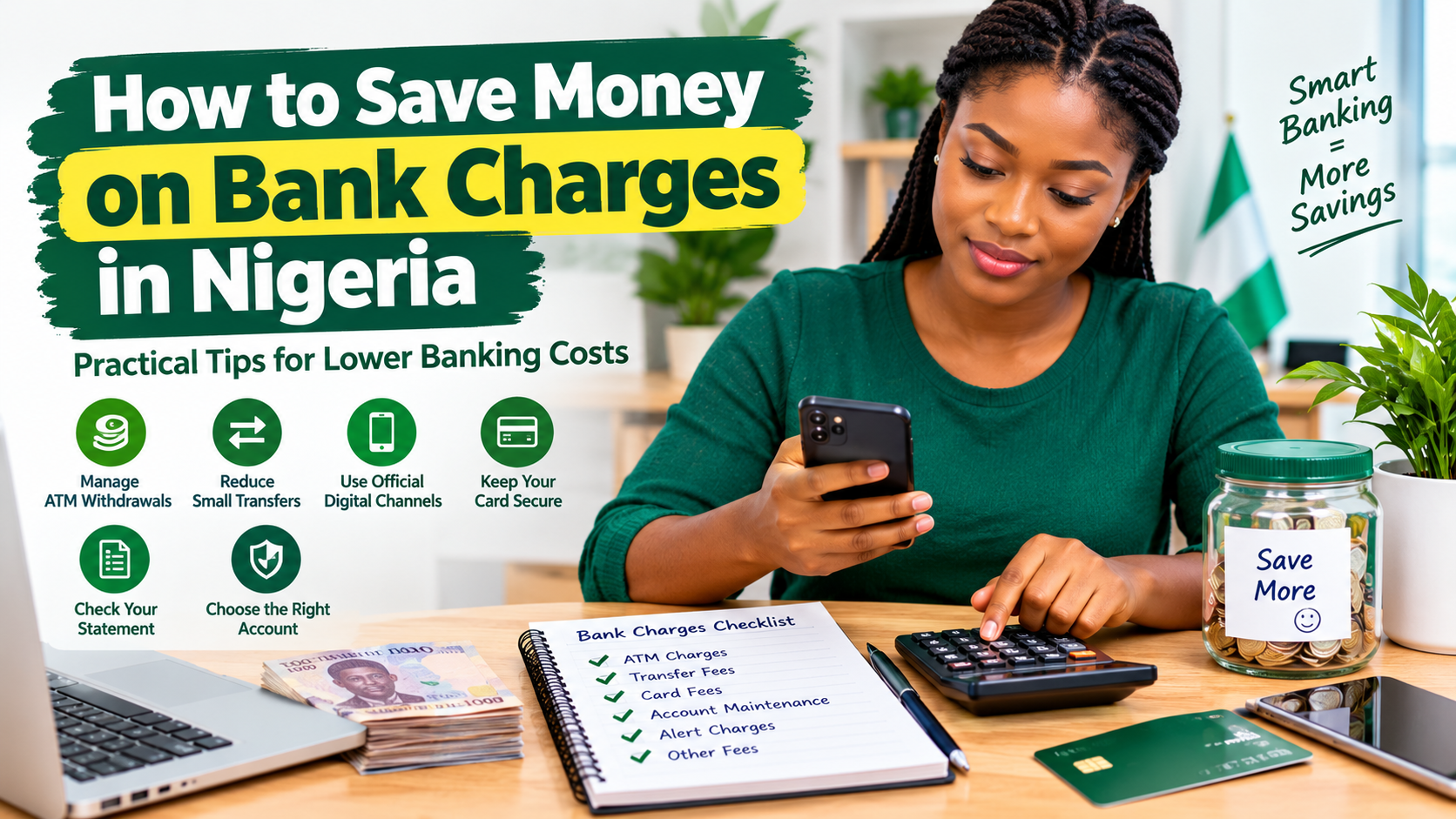
Bank Account Charges in Nigeria Common Fees You Should Know
Don’t Use Savings as Your Everyday Wallet
A common problem is saving money and then repeatedly withdrawing it for normal expenses.
If that happens often, your savings may need stronger separation.
Ask yourself:
“What is the purpose of this money?”
If the answer is emergency savings, business capital or another long-term goal, avoid treating it as money for routine purchases.
For practical saving strategies, see our guide on how to save money in a bank account in Nigeria.
A Monthly Bank Account Reset
At the beginning or end of every month, spend 15–20 minutes reviewing your finances.
Check:
Income
How much money came in?
Bills
What must be paid before the next income?
Spending
Where did most of your money go?
Savings
How much did you keep?
Charges
Were there bank-related costs you could have avoided?
Next month
What is the one financial habit you want to improve?
You do not need complicated financial software to perform this review. Your bank statement or transaction history may provide enough information to begin.
The “Four Questions” Before Spending
Before making a significant purchase, ask:
1. Is it necessary?
Do I genuinely need it?
2. Is it already budgeted?
Did I plan for this expense?
3. Which money will pay for it?
Am I using spending money, bill money or savings?
4. What happens after I pay?
Will the purchase affect an important upcoming obligation?
These questions take less than a minute but can improve spending discipline.
How to Choose the Right Bank Account Structure
Your account structure should match your financial situation.
If you are a student, you may need a simple account for receiving money and controlling daily expenses.
If you are a salary earner, separating everyday spending from savings may be useful.
If you run a business, keeping business transactions separate from personal spending can make financial tracking easier.
If you are considering another savings account, compare its requirements, charges, accessibility and available features before opening it.
Read our guide on how to choose the best savings account in Nigeria.
A Simple Monthly Template
You can use this template every month:
Income received: ₦__________
Money for bills: ₦__________
Money for everyday spending: ₦__________
Money for savings: ₦__________
Business/income expenses: ₦__________
Other planned expenses: ₦__________
Expected remaining balance: ₦__________
At the end of the month:
Actual remaining balance: ₦__________
Amount saved: ₦__________
Largest unnecessary expense: ₦__________
One thing to improve next month: __________
Mistakes to Avoid
Treating your entire balance as available money
Your balance may include money already committed to bills or savings.
Keeping everything in one mental category
When every naira is simply “money,” spending becomes harder to control.
Saving only what remains
If you wait until the end of the month to save, there may be little left.
Ignoring transaction history
Your bank statement can reveal spending patterns that you don’t notice during everyday transactions.
Opening accounts without checking the conditions
More accounts are not automatically better. Consider charges, requirements, convenience and purpose before opening another account.
Frequently Asked Questions
How many bank accounts should I have in Nigeria?
There is no universal number that is right for everyone. One account may be enough for some people, while others may benefit from separating spending, bills and savings.
Should I keep my savings in a different account?
A separate account can make savings easier to protect from everyday spending, but the right arrangement depends on your financial situation and the features and costs of the accounts available to you.
Can this system work for people with irregular income?
Yes. Instead of relying on a fixed monthly salary, you can apply the same three purposes whenever income arrives: spending, obligations and future goals.
Is keeping money in a bank account enough to build wealth?
No. Saving is an important financial habit, but long-term financial progress may also involve increasing income, managing debt responsibly and learning about suitable investment options.
How often should I review my bank account?
A short review once a week can help you monitor spending, while a more detailed review once a month can help you evaluate your overall progress.
Final Thoughts
A well-organized bank account is not about having a large balance.
It is about knowing what your money is meant to do.
When you separate spending money from bills and savings, your bank balance becomes easier to understand and your financial decisions become more intentional.
Start with a simple system today. You can improve it as your income, responsibilities and financial goals change.
Related Guides on NaijaMoneyGuide
Disclaimer
This article is for general financial education and information only. It does not constitute financial, investment, banking or legal advice. Bank products, requirements, charges and features can change, so readers should verify current information directly with their bank or relevant financial institution before making financial decisions.