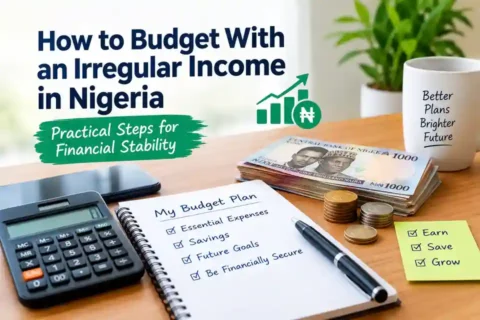
Saving money can be difficult when income is limited and everyday expenses continue to rise. However, saving does not always require a large salary. A realistic saving plan can start with a small amount and become stronger as your income and financial habits improve.
If you are searching for how to save money in Nigeria, how to save money monthly, or how to save money on a low income, this guide explains practical steps you can use to build a consistent saving habit.
The Central Bank of Nigeria (CBN) defines saving as setting something of value aside for future use. It also explains that savings are the part of income that is not spent on consumption.
Important: This article provides general financial education. It is not personalised financial, investment or legal advice. Before opening an account or using a financial product, check the current terms, charges, risks and regulatory status of the provider.
What Does Saving Money Mean?
Saving money means keeping part of your income instead of spending all of it immediately.
For example, if you earn ₦150,000 in a month and decide to keep ₦15,000 for future needs, that ₦15,000 becomes part of your savings.
You can save for different purposes, including:
- Emergency expenses
- Rent
- School fees
- Business capital
- Buying equipment
- Medical or family expenses
- A future project
- Travel
- Retirement
- A personal financial goal
The most important part is to give the money a clear purpose.
Why Is Saving Money Important?
Saving can provide a financial buffer when unexpected expenses occur.
Without savings, an unexpected bill may force you to borrow money, sell an asset or delay an important payment.
Some common reasons Nigerians save include emergencies, future purchases and smoothing income when earnings are irregular.
The CBN’s financial-literacy materials have also identified emergencies and income-smoothing among important reasons people save.
Saving can help you:
- Prepare for unexpected expenses.
- Reduce dependence on emergency borrowing.
- Plan for major purchases.
- Build financial discipline.
- Create money for future opportunities.
- Separate short-term spending from long-term goals.
15 Practical Ways to Save Money in Nigeria
1. Know Exactly How Much You Earn
Before deciding how much to save, calculate your actual monthly income.
If you have a salary, this may be relatively straightforward.
If you are a trader, freelancer, farmer, business owner or gig worker, your income may change from month to month.
In that situation, calculate your average income over several months and build a saving plan that does not depend on your best month.
2. Track Your Spending
One of the simplest ways to discover where your money goes is to record your expenses.
For one month, write down:
- Food
- Transportation
- Airtime and data
- Rent
- Electricity
- School expenses
- Subscriptions
- Shopping
- Entertainment
- Family support
- Business expenses
- Debt repayments
- Other miscellaneous spending
After a month, review the list.
You may discover that several small expenses are taking a significant portion of your income.
3. Create a Simple Monthly Budget
A budget tells your money where to go before you spend it.
A simple budget can divide your income into:
Needs + Savings + Debt Payments + Personal Spending
For example, someone earning ₦200,000 might create a plan such as:
| Category | Example Amount |
|---|---|
| Essential expenses | ₦130,000 |
| Savings | ₦30,000 |
| Debt repayment | ₦20,000 |
| Personal/flexible spending | ₦20,000 |
| Total | ₦200,000 |
This is only an example. Your actual percentages should depend on your income, household responsibilities and existing obligations.
The goal is not to copy somebody else’s budget. The goal is to create a plan you can realistically maintain.
4. Pay Yourself First
A common problem is waiting until the end of the month to see what remains before saving.
Often, nothing remains.
Instead, decide on your savings amount before discretionary spending begins.
For example:
Income received → Savings → Essential expenses → Other spending
If you receive ₦100,000 and choose to save ₦10,000, move the ₦10,000 into your designated savings immediately.
This makes saving a regular financial habit rather than an occasional decision.
5. Start With a Small Amount
You do not need to wait until you can save ₦100,000 before starting.
If your income is limited, you could begin with an amount you can consistently afford.
For example:
- ₦500 weekly = ₦26,000 in a year
- ₦1,000 weekly = ₦52,000 in a year
- ₦5,000 monthly = ₦60,000 in a year
- ₦10,000 monthly = ₦120,000 in a year
These figures assume you maintain the contribution throughout the year and do not include interest or investment returns.
The important lesson is consistency.
6. Separate Savings From Everyday Spending
Keeping all your money in one account can make it easier to spend money intended for future goals.
Consider using a separate savings arrangement for money you do not intend to spend immediately.
Before using any savings product, check:
- Who operates it
- Whether the institution is appropriately licensed
- Interest or return terms
- Fees
- Withdrawal restrictions
- Minimum balance requirements
- Conditions for closing the account
- Applicable consumer protections
CBN explains that banks and other financial institutions operate under regulatory frameworks, while deposit insurance is handled by the Nigeria Deposit Insurance Corporation (NDIC) for covered institutions and deposits.
7. Build an Emergency Fund
An emergency fund is money reserved for unexpected but important expenses.
Examples include:
- Emergency medical expenses
- Urgent home repairs
- Temporary loss of income
- Essential transportation problems
- Unexpected family responsibilities
Do not treat an emergency fund as money for regular shopping.
If you are starting from zero, your first goal could simply be building enough savings to handle one small unexpected expense.
As your financial situation improves, you can gradually increase the amount.
8. Reduce Unnecessary Spending
Saving does not mean eliminating everything you enjoy.
Instead, identify expenses that provide little value to you.
For example, review:
- Unused subscriptions
- Frequent impulse purchases
- Unplanned online shopping
- Excessive food delivery
- Unnecessary transportation costs
- Repeated small purchases
- Unused memberships
Cutting even a few unnecessary expenses each month can create additional money for savings.
9. Use the 24-Hour Rule for Impulse Purchases
Before buying something you did not plan for, wait 24 hours.
Ask yourself:
Do I need it, or do I simply want it right now?
For expensive purchases, you may choose to wait even longer.
This simple habit can reduce impulse spending and give you more control over your money.
10. Save Extra Income
When you receive money outside your normal income, consider saving part of it.
Examples include:
- Bonuses
- Gifts
- Side-hustle income
- Business profits
- Seasonal income
- Refunds
- Unexpected legitimate payments
You do not necessarily have to save all of the money.
For example, you could decide beforehand that a certain percentage of unexpected income goes toward a financial goal.
11. Save Automatically Where Possible
If your bank or savings provider offers an automatic savings feature, you may be able to schedule regular transfers.
For example, you could arrange a transfer shortly after receiving your salary.
Automation can reduce the temptation to spend money before saving it.
However, always check whether automatic transfers have fees, limits or other conditions.
12. Set a Specific Savings Goal
“I’m going to save money” is less specific than:
“I want to save ₦120,000 within 12 months.”
A specific target gives you something measurable.
For example:
Goal: ₦120,000
Time: 12 months
Monthly saving: ₦10,000
If you save ₦10,000 each month for 12 months, your contributions total ₦120,000, excluding any applicable interest or charges.
13. Avoid Using Savings for Everyday Expenses
If you repeatedly withdraw from your savings for ordinary spending, your savings goal may never grow.
Before withdrawing money, ask:
Is this an emergency, a planned expense or an impulse purchase?
If it is an ordinary expense, look at your monthly budget first.
14. Be Careful With “Double Your Money” Schemes
Be cautious when someone promises unusually high or guaranteed returns with little or no risk.
The CBN has specifically warned consumers about unlicensed “wonder banks” that collect money while promising high returns.
Before giving your money to an unfamiliar financial platform or organisation:
- Verify the company.
- Check the relevant regulator where applicable.
- Understand how the product works.
- Read the terms and conditions.
- Find out how withdrawals work.
- Check the fees.
- Do not rely only on social-media testimonials.
- Be suspicious of pressure to deposit immediately.
A high promised return does not automatically mean a safe product.
15. Review Your Savings Every Month
At the end of every month, check:
- How much did I earn?
- How much did I spend?
- How much did I save?
- Did I exceed my budget?
- What caused the extra spending?
- Can I increase my savings next month?
- Am I still working toward my goal?
A monthly review allows you to correct problems early.
How Much Should I Save Every Month?
There is no single amount that works for everyone.
Someone earning ₦80,000 may have very different responsibilities from someone earning ₦500,000.
Instead of copying another person’s savings target, consider your:
- Income
- Rent
- Food costs
- Transportation
- Dependants
- Debt
- Business expenses
- Existing savings
- Financial goals
For someone starting out, even a small consistent contribution can be useful.
For example:
| Monthly Income | Example Saving Target |
|---|---|
| ₦80,000 | ₦4,000 |
| ₦100,000 | ₦5,000 |
| ₦150,000 | ₦7,500 |
| ₦200,000 | ₦10,000 |
| ₦300,000 | ₦15,000 |
| ₦500,000 | ₦25,000 |
These are illustrative examples, not recommended amounts. Your personal circumstances should determine your actual savings target.
How to Save Money on a Low Income
If your income is low, the solution is not necessarily to set an unrealistic savings target.
Try these steps:
Start small
Saving ₦500 or ₦1,000 consistently is better than creating a large target that you cannot maintain.
Save immediately after receiving income
Do not wait until everything has been spent.
Track every expense
Small daily purchases can add up.
Reduce avoidable costs
Look for expenses you can reduce without affecting essential needs.
Increase income where possible
Saving becomes easier when you can increase your income through legitimate work, business or additional skills.
Increase your savings gradually
If your income increases, consider increasing your savings contribution instead of immediately increasing every expense.
Where Can You Keep Your Savings?
Possible options can include:
- Savings accounts
- Other regulated deposit products
- Appropriate savings products offered by licensed financial institutions
- Certain structured financial products, depending on your goal and risk tolerance
The right option depends on what the money is for.
For short-term emergency money, accessibility and safety may be more important than chasing a high return.
For longer-term goals, you may consider other financial products after understanding their risks and terms.
Do not assume that every app, website, cooperative, investment platform or money-collection scheme offers the same level of protection.
Always verify the provider and understand the product before depositing money.
Savings Account vs Keeping Cash at Home
Keeping cash at home may appear convenient, but it can expose the money to risks such as theft, loss, fire or spending temptation.
A formal savings arrangement can provide account records and easier access to certain financial services.
However, financial institutions and products have their own terms, charges and risks.
The CBN’s financial-literacy materials explain that regulated financial institutions provide different services, including deposit-taking and electronic banking.
A Simple 30-Day Saving Challenge
If you have never saved consistently, try this simple challenge.
Week 1
Record every expense.
Week 2
Identify three unnecessary expenses you can reduce.
Week 3
Transfer a fixed amount into your savings.
Week 4
Review your spending and calculate how much you saved.
At the end of the month, set your target for the following month.
The amount is less important than creating a repeatable system.
Example: Saving ₦10,000 Every Month
Suppose you decide to save ₦10,000 every month.
| Period | Total Contributions |
|---|---|
| 1 month | ₦10,000 |
| 3 months | ₦30,000 |
| 6 months | ₦60,000 |
| 12 months | ₦120,000 |
| 24 months | ₦240,000 |
These calculations assume you make the full contribution every month and do not withdraw from the savings.
If the savings product pays interest or another return, the final balance could be different. Fees, taxes where applicable and product terms can also affect the outcome.
What Should You Save For First?
Your priorities will depend on your situation, but a practical order could be:
- Cover essential living expenses.
- Build an initial emergency buffer.
- Deal with expensive debt where appropriate.
- Continue building emergency savings.
- Save toward specific short- and medium-term goals.
- Consider suitable long-term investments after understanding the risks.
This is not a universal financial formula. Your circumstances may require a different order.
Common Saving Mistakes to Avoid
Saving without a goal
A clear target makes it easier to measure progress.
Saving an unrealistic amount
A target that consistently causes you to miss essential expenses may not be sustainable.
Keeping savings where you spend
Separating savings from everyday spending can improve discipline.
Ignoring fees
Some financial products have account, transfer, withdrawal or other charges.
Chasing unrealistic returns
Promises of very high or guaranteed returns should be investigated carefully.
Using emergency savings for non-emergencies
If every ordinary purchase comes from your emergency fund, the fund may not be available when you actually need it.
Never reviewing your budget
Income and expenses change. Your budget should change when your circumstances change.
Frequently Asked Questions About Saving Money in Nigeria
What is the easiest way to start saving money?
Start by deciding on a realistic amount, separating it from your everyday spending and making the contribution regularly.
How can I save money every month?
Create a monthly budget, decide on a savings target and transfer the money before discretionary spending.
Can I save money if my salary is small?
Yes. You can begin with a small amount that does not interfere with essential expenses and increase it as your income improves.
How much should I save from my salary?
There is no universal percentage that is suitable for everyone. Consider your income, expenses, dependants, debt and financial goals before choosing an amount.
Where is the safest place to keep savings in Nigeria?
Safety depends on the financial institution and product. Before depositing money, verify the provider’s regulatory status, understand applicable deposit protection, and read the product terms.
Is keeping money at home a good way to save?
Cash at home may be convenient, but it can expose your money to theft, loss, damage and spending temptation. Consider the risks before choosing where to keep savings.
What is an emergency fund?
An emergency fund is money reserved for unexpected essential expenses or financial emergencies.
Should I invest instead of saving?
Saving and investing serve different purposes. Savings can be appropriate for accessible short-term needs, while investments can involve greater risk and may be more suitable for longer-term goals. Understand the product before committing your money.
Can I save ₦1,000 every week?
Yes. If you save ₦1,000 every week for 52 weeks, your contributions would total ₦52,000, assuming you do not withdraw the money.
Final Thoughts
Learning how to save money in Nigeria does not have to begin with a large amount of money.
Start by understanding your income, tracking your expenses, creating a realistic budget and setting aside an amount you can maintain consistently.
As your income changes, review your savings target and financial goals.
Most importantly, be careful with financial products or schemes that promise unusually high returns without clearly explaining the risks. Verify providers and understand the terms before committing your money.
Good saving is not about saving the largest amount possible in one month. It is about developing a financial system that you can realistically maintain over time.
Related Money & Saving Topics
For more practical financial education, readers can also explore related Naija Money Guide articles such as:
Editor’s Note: Financial products, fees, regulations and account conditions can change. Always verify current information directly with the relevant financial institution or regulator before making a financial decision.
Disclaimer: Naija Money Guide provides general financial information for educational purposes. The information on this page should not be treated as personalised financial, investment, legal or tax advice. Readers should independently verify current terms, rates, charges, eligibility requirements and regulatory information before making financial decisions.
Last Updated: September 2026