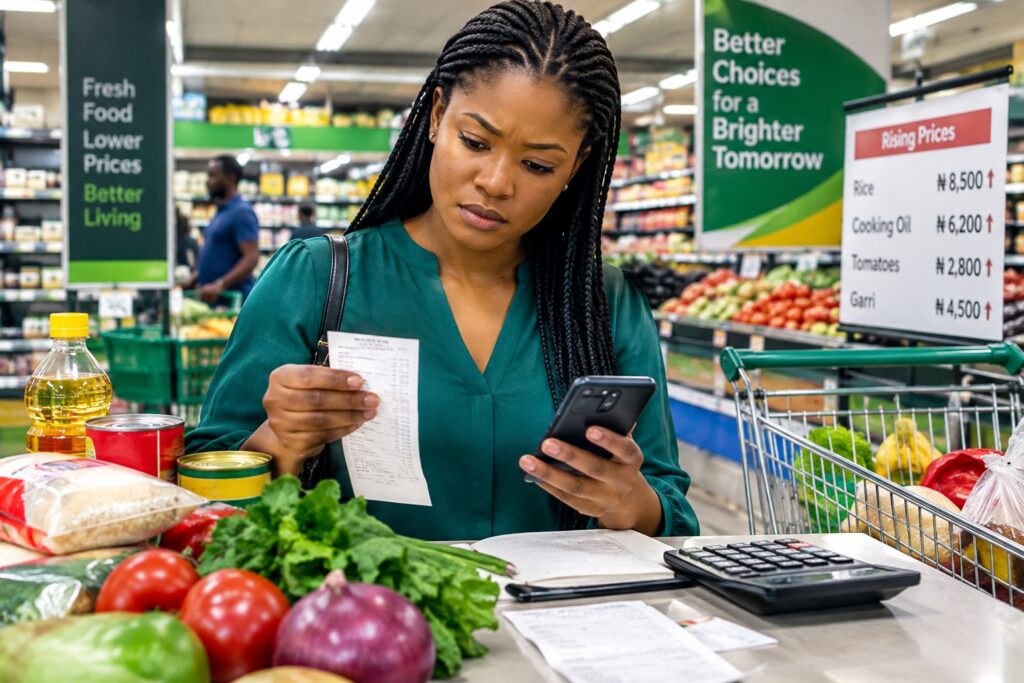
Inflation is one of the most important economic topics for anyone managing money in Nigeria.
When prices of food, transportation, rent, electricity and other goods and services change, inflation can affect how much households need to spend each month.
But what exactly is inflation? Why does it happen? How is inflation measured in Nigeria? And what can individuals and businesses do when their purchasing power comes under pressure?
This guide explains inflation in Nigeria in simple terms, including how the inflation rate works, the difference between inflation and high prices, common causes of inflation and practical steps for managing personal finances during periods of changing prices.
Important: Inflation data changes when the National Bureau of Statistics publishes new Consumer Price Index reports. Always check the latest official NBS release when using a current inflation figure.
Quick Summary
- Inflation refers to the rate at which the general level of prices changes over time.
- Nigeria’s official inflation statistics are published by the National Bureau of Statistics (NBS).
- Inflation can affect food, transportation, housing, utilities, education and other household expenses.
- Lower inflation does not necessarily mean that prices have returned to previous levels.
- Your personal experience of inflation may differ from the official national rate.
- Budgeting, expense tracking, emergency savings and careful debt management can help households adapt to changing prices.
- Businesses also need to monitor costs, pricing and customer demand when inflation changes.
What Is Inflation?
Inflation is a sustained increase in the general price level of goods and services over time.
In simple terms, inflation means that the same amount of money may buy fewer goods and services than it did previously.
For example, imagine that a household spends ₦100,000 on a particular basket of goods and services.
If the prices of those items increase, the household may need ₦110,000 or more to purchase a similar basket later.
This is one way inflation can reduce purchasing power.
However, individual products do not all increase in price at exactly the same rate.
What Is the Inflation Rate?
The inflation rate is usually expressed as a percentage.
It measures the change in the prices of a selected basket of goods and services over a specified period.
Nigeria’s National Bureau of Statistics uses the Consumer Price Index (CPI) as an important measure of consumer price changes.
The CPI covers different categories of goods and services consumed by households.
These include areas such as:
- Food
- Housing
- Transportation
- Clothing
- Health
- Education
- Communication
- Restaurants and accommodation
- Household goods
- Recreation
Because households have different spending patterns, the official inflation rate may not exactly match the price experience of every individual.
How Is Inflation Measured in Nigeria?
The National Bureau of Statistics collects price information and uses it to calculate the Consumer Price Index.
The CPI tracks changes in the prices of a basket of goods and services.
NBS periodically publishes:
- Headline inflation
- Food inflation
- Core inflation
- Consumer Price Index information
- Other related price statistics
For current figures, readers should use the latest official NBS publication because inflation data can change from one reporting period to another.
What Is Headline Inflation?
Headline inflation is a broad measure of consumer price changes across the economy.
It covers the overall basket used in the CPI.
When you hear news reports saying:
“Nigeria’s inflation rate is X%”
they are generally referring to headline inflation unless another measure is specifically identified.
What Is Food Inflation?
Food inflation focuses on changes in the prices of food items included in the CPI basket.
This is particularly important for Nigerian households because food represents a significant part of many household budgets.
Food inflation can affect items such as:
- Rice
- Bread
- Beans
- Yam
- Maize
- Vegetables
- Meat
- Fish
- Eggs
- Cooking oil
- Other food products
The effect can vary depending on what a household normally buys.
What Is Core Inflation?
Core inflation is another measure used to analyse price changes after excluding certain volatile components, depending on the methodology used by the statistical authority.
It can help analysts examine underlying price movements without allowing particularly volatile categories to dominate the measure.
For current methodology and figures, readers should refer directly to NBS publications.
What Causes Inflation in Nigeria?
Inflation usually has multiple causes rather than one single explanation.
Some factors that can contribute to price increases include the following.
1. Higher Production Costs
When businesses pay more to produce goods, they may increase selling prices.
Production costs can include:
- Raw materials
- Labour
- Electricity
- Fuel
- Transportation
- Packaging
- Equipment
- Financing
If several costs increase simultaneously, businesses may face pressure to raise prices.
2. Transportation Costs
Transportation is connected to many parts of the Nigerian economy.
Goods often need to move from farms or factories to wholesalers, retailers and consumers.
If transportation costs increase, businesses may face higher distribution expenses.
Some of those costs may eventually be reflected in retail prices.
3. Exchange-Rate Movements
Businesses that depend on imported products, machinery, components or raw materials can be affected by movements in the foreign-exchange market.
If imported inputs become more expensive in naira terms, business costs can increase.
This can have effects on the prices of some goods and services.
However, the relationship between exchange rates and consumer prices is not identical for every product.
4. Food Supply and Agricultural Conditions
Food prices can be affected by:
- Weather
- Flooding
- Drought
- Agricultural production
- Transportation
- Storage
- Seasonal availability
- Security conditions
- Distribution challenges
When the supply of a product is constrained while demand remains strong, prices can come under upward pressure.
5. Energy Costs
Energy is an important input for businesses and households.
Changes in the cost of electricity, fuel and other energy sources can affect production, transportation and household expenses.
For businesses that rely on generators or other alternative power sources, energy costs can be particularly important.
6. Demand
Inflation can also occur when demand for goods and services grows faster than the available supply.
When many buyers compete for limited goods, sellers may have room to increase prices.
The strength of demand relative to supply can therefore influence price movements.
Why Does Inflation Matter to Ordinary Nigerians?
Inflation is not just an economic statistic.
It can affect everyday financial decisions.
Food Budget
If food prices increase, a household may need to allocate more money to groceries.
Transportation
Higher operating costs can contribute to increased transportation expenses.
Rent
Housing costs can change over time, affecting the amount households need to set aside for accommodation.
Savings
If the purchasing power of money falls, simply keeping the same amount of money may not provide the same purchasing power in the future.
Borrowing
Interest rates and economic conditions can affect the cost and availability of loans.
Business
Businesses may face higher operating costs and need to reassess pricing and cash-flow management.
Inflation vs High Prices: What Is the Difference?
This is an important distinction.
Inflation refers to the rate at which prices are changing.
A high price refers to the actual price of a product or service.
For example, suppose a bag of a particular product costs ₦50,000.
If it rises to ₦55,000, its price has increased.
If it later rises to ₦56,000, the price is still higher than before, even if the rate of increase has slowed.
Therefore:
Falling inflation does not necessarily mean falling prices.
It may simply mean that prices are increasing more slowly.
Why Does the Inflation Rate Differ From What I Experience?
The official inflation rate is based on a broad basket of goods and services.
But every household has a different spending pattern.
For example:
A student may spend most of their income on:
- Food
- Transport
- Data
- School expenses
A family may spend more on:
- Food
- Rent
- School fees
- Healthcare
- Transportation
A business owner may spend more on:
- Inventory
- Electricity
- Transport
- Staff
- Rent
Because their spending patterns differ, their personal experience of price changes can also differ.
How Does Inflation Affect Savings?
Inflation can reduce the purchasing power of money over time.
Suppose you save ₦500,000.
If prices rise significantly over several years, ₦500,000 may not buy the same quantity of goods and services in the future.
This does not mean saving money is useless.
An emergency fund is still an important part of financial planning.
Instead, it means that long-term financial planning should consider both:
How much money you have saved
and
What that money can purchase in the future.
How Does Inflation Affect Salaries?
If a person’s salary remains unchanged while living expenses increase, their purchasing power may decline.
For example:
Previous salary: ₦300,000
New salary: ₦300,000
Living expenses: Higher than before
Although the salary has not changed, the person’s financial situation may feel more difficult because more of the salary is required for basic expenses.
This is why wage growth and inflation are often considered together when discussing household living standards.
How Does Inflation Affect Businesses?
Businesses can experience inflation through increased costs.
Common areas include:
- Raw materials
- Inventory
- Transportation
- Electricity
- Rent
- Salaries
- Packaging
- Equipment
- Financing
A business may respond by:
- Reviewing prices
- Negotiating with suppliers
- Reducing waste
- Improving inventory management
- Finding alternative suppliers
- Adjusting product sizes or offerings
- Increasing productivity
However, increasing prices too aggressively can also affect customer demand.
Business owners therefore need to consider both costs and customers.
How Can Individuals Manage Money During Inflation?
There is no guaranteed way to completely avoid the effects of inflation.
However, several financial habits can help.
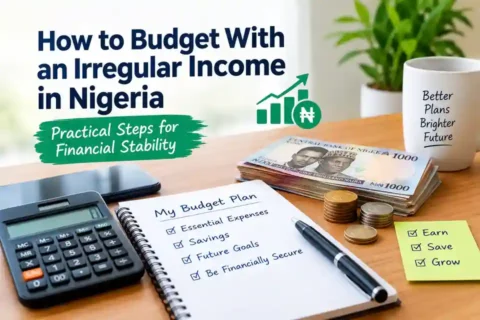
1. Create a Realistic Budget
List your income and expenses.
Divide expenses into:
Essential expenses
- Food
- Housing
- Transportation
- Utilities
- Healthcare
- Education
Non-essential expenses
- Entertainment
- Unplanned shopping
- Unused subscriptions
- Some convenience purchases
Review your budget when major expenses change.
2. Track Your Expenses
Write down your spending.
You may discover that certain expenses have increased gradually without you noticing.
For example:
- Transport: ₦20,000 → ₦28,000
- Food: ₦60,000 → ₦75,000
- Data: ₦10,000 → ₦14,000
Tracking expenses makes these changes visible.
3. Build an Emergency Fund
An emergency fund provides money for unexpected expenses.
Possible emergencies include:
- Medical expenses
- Job loss
- Urgent repairs
- Family emergencies
- Unexpected travel
The appropriate emergency-fund amount depends on your income, responsibilities and financial situation.
Start with a realistic target and build it gradually.
4. Avoid Unnecessary Debt
When living costs increase, some people may consider borrowing money to cover everyday expenses.
Before taking a loan, understand:
- Total repayment
- Interest
- Fees
- Repayment schedule
- Late-payment penalties
- Other conditions
Borrowing should not be treated as free money.
5. Increase Your Earning Capacity
Reducing expenses has limits.
You may also consider ways to increase income through:
- Professional development
- Digital skills
- Freelancing
- Small business
- Agriculture
- Technical skills
- Additional legitimate work
There is no guarantee that any particular skill or business will generate a specific income.
Avoid schemes that promise guaranteed high returns.
6. Compare Prices
Before purchasing expensive items, compare prices from legitimate sellers.
For regular household expenses, comparing alternatives can sometimes reduce costs.
However, the cheapest option is not always the best option.
Consider:
- Quality
- Durability
- Warranty
- Seller reputation
- Transportation cost
- Total cost
Inflation and Investment Decisions
Inflation is one factor investors may consider when evaluating long-term financial goals.
However, investment decisions should not be based solely on inflation.
Before investing, consider:
- Risk
- Expected return
- Investment period
- Liquidity
- Fees
- Regulatory status
- Your financial goals
- Your ability to tolerate losses
Be careful with platforms or individuals promising guaranteed investment returns.
A high promised return can also involve high risk.
What Can Government Do About Inflation?
Governments and central banks can use different economic and monetary policies to address inflation and its underlying pressures.
These can include:
- Monetary policy
- Fiscal policy
- Measures affecting food supply
- Infrastructure investment
- Energy policies
- Trade policies
- Agricultural policies
- Foreign-exchange policies
Different policies can have different effects, and some measures may involve trade-offs.
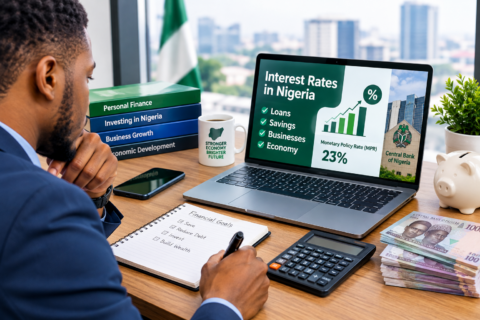
The Central Bank of Nigeria is responsible for monetary policy and uses instruments such as the Monetary Policy Rate as part of its policy framework.
For current policy decisions, readers should consult official CBN publications.
Where Can You Check Nigeria’s Inflation Rate?
For reliable inflation information, use the National Bureau of Statistics.
NBS publishes official Consumer Price Index and inflation reports.
When reading an inflation figure online, check:
- Publication date
- Reference month
- Whether it is headline, food or core inflation
- Methodology
- Whether the figure is year-on-year or month-on-month
This helps prevent misunderstanding outdated statistics.
Frequently Asked Questions
What is Nigeria’s inflation rate in 2026?
Nigeria’s inflation rate changes as NBS releases new monthly CPI reports. For the latest figure, readers should check the most recent official NBS publication rather than relying on an older article or social-media post.
What causes inflation in Nigeria?
Inflation can result from several factors, including production costs, food supply conditions, transportation, energy costs, exchange-rate movements and demand conditions.
Does inflation mean everything becomes more expensive?
Not necessarily. Inflation measures changes in the general price level across a broad basket. Individual products can rise, fall or remain relatively stable.
Does lower inflation mean prices are falling?
No. Lower inflation generally means prices are increasing more slowly. It does not necessarily mean that prices have returned to previous levels.
How does inflation affect my salary?
If your salary does not increase while your living expenses rise, your purchasing power can decline.
How can I protect my money from inflation?
Useful financial habits include budgeting, maintaining emergency savings, managing debt carefully, improving earning capacity and making informed long-term financial decisions.
Is saving money still important during inflation?
Yes. Savings can provide liquidity and financial security, particularly for emergencies and short-term goals. Long-term financial planning should also consider purchasing power and appropriate investment options where suitable.
Who publishes Nigeria’s official inflation statistics?
The National Bureau of Statistics (NBS) publishes Nigeria’s official Consumer Price Index and inflation statistics.
Final Thoughts
Inflation affects more than economic headlines.
It can influence how much a family spends on food, how much a worker spends on transportation, how businesses price their products and how households plan their savings.
The best response is not to panic whenever prices change.
Instead, understand what inflation means, monitor your actual expenses, maintain a realistic budget and make financial decisions based on reliable information.
Remember that the official inflation rate is a national statistical measure. Your personal experience may be different because your household has its own spending pattern.
By understanding the difference between inflation, prices and purchasing power, you can make more informed decisions about your money.
Disclaimer
This article is for general educational and informational purposes only. Economic conditions, prices, inflation figures, interest rates and government policies can change. The information presented should not be considered personalised financial, investment or economic advice. Verify current statistics with the relevant official Nigerian institutions before making important financial decisions.
Last reviewed: September 2026